Friday, December 09, 2011

This is what dominance looks like

Sometimes, as they say, a picture is worth a thousand words.  This is a chart from a recent investor presentation showing the market share of the dominant provider group in Massachusetts. 

As I have said before, this represents excellent execution of a business strategy formulated in the mid-90s, when this system was founded by a corporate affiliation of Brigham and Women's Hospital and MGH.  It has resulted in a behemoth, and the state's largest insurer has said publicly that it does not have the ability to withstand the resultant market power -- and acts that way, too.

The chart shows only tertiary discharges, reflecting the 4,000 licensed beds and 6,560 physicians in this system, with operating revenues of $8.5 billion in fiscal year 2011.  So, when you read a story about this system being vulnerable to the poaching of a 90-doctor group by a cash-laden private equity firm, you really have to wonder.  Especially when the story notes:  "Compass doctors send many of their patients to the Brigham for advanced care, and doctors intend to continue that relationship."

How convenient, though, for the dominant player when such an event happens.  It can spin the story and assert that this shows how market forces are at work.

In other regions characterized by similar market dominance (e.g., Utah with Intermountain Health; parts of Wisconsin with Gundersen Lutheran, parts of Pennsylvania with Geisinger), the local provider systems have demonstrated an agenda of controlling the growth of health care costs by focusing on improving quality and safety and process improvement.  This Massachusetts system could have and still could exercise similar leadership, but not if it continues to execute the old growth model.

Thursday, December 08, 2011

Private equity buys the human resource equity

A story in today's Boston Globe again misconstrues the business plan of Steward Health Care System in acquiring a physician group that was part of the Partners Healthcare System.

Compass Medical includes 90 doctors in eight offices between Braintree and Taunton, and over time, doctors there probably will refer more of their thousands of patients to nearby Steward-owned community hospitals for care, including Quincy Medical Center, Good Samaritan Medical Center in Brockton, and Morton Hospital in Taunton.

The change is a loss for Partners, a powerful provider network that includes Massachusetts General and Brigham and Women’s hospitals, which has been affiliated with Compass for 16 years. 

The Steward plan does not divert patients from PHS hospitals.  If anything, it is an attempt to divert them from the other community hospitals in those regions, like Milton and Brockton Hospital.  PHS does not have community hospitals in that region.  Remember, too, that Steward is using MGH as its tertiary center.

This whole thing, though, is really part of the usual private equity strategy during the years leading up to an IPO or other flip of the Steward network.  The name of the game is to show investors a pattern of market share and revenue growth.  The profitability of such moves is secondary, in the investment world, to an increase in scale.  When viewed that way, it doesn't matter what Steward pays to acquire these physician groups for just a few years:  There is no way, though, that the incumbents can match the acquisition price, as they have to plan to stay in business for years to come.

Something we'd rather not need

Imperial College in London has opened up a new research center to assess the effects of roadside bombs on British troops.  The Royal British Legion is providing £5 million to establish the center.  As noted in this article in the International Business Times:

The Royal British Legion Centre for Blast Injury Studies at Imperial College will plan the new tools that will develop better ways of protecting British troops.

"The Centre for Blast Injury Studies aims to improve treatment and recovery for those injured serving their country, as well as to reduce the number and extent of blast injuries in the first place," Chris Simpkins, Director General, The Royal British Legion, said in a statement. 

This is an excellent idea.  One of the often untold stories of these wars is the resulting long-term damage to soldiers who are in vehicles.  Even when they are not maimed physically, they can often suffer brain damage from the concussive effects of these explosions.  There are many soldier who return with live-long migraine headaches, for example.  They are forced to live a life of heavy medication and disability.

The Times story continues:

"We now need to assess the effects of blasts on survivors. We urgently need to know more, so that we can protect and treat people more effectively. This Centre can make a real difference to the survival and quality of life of those serving in conflicts," Anthony Bull, Professor at Department of Bioengineering at Imperial College, said.

Exactly.

Wednesday, December 07, 2011

Brilliant or anachronistic?

I write this not as a competitor, for that is no longer the case.  Neither do I write this with some Machiavellian purpose to support my former hospital.  I write it as a citizen watching the unfolding of a business plan that seems to me to be building in future health care cost increases for our region, or worse, potentially weakening one of the country’s great hospitals.

I refer to the exposition by Robert Weisman in the Boston Globe of expansion plans for Brigham and Women’s Hospital.  The plan is to build roughly $500 million in clinical and research space over the next few years.  It is hard to see how this much new clinical space can yield a positive return, given the pending environment of constrained payment rates from governmental and private payers.  Indeed, the last major clinical addition to that hospital reportedly failed to show a positive return in the financial projections used at the time, and that was several years ago.

It is even more hard to see how additional research space would yield a positive return, given a likely flattening of NIH funding and given that research funds never fully compensate a hospital for the indirect costs associated with those laboratories.

When I read that the program was the result of consultation with hundreds of people in the hospital, it made me wonder whether it is partly a compendium of the wish-lists of different constituencies in the organization.  How much rigorous analysis went into this, versus the kind of territorial expansion that usually characterizes strong-willed people in an academic medical center?

As I have noted before -- and as Clay Christensen puts so forth so clearly in The Innovator’s Prescription -- the business model of general hospitals is already at risk.  Even more so for academic medical centers.  The name of the game for the future must be to minimize new capital commitments and their concomitant fixed cost additions, while focusing on Lean or other process improvement approaches to reduce waste, inefficiency, and patient harm.

It is hard for me to see how the plan laid out in the Globe makes sense.  It is either so brilliant that I cannot understand its basis, or so out of touch as to be an anachronism.

A final toast to #IHI

Just when I thought it was safe to eat the oatmeal, I discovered problems with the bagels!  Readers from last year's IHI National Forum may recall my series of articles about the non-Lean system used to serve oatmeal at the conference facility.  That was a four-part series.  And remember, too, this Lean conference in Springfield, MA, where they had a problem serving the toast.

So, now, look at this set-up.  I first saw the potential for a problem when I came downstairs and noticed a really, really large number of bagels and one four-slice toaster per station.  I guessed that this would create backlogs.


And, voila!  When the people came to eat, sure enough.  Not enough toasters for the flow of traffic.  We had introduced a blocking batch process in what should have been a cleaner continuous process.  This creates waste, in the form of unnecessary time spent.


One of the hotel staff people saw me taking the pictures, and we started joking about the problem.  S/he said, "We used to have another toaster at each station, but the electrical circuitry in each socket got overloaded, so we had to remove one.  This back-up always happens."

This demonstrates that in a facility, Lean starts in the design.  The architect and electrical planner for this conference center did not have a full understanding of how the building would be used.  Waste built in is waste that lasts forever.  Another lesson to those in health care.

Cooley Dickinson KOs C. diff

#IHI Cooley-Dickinson Hospital in Northhampton, MA, has had an exemplary record for infection control, knocking out central line infections for an extended period, but they have just reached some new heights.  They used a high intensity, pulsing ultraviolet light to kill Clostridium difficile and MRSA (methicillin-resistant Staphylococcus aureus) bugs in patient rooms and elsewhere.  C. diff, a bacteria that can cause diarrhea and when severe can cause sepsis and death, is a difficult organism to kill: Its spores lay dormant but potent on surfaces of patient rooms (e.g., walls and bed rails).  Bleach is the most effective cleaning agent, but it is hard to know if all areas have been properly cleaned.

The technique is to use the Xenex system to have 120 flashes per minute for seven minutes in each patient room, and each bathroom, and each OR after discharge and each emergency department space every day.  This was all added to aggressive previous approaches like MRSA screening before admitting patients, and using precautions.

During the application period, the UV light bounces all over the room, on all surfaces and into cracks that might otherwise be missed.  The results were extraordinary:


Or to put it in the technical terms of a recent poster presented by Joanne Levin, MD; Linda Riley, RN; Christine Parrish, RN; and Daniel English:

Methods. During January 2011, the use of two PPX-UV devices to disinfect patient rooms was phased in. Rooms and bathrooms were terminally cleaned as usual with a chlorine- based product, followed by the use of PPX-UV, usually for three, seven-minute exposures (once in the bathroom, twice in the bedroom). The overall room turnover time was extended by about 15 minutes. When a device was not being used for terminal cleaning of patient rooms, it was also used in the operating suites, emergency department, and other areas. Surveillance for HA-CDI using SHEA definitions continued as per routine. No other new infection prevention interventions were instituted during this time.

Results: CDI cases were found for a rate of 3.18/10,000 patient days (pd). This compares favorably with the rate of 9.5/10,000 pd for all of 2010. We also compared Q1-Q3 data for the previous three years. The combined Q1-Q3 rate for 2008-2010 was 9.77/10,000 pd compared to 3.18 for Q1-Q3 2011 when PPX-UV was used, resulting in a 67% decline (p=0.017). In addition, to date there have been no HA-CDI–related deaths or colectomies since the institution of PPX-UV. 

I wonder if this will become the disinfection routine of choice over time.

Tuesday, December 06, 2011

Poster session at #IHI

Each years, dozens of people present posters at the IHI National Forum.  Here's a sampling from today's presentations.


As you have seen, one of them is from Atrius Health, a Massachusetts multi-specialty practice.  Here's a nice graphic showing attendance at the Leadership Academy discussed in the video.


If you cannot see the video, click here.

Scholtz and Wall at #IHI

You never know what you'll find wandering the halls during the IHI National Forum.  I came upon this duo -- Bellingham's Richard Scholtz on the autoharp and Seattle's Eric Wall on the mandolin.  They never have time to get together in Puget Sound, so Orlando became the venue of choice.

Here it is live and unedited, including Richard setting up his dinner time, and with a surprise appearance in the audience, Dartmouth health quality guru Paul Batalden.

If you cannot see the video, click here.

PACE -- Managed care for frail elders

#IHI I'm taking these notes as Jennie Chin Hansen, President of the American Geriatrics Society, leads a session at the IHI Annual National Forum on PACE, the Program for All-Inclusive Care, a comprehensive capitated program for "dual-eligible" Medicare/Medicaid patients.

The focus of this program is in on frail, disabled, complex elderly patients.  There is a comprehensive offering of services on different sites (e.g., recreational therapy, nursing, physical therapy, meals, nutritional counseling, home health care, psychiatric care, social work, prescription drugs, social services, audiology, dentistry, podiatry, speech therapy, optometry, respite care.)  As you can see, this relies on an interdisciplinary team, and they and the services follows the person on a 24x7 basis.

The first center was founded by a social worker and dentist in 1973.  The concept spread, with the aim of spending equal or less than was being spent in nursing home facilities.  In the early 1980s, the people doing this demonstrated a savings of 5% and were able to negotiate a dual-eligible contract with the state and federal governments, based on administrative waivers of the rules.  Later, in 1997, there was bipartisan Congressional support to make the program permanent.  (Hard to imagine today:  It was a 13-0 vote in the Commerce Committee!)  It took nine years, though, for the full rule-making process to be finished.

The program honors what frail elders want:  To stay in familiar surroundings, to maintain autonomy, and to maintain a maximum level of physical, social, and cognitive function.

The components of the population (average age of 80) indicate the following complexity -- frailty, co-morbidity (six or seven conditions, on average), mobility impairment and disability cognitive impairment.  Given this mix, there is an important focus on activities of daily living (ADL).  Also, a goal is to avoid acute care episodes, in part to avoid hospital-acquired disability, as well as to avoid the cost of that type of care.

PACE eligibly:  Age 55+; nursing home certified; PACE service area; Able to live safely in the community; must enroll all eligible applicants; 95% dually eligible.

Mean age is 80; 75% women; ADL deficits 3.5; 63% have cognitive impairment; average life expectancy in the program is 4.5 years.

PACE is small in scale.  Nationally, there are only 23,000 participants served by 80 organizations in 23 states.  There are 100-2000 participants per program.

A final and interesting note: The van drivers are the first line of information about the patients, as they can get see early warnings of problems.

Lessons for hospitals from the Gaylord Palms

#IHI Transforming health care will require, among other things, the enthusiastic engagement of staff throughout the nation's hospitals in process improvement.  The means for doing this have been demonstrated by corporations in other sectors.  Led by Eric Dickson, Senior Associate Dean of U. Mass. Memorial Hospital, and Christina Gunther-Murphy, IHI's Director of Hospital Portfolio Operations (seen here), a group of us at the IHI Annual National Forum had a chance to witness one such approach during an excursion at the Gaylor Palms hotel and resort.

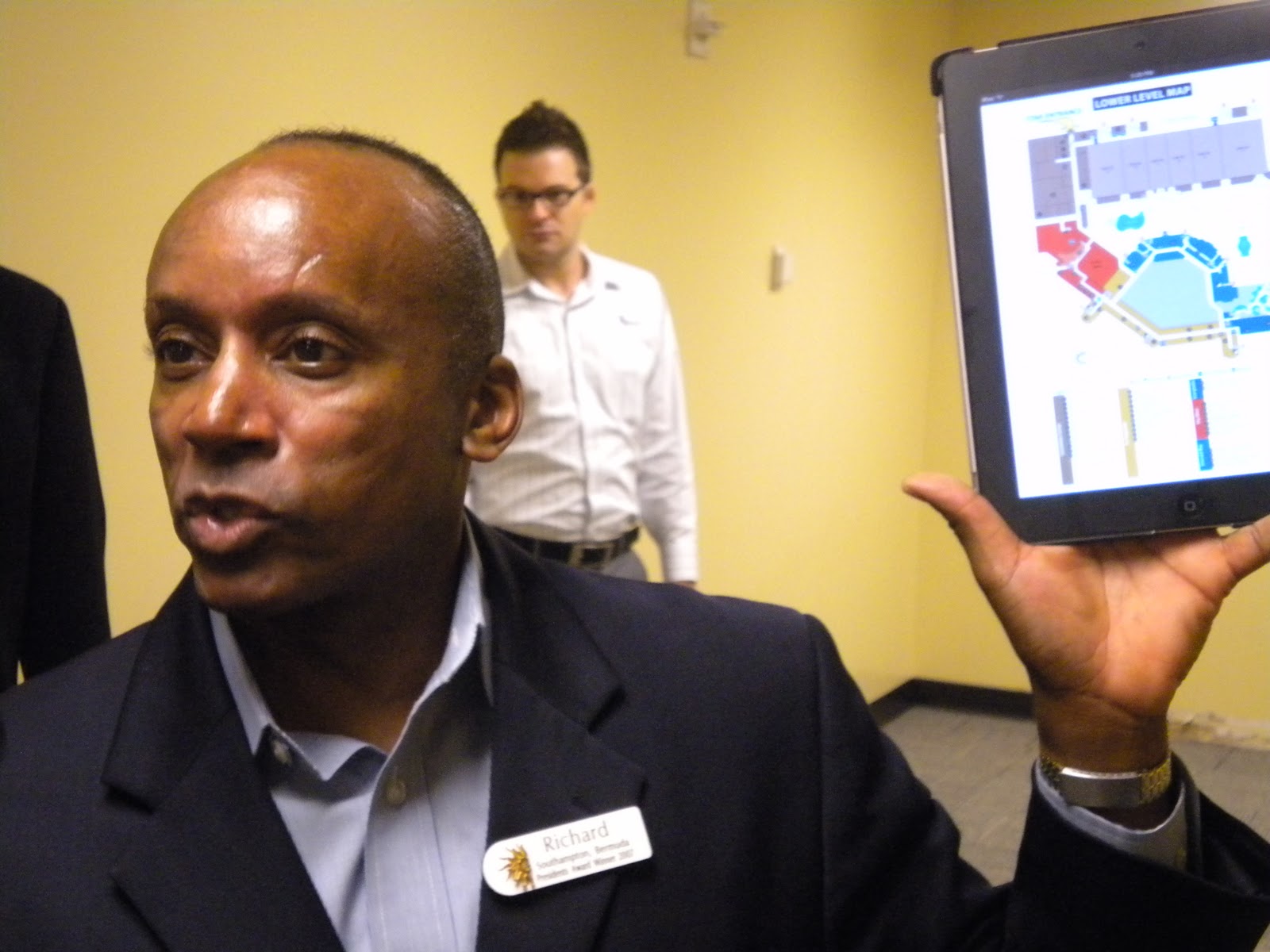
In this all-day session, entitled "Joy in Work and Staff Best Practices," we  were treated to a dynamic and informative presentation by Richard Caines, training manager at the Gaylord Palms.  You see him here in the caricature portrait hanging outside the door of the human resources department.  I choose this way to introduce Richard because it exemplifies an underlying premise of the GP approach, to create opportunities whenever possible to have fun in the workplace, with an example set by leaders throughout the company.

Richard, seen here in his real body, had a lot of serious things to say, too.  The first related to the criteria used by the Gaylord Palms in hiring staff.  Those "non-negotiable" attributes are laid out explicitly:  Ability to Smile, engage in Team work, bringing the right Attitude to work, Reliability, and Serving with a passion.  Staff, hereafter called STARS, are considered for employment in joint interviews, where HR professionals and line managers look to see which people in the session rise to the top compared to other applicants.  For some jobs, 500 people might apply for a single positions.  Here's Richard in a short video describing the attributes more fully.  (If you cannot see the video click here.)


A thoughtful orientation has to follow a good hiring process.  All STARS receive a full two-day orientation by Richard, focusing on corporate culture, goals, and the like.  Each person then receives a personalized two-week orientation, after which he or she is fully capable of independently carrying out all the responsibilities of the assigned job.  Ninety days later, an orientation reunion is held, at which each STAR has a chance to provide feedback to the company on the quality of the work experience and the environment, and on the orientation process itself.

But good hiring and even a good orientation do not make a good organization.  It takes a corporate culture of trust, empowerment, assistance, and abetting personal and professional growth to deliver fine excellent service all the time to one another and to guests.  Richard explained the panoply of programs offered by the Gaylord Palms to make life better for its STARS.  This includes amenities like an on-site car repair shop, laundry service, convenience store, physical trainers and athletic facilities, and amazingly inexpensive ($1.50 per lunch) cafeteria.

There are more substantive human resource approaches at work, too.  A bonus system provides, based on meeting guest satisfaction goals, offer all hourly STARS the chance for a monthly cash payout.  Even when a staff member has poor performance, the first step in the progressive discipline process is counseling, to see what might be done to help a person regain his or her footing and begin to excel again.  There are also clear moral and ethical standards, the "Red Rules," that make it clear that things like serving alcohol to a minor or hiring an illegal immigrant, will result in termination.  (Even there, the first step by the supervisor is suspension:  The actual termination process can only be carried out by the trained and designated HR professional.)


As part of the commitment to staff to provide the support and resources necessary to provide flawless service, there are also regular STARS satisfaction surveys.  The last one had only one question.  Staff were asked to give an answer from 1 to 5 on the following statement: "I am completely satisfied with my job."  Later, in section meetings, staff are queried, "What makes this a great place?" and "What would make it a better place?"  Is there any doubt why this is the only hotel consistently listed in the top 25 companies for working families by the local newspaper?


But a really fine organization depends on strong leaders who understand that their role is not to micromanage, but to coach.  As noted above, at the Gaylord Palms, leaders also look for opportunities to create fun.  They are expected to model the mutual respect that is a corporate standard.  I close this post with another video of Richard explaining some of these aspects of the corporate culture -- and with the question for my colleagues in the hospital world, "What aspects of what we learned from Richard might be applied in our environment, one dedicated to high service to patients and families, and one dependent on the human capital in the organization to deliver that service?"

If you cannot see the video, click here.

Monday, December 05, 2011

North Shore-LIJ invests in continued excellence

Another notable moment at the #IHI Exhibition Hall was an encounter with two of the quality and safety mavens from the North Shore-LIJ Health System.  Karen Nelson, RN, is Vice President for Clinical Excellence and Quality, and Dr. Jeremy Boal is Chief Medical Officer.

Regular readers of this blog may remember my post from August in which I praised the leadership of CEO Michael J. Dowling and congratulated him for receiving the National Center for Healthcare Leadership (NCHL) 2011 Gail L. Warden Leadership Excellence Award for bringing innovation and accountability to health care and contributing significant and lasting improvements to the field.  Well, a leader like that attracts talent like Karen and Jeremy, who make real differences in the lives of patients, family, and staff.

The group has also created the "Center for Learning and Innovation," the largest corporate university in the health care industry.  The mission of this organization is to "promote a culture dedicated to excellence, innovation, teamwork, and continuous change."  The agenda: "Through continuous learning opportunities, employees are assisted in the development of knowledge, attitude, and skills necessary to support the North Shore-LIJ Health System's strategic and business goals."

As Mr. Dowling notes:  "To advance an organization's strategic and business goals, its leadership must foster growth and continuous learning among it employees."

I have no doubt that they are well on their way and will set an example that will be noticed far and wide.

How to remember your doctor's advice

The Exhibition Hall at the #IHI Annual National Forum is packed with dozens of exhibitors, and I was pleased when I happened upon the booth of the Cautious Patient Foundation.  I was even more pleased to find Fred Trotter and Betsy Kusin (seen here) there and to learn from them about the release of YourDoctorsAdvice.org.

This is a brand new service that allows people to use their cell phones to capture their doctors' advice, and then pick up that advice on their home computers.  It also permits a patient to share that oral record of advice with anyone of their choice -- a family member, a close friend, a personal health care aide.

Here's how it works.  You speed-dial a number from your cell phone before leaving the doctor's office.  You can either ask the doctor to speak into the phone while talking with you, or you can repeat what s/he said before you forget important details.  The system at YDA recognizes the phone number from which you are calling and stores the message in your secure location.  Then, when you go home, you can access your account on the YDA website.  You can listen -- and listen again as often as you want -- label it, store it for future use, or share it with people of your choice.

This service is being offered by a non-profit organization, and so its pricing is very low.  Individuals will be asked to pay $19.95 for the service; and hospitals, physician groups, and other providers are being offered the source code for free so they can set up the service for their patients.

Why is this useful and important?  We all know that doctors would like us to follow their advice, but very often patients cannot remember it once they leave the office.  YDA points out that studies have shown that patients only remember 30 to 70% of what their doctors have told them.  This service offers an easy and convenient way to overcome this problem.  Check out the website to learn more.

Sunday, December 04, 2011

#SASKIHI11 @ #IHI


Regular readers might recall my post from August about the progress being made in Saskatchewan under the auspices of the Saskatchewan Health Quality Council.  The council is an independent agency that measures and reports on quality of care in Saskatchewan, promotes improvement, and engages its partners in building a better health system.

Well, upon arriving here in Orlando for the IHI Annual National Forum, I heard that there were several attendees from the province who had created their own Twitter hashtag to keep in touch with one another.  So, I borrowed the hashtag and invited myself to have dinner with them.  There, I heard more about the origins and organization of the SHQC.  It was created by provincial legislation in 2002, is funded by the province, and has an impressive board of directors.

Among the dinner crowd, too, was urologist and fellow blogger Dr. Kishore Visvanathan, who notes:

My QI journey started 5 years ago at the IHI National Forum. It was literally a life-changing experience for me.   This weekend, I'm going to the IHI National Forum again.  Will lightning strike twice? 

I was also pleased to meet Katherine Stevenson, a native of the province, who is currently getting her Ph.D. at the Jönköping Academy for Improvement of Health and Welfare.  This is the county in Sweden that is viewed as one of the most advanced place in the world in terms of integrating public health, primary care, and acute care -- and applying principles of process improvement on a broad scale.  Katherine, who used to work at the SHCQ, is hoping to return after receiving her degree to apply some of the lessons learned in her home community.

Blue-shirts, the movie

#IHI Here are some friendly welcoming videos from the "blue-shirts," IHI staffers who are assisting attendees of the Annual National Forum.  They tell you their names, where they are from, how many Forums they have attended, and their hopes for this year's participants.

Make sure you watch all the way through to the last one by Lauren.  She brings back memories of the four-part oatmeal chronicles posted here during last year's Forum.

Don’t wait for Washington

Brent arriving at the IHI Annual Forum
#IHI With these words, Brent James began his keynote address to the attendees at the Vermont Oxford Network meeting this morning.  Noting that the recent legislation in Washington focused mainly on providing insurance to a portion of the 46 million Americans without coverage, he reminded the audience that the law had very little to say about the issue of rising health care costs in the country.  He warned them that “our profession is in the midst of profound change” because the cost pressures would wend their way to affect doctors and hospitals over the coming years.  “If you feel like you have a target on your forehead, you are right.”  Paradoxically, though, he left the audience eventually with the thought, “This is a glorious time to be in medicine.”

“What’s up?” you might ask.  What’s up in Brent’s view is the fact that more and more doctors, nurses, and administrators have started to adopt an approach to clinical care based on reducing variation and on weeding out inefficiencies and waste.  “Quality costs less, “ is his watchword, dating this philosophy back to the work of W. E. Deming.

Brent went through the evolution of this approach at Intermountain Health, hearkening to the initial work done in 1991 by Dr. Alan Morris at LDS Hospital.  Undertaking an NIH-funded randomized clinical trial in treatment of pulmonary disease, Morris’ team of eight intensivists discovered a large degree of variation in ventilator settings, not only among themselves, but even between daytime and nighttime with the same doctor and the same patient.  Morris, looking at the work of Jim Womack documenting Toyota’s Lean process improvement in The Machine that Changed the World, realized that he needed to create a protocol among all the doctors to standardize the care being given.  Only by have enough standardization could there be the possibility of evaluating the “pre” and “post” of the clinical trial.

But Morris noted, “I had no validation data” for the best protocol.  So, the team assembled and designed a protocol based on the literature of the day, but then they applied Lean principles to the use of the protocol.  Physicians were instructed to vary from the protocol if they judged it in the best interest of a patient.  Each time this happened, though, the case would be discussed among the group.  Over time the protocol was modified when there was a scientific basis for doing so, and over time variation from the protocol diminished.

During the following years, this process was expanded to other clinical arenas in the Intermountain system.  The concept of “shared baselines” came to rule:

1 -- Select a high priority clinical process;
2 -- Create evidence-based best practice guidelines;
3 -- Build the guidelines into the flow of clinical work;
4 -- Use the guidelines as a shared baseline, with doctors free to vary them based on individual patient needs;
5 -- Meanwhile, learn from and (over time) eliminate variation arising from the professionals, while retain variation arising from patients.

Note that this approach demands that doctors modify shared protocols on the basis of patient needs.  The aim is not to step between doctors and their patients.  This is very different from the free form of patient care that exists generally in medicine.  Notes Brent, “We pay for our personal autonomy with the lives of our patients.  This is indefensible.”  The approach used at Intermountain values variation based on the patient, not the physician.

Brent is optimistic because he has seen this philosophy of learning how to improve patient care extend to more and more doctors and hospitals around the country.  He views it as providing the answer to the rising cost of care, and he is excited about the potential.  He concludes that this is a “glorious time” to be in medicine because it is the “first time in 100 years” that doctors have a chance to institute fundamental change in the practice of medicine.

We left the VON meeting together and flew off to Orlando, where we are now attending the IHI Annual National Forum.

Saturday, December 03, 2011

State collaboratives save babies' lives

A number of state perinatal quality collaboratives take advantage of the Annual Meeting and Quality Congress of the Vermont Oxford Network to get together and compare notes.   Some of these collaboratives have existed since 2006 or so; others are more recently created.  The idea is for people in neonatal intensive care units (NICUs) in each state to set statewide targets and objectives, compare best practices, and understand the variability in clinical practices across and within institutions.  This is not a government-ordered process:  It originates with practitioners in each state.

I sat in on the session today and was greatly impressed by the scope and scale of work going on in a number of states.  In Michigan, for example, 17 centers get together and have produced a 46% reduction in nosocomial infections between 2008 and 2010 among level III (the most vulnerable) babies in their NICUs (from 298 cases per thousand patient days to 127.)  It was reported that trust across the centers assisted in the shared learning that made this possible.  Also, transparency across centers identified factors contirbuting to the variability in infection rates across the centers.

In Mississippi, where the group has just formed, they have set targets for reductions of central line associated bloodstream infections (CLABSI), reduction of bronchopulmonary dysplasia (BPD); increases in the use of human milk for very low body weight (VLBW) babies; and the like.  In North Carolina, with one of the longest running collaboratives, documented progress on an number of metrics has persuaded the state's largest insurer to give preferential rate treatment to those centers that are part of the collaborative.  In Ohio, with a long-running collaborative, CLABSI problems have significantly diminished.

I was especially pleased to learn that back in my home state of Massachusetts, the 9-center collaborative decided several years ago to share all data from their NICUs with one another, attaching the name of each hospital to the data as part of the process.  This was at the urging of Jonathan Cronin, unit chief of neonatology at Massachusetts General Hospital, who reportedly said that if the collaborative was to be serious about meeting higher standards of care, such transparency of clinical metrics was essential.  So the group regularly shares information on rates of retinopathy of prematurity, chronic lung disease, necrotizing enterocolitis, infections, and the like.

In summary, this was an inspiring session with lots of important examples and lessons for adult care, as well.  And good for the Vermont Oxford Network to facilitate the collaborative process.

Things are cooking at Cook's

#IHI As a kind of warmup to this week's IHI Annual National Forum, I am currently at the Annual Meeting and Quality Congress of the Vermont Oxford Network, a group of over 1000 neonatal doctors and other professionals who gather together to share stories of patient care advancement.  I was asked to give a keynote address, but as usual, I learned more than I imparted.  Here is a great story told by Tammy Hoff, RN, from Cook Children's Medical Center in Fort Worth, Texas (seen here with BIDMC's John Zupancic).  They made a concerted effort to reduce the rate of central line infections in their level III-C NICU (750 admissions per year, average census 55).  They used methods from the Institute for Healthcare Improvement and Pediatrix medical group and have been a rate of zero for many months.  Here are the key slides:


What were the costs to the hospital?


Tammy noted:

In order to establish the line team, we had to give up two nursing positions.

Since the establishment of this team and with the success of the program, we have since been able to get those two nursing positions back and filled.

The overall greatest expense in this process is in the risk of taking the first step:  To hire a dedicated team that can focus on nothing but infections and the development of best practice.

Since the inception of this team an expense, but one that we are willing to accept, is the travel to different conferences and programs around the country to share out story.

Here are the benefits, more generally, for society, using Peter Pronovost's CLABSI Opportunity Estimator tool:

Friday, December 02, 2011

The "non-two-tier" story saga continues

Thanks to Jack Sullivan over at CommonWealth Magazine, we now have an new chapter to add to the story of the referral of a patient by one hospital to its higher priced affiliate.  In particular, we get to add the insensitivity of the insurance company to that of the provider network.  We can now understand more fully the nature of the problem faced by this patient.

Remember the background.  A patient was told that he could not get his prostate surgery done quickly enough at the lower-priced hospital, but could get it done at the higher-priced one, by the same surgeon.  It was not until afterward that he realized that his two-tier insurance company would charge him more for the service.  He was never told it was the same health care provider system.

I am not surprised by the comment from the provider network, even though it is totally off-point, as the care received by the patient would have been exactly the same at either hospital:

[A] spokesman for Partners Healthcare dismissed questions about a potential conflict of interest and said all care decisions are based on the health of the patient.

But here's the reaction from the largest insurer in the state:

[Patients] have to wrestle with the fact it’s going to cost more money if they choose a higher-tier hospital.... The copays are designed to incent a thought process around quality and cost. Members still get a choice but it costs them more out-of-pocket. It costs the health care system less.

If a patient is not told that the choice is going to cost more money, shouldn't the integrated provider network refund the difference in the co-pay?  But, better yet, shouldn't someone have told the patient that there was a financial consequence in the decision being made?  But, even better, shouldn't the provider system have figured out how to deliver the service at the lower priced hospital?

Here's another unanswered question:  Do Faulkner and the Brigham receive the same technical fee for this surgery?  I am guessing not, in that they are in different tiers.  So, net of the higher copay, did Blue Cross still pay more for the surgery than it would have had it been at the Faulkner?  If so, does it care about that?

Thanks to Don Berwick

As Don Berwick steps down today from his position as head of the Centers for Medicare and Medicaid Services, it is time to offer him a simple and heartfelt "thank you."  It takes a high degree of courage and selflessness to throw oneself into the political maelstrom that exists in Washington, DC.  Don had no need to leave his comfortable and highly regarded position as head of the Institute for Healthcare Improvement.  He did so because he thought he could make contributions to the development of sensible health care policy, in service to the people of this country.  He carried out that job admirably, with honesty and good spirit, notwithstanding attacks on him personally that were inaccurate, mean, and uncalled for.  A political climate that thrives on the demonization of such a person and his dedication to the public good is an indication of deep problems in our body politic.  That a fine person would nonetheless choose to serve in that environment is an indication that there is still hope, a reservoir of people who are willing to be tapped to help our country.  Bravo to Don!

Thursday, December 01, 2011

The truth about lies

The four great lies in American life:

"I'll still respect you in the morning."

"The check is in the mail."

"I'm from the government, and I am here to help you."

"I'm from academia, and I am here to clarify things."

Here's proof of the last one, from the Boston University IT department:

"Accounts for new faculty and staff will be provisioned during employment onboarding."

Good study. Bad access.

The AHRQ Patient Safety Network is a great site for keeping up to date on research in the field.  Here is an example of an article of interest, "Medication errors during patient transitions into nursing homes: characteristics and association with patient harm."

Here's a portion of the abstract:

This study analyzed medication errors reported by North Carolina nursing homes to describe specific errors that occurred during patient transitions to nursing homes. Of the nearly 30,000 individual medication errors reported, 11% involved a care transition. Notably, the transition-related errors were also associated with higher odds of patient harm. Contributing factors to the transition-related reports included problems with staff communication, order transcription, medication availability, and pharmacy issues. The authors highlight the opportunities for medication safety during this high-risk transition period for patients.

Unfortunately, like so many others, The American Journal of Geriatric Pharmacotherapy will not permit you to read the article without a subscription or paying for the single article ($31.50),  and the AHRQ can't get you past that paywall from their site.  A shame.  I bet it has some useful things to say that would be of broad interest to hospital case managers and others involved in transition of care issues.

Wednesday, November 30, 2011

Night activities on WIHI

Night Talks and Nocturnists: New Interventions for the Hospital at Night  
December 1, 2011, 2:00 PM – 3:00 PM Eastern Time

Guests:
David Gozzard, FRCP, FRCPath, MBA, Consultant in Quality Improvement, North Wales, UK; Former Consultant Haematologist

Christine White, MD, MAT,
Assistant Professor, Division of General and Community Pediatrics, Cincinnati Children’s Hospital Medical Center

Winthrop Whitcomb, MD, MHM,
Medical Director of Healthcare Quality, Baystate Health

Although most hospitals are open for business 24/7, patients are well aware that days, nights, weekends, and holidays are not created equally in hospitals. There’s a history of assigning fewer medical and nursing staff during these times, creating a host of challenges for improvement leaders seeking to ensure safe and reliable care regardless of what the clock says. And there are real consequences: a study published in JAMA in 2008 found that patients who had heart attacks in the hospital at night and on weekends were less likely to survive than if they’d arrested during “normal business hours.”

Innovative solutions to close this gap in care are cropping up in several corners. In the US, the growing number of and reliance on hospitalists is giving rise to a particular type of hospitalist, known as a “nocturnist,” who specializes in after-hours care. In the UK, attention to patient safety as well as work hours for medical staff have spawned an increasingly widespread practice of interdisciplinary “night teams.” And, many hospitals are focusing on night times and weekends as part of their overall efforts to improve communication and handoffs among nurses and medical residents, the latter of whom in the US now have shifts of their own to comply with ACGME regulations.

So, the road to ensuring that patients get the same kind of care, no matter the time of day or night, is definitely still under development. But, each of the guests and experts on the December 1 WIHI are contributing to the solutions and they’re eager to find out what innovations are underway in your own organizations. WIHI host Madge Kaplan and Drs. David Gozzard, Christine White, and Win Whitcomb all hope you’ll tune in to share what you know and to learn more. Any one of us, for any number of reasons, can wind up being admitted to a hospital on a weekday morning, in the middle of the night, or over a major holiday. The quality of care should be the same. Please join us! 

To enroll, please click here.

Visualizing Your Medical Data


Thanks to Gordon Massey at Children's Hospital Boston for referring me to this blog post by Kenneth S. Spriggs on e-patients.net, and to the image presented there, which I reproduce here. In the post, Sprigg talks about how he made sense of his medical data by creating a graphic electronic health record, the DIYEHR.

His visual presentation of his medicine regime brought out associations and questions that he had never thought about: 

There’s dramatically more information there than meets the eye. Patterns emerge. I’ll give a few examples.

You can see I have a history of inflammatory diseases — first was eczema, then asthma, and now Crohn’s disease. When my asthma was developing my skin was clearing up and when my Crohn’s was developing my asthma was clearing up. You can clearly see this transition just by reading from left to right. Perhaps they’re related?

There’s another useful discovery — it’s the inclusion of the Vitamin B-12 injections. As soon as B-12 was prescribed I no longer needed depression medication. . . .

The last observation I’ll make is that the combination of Remicade and azathioprine lost its efficacy and it landed me in more trouble than just before I was diagnosed — which I assure you was an awful lot of trouble. And then there’s a big drop in the number of drugs I’ve had to take post surgery. In retrospect I’d have chosen to avoid the drugs and opt for surgery back in 2001.

A fascinating example of patient empowerment.  Who is going to design the app for this, that with your authorization could automatically download your medication history from your health care providers and create a neat chart out of it?

Let's wake up about ACOs

Comments by two folks recently should reawaken our concern about how to hold accountable care organizations accountable and whether creation of ACOs will lead to market dominance that will not bring value to patients.

Back in 2009, I noted: 

Here in Massachusetts, there is only one such entity that approaches the definition of an ACO, Partners Healthcare System. But there is no sign that it has used its size and scale to deliver care at a lower cost. Indeed, there is evidence that it has used its market power to extract higher rates from insurance companies. Likewise, there are no data to show that quality, safety, and efficacy in the delivery of care throughout the Partners system is better than other community hospitals or academic medical centers.

Indeed, a recent post suggests that such economies may be at risk in ways I hadn't considered.

Now, see these comments from Federal Trade Commissioner J. Thomas Rosch, as reported by Avik Roy on The Health Care Blog:

“The net result” of ACOs, says Rosch, “may therefore be higher costs and lower quality health care—precisely the opposite of its goal.”

Rosch notes that the Centers for Medicare and Medicaid Services (CMS) have been running an ACO demonstration project, called the Physician Group Practice Demonstration, for several years now. “The results were nothing to crow about,” says Rosch. “Even after five years of the project, a majority of the participating practice groups did not achieve any cost savings.”

In theory, the Federal Trade Commission has the authority to challenge monopolistic hospital mergers. But in 1996, the FTC’s policies on health care mergers were amended to provide a safe harbor to competing hospitals that achieved sufficient clinical integration. “I thought then, as an antitrust practicioner who frequently represented health care providers, that the 1996 amendments…were the biggest loophole in the antitrust laws I had seen,” says Rosch. “Subsequent Advisory Opinions issued by Commission staff…were about as clear as mud.”

Now, look at the remarks from former Massachusetts Governor Michael Dukakis, who, you might remember, introduced the first universal health care law to the state several decades ago.  Whether you agree with his remedy or not, it is prudent to regard his warning carefully:

Speaking during the Harvard School of Public Health Voices from the Field series, Dukakis said urging the health care market to fix itself is “a colossal waste of time.”

“If the market doesn’t work you have to regulate,” he said. “R-E-G-U-L-A-T-E. Thoughtfully, responsibly, and with the active involvement of all of the people who provide health care and who are very important to us.”

ACOs and global payments. What did we used to call them? HMOs and capitation. We tried that, folks. It didn’t work. Why are we doing it again?

I have noted before that public policy formulation in the health care arena is characterized by a striking lack of rigor.  Here are two experts in the field who are urging us to be cautious about basing the new design of health care on a wish and a prayer.  It is interesting to ask why they are being ignored.  Can it be that those with market power in this field have seen a answer to their problems, as opposed to ours?

Tuesday, November 29, 2011

Designing websites at Tufts University School of Medicine

#TUSM Lisa Gualtieri teaches a fascinating course at Tufts University School of Medicine entitled, " Online Consumer Health."  The idea is to train students how to conceptualize and design websites that can be an integral part of the marketing and education strategies of hospitals, physician groups, and public health agencies.  This isn't as easy as it might appear.  Among other things, you need to think about your overall strategy and goals; you need to develop personas representing segments of your audience, against which to test the effectiveness of your message; and, of course, there is the standard web stuff of design, layout, fonts, integration of photographs and video.

I had a pleasure of attending the class today and who should be there but Pam Ressler, a virtual friend from the blog world, and an adjunct faculty member at both Tufts and the University of Massachusetts.  Pam specializes in stress resiliency and social media in health care.  Together, we served as guinea pigs as the students presented their projects for the course, and conducted formative evaluations in which we played the roles of possible viewers of the websites.

My first interview was with Mary, shown here, who was tasked with revising the website of Harvard Vanguard Medical Associates with regard to shared medical appointments.  I had some fun, pretending I was a primary care doctor who was interested, but skeptical, about this care delivery model.  Her task was to use my comments to design a website that would answer my questions and gently persuade me to consider the approach.

Pam's first interview was with Lisa, and the project was a redesign of the state Department of Public Health's website about oral health care.  I then proceeded with Emily, who was working on a Children's Hospital website to help inform teachers about classroom issues surrounding students with cancer.  I had to leave before Pam concluded with Kelly on her project.

All in all, an excellent experience in a thoughtfully run class.  Lisa runs a more extensive course for professionals entitled "Digital Strategies for Health Communication" during the summer.  It is worth a look here for those able to come to Boston in July.

Monday, November 28, 2011

This is not about tiered health plans

A Boston Globe story raises a number of questions, but not the ones suggested by the title, "Tiered health plans cutting costs, restricting options."  You read the lede and see if you catch my drift:

Told he had an aggressive form of prostate cancer, Glenn McCarthy faced a decision this year. He could make a $1,000 copayment and have surgery at Brigham and Women’s Hospital in about two weeks. Or he could wait more than a month for an opening at Faulkner Hospital, paying just $150 for the same procedure by the same surgeon. His doctor advised against a delay. “It was life or death,’’ said McCarthy’s wife, Tracy. “We really didn’t have a choice.’’

The issue here is that Faulkner Hospital is owned by the Brigham.  See this logo from its website:

Indeed, we even find stories on that site about prostate surgery.

Many questions arise from the Globe story, since we know that the technical capacity (i.e., equipment, supplies, support services) to do the surgery exists in both hospitals:

Why couldn't the surgeon do the surgery in timely fashion at the lower-cost affiliated hospital?  Was this his choice?  Did he know a failure to do so would cost his patient extra money?  Was his choice limited by the OR times made available to him by the hospital administration?  Did the surgeon ask the administration to make room on the schedule to avoid the extra cost to the patient?  Is there anyone at either hospital who acts as an ombudsman or facilitator to help patients receive their care in the lower cost hospital?  Is there pressure on surgeons to fill up the operating schedule at the Brigham to help offset the operating costs of the more expensive institution?

In short, this case does not seem to be about the features of tiered health plans so much as the features of an integrated provider network that either acted inadvertently or affirmatively to cause a patient to spend more money than necessary for an important procedure.  If the former, it is a shame.  If it is the latter, it is an outrage.  Or maybe there is a more innocent explanation.  Who will ask the questions?

A pause to remember

No post today, in memory of Monique Doyle Spencer.

Sunday, November 27, 2011

In memoriam: Monique Doyle Spencer

Monique Doyle Spencer (seen here in July 2010) died peacefully and surrounded by her family last night after a long stint with metastatic breast cancer.  By any measure, she was an extraordinary person, full of ideas, strongly held views, and with a marvelous sense of humor.  I was privileged to be her friend.

I came to know Monique during one of her stays in our hospital.  She mentioned that she had been writing a book about her experience with cancer, but that no one would publish it because it was funny.  Without a pause, I said that we would publish it as a book from our hospital, and the result was The Courage Muscle, A Chicken's Guide to Living with Breast Cancer.  Those title words were chosen carefully because her whole being was about living.

Here is an excerpt from a review of the book that Joseph Breiteneicher posted on Amazon:

It should become a textbook for the medical professions and a guidebook for all who must confront, or support those who do, breast cancer. It is a beautiful book, beautifully written, that sweetly balances gravitas, zaniness and one person's truth. The author's humanity is in full, accessible display for all to see, share and learn from.


Many interviews, like this one at Business Week followed.

Monique signed her comments on this blog with the moniker "NASOV."  When I asked her what it meant, she said, "Neither a survivor nor victim."  She continued, "I have this disease, and I am going to fight it, but I am not a survivor or victim.  I just have a disease.  There are lots of people who are going through worse."

In July of 2010, I was going to California to attend Sci Foo, which promised to be a stimulating conference of scientists and other creative thinkers.  I decided to bring copies of the book to give to the attendees.  I asked if she would mind autographing them.  She was delighted, and not only autographed them, but wrote a message to each person who might pick one of the 100 copies.  Here's an example:


It reads, "Here's to new ideas and fresh thinking at Sci Foo!  This is my new approach for the millions living with cancer."

Three years after the publication of the book, she wrote me a note:

I'm getting all kinds of comments about the Courage Muscle.  "It saved me."  "It was my Bible." "It was the only cancer book that helped me."

Apparently we really helped a lot of people.  Are you sick of me thanking you?

Oh, no, Monique, the thanks goes entirely in the other direction.  Not only from me, but from all whose lives you touched.

Wednesday, November 23, 2011

Occupy With Grace

#EWG -- A group of us bloggers have been conducting an Engage with Grace blog rally each Thanksgiving, as it is a good time to be with family and talk turkey about end-of-life issues.  Here's a summary prepared by Alexandra Drane and others involved in this issue. 

Once again, this Thanksgiving we are grateful to all the people who keep this mission alive day after day: to ensure that each and every one of us understands, communicates, and has honored their end of life wishes.

Seems almost more fitting than usual this year, the year of making change happen. 2011 gave us the Arab Spring, people on the ground using social media to organize a real political revolution. And now, love it or hate it - it's the Occupy Wall Street movement that's got people talking.

Smart people (like our good friend Susannah Fox) have made the point that unlike those political and economic movements, our mission isn't an issue we need to raise our fists about - it's an issue we have the luxury of being able to hold hands about.

occupy_with_grace_logo

It's a mission that's driven by all the personal stories we've heard of people who've seen their loved ones suffer unnecessarily at the end of their lives.

It's driven by that ripping-off-the-band-aid feeling of relief you get when you've finally broached the subject of end of life wishes with your family, free from the burden of just not knowing what they'd want for themselves, and knowing you could advocate for these wishes if your loved one weren't able to speak up for themselves.

And it's driven by knowing that this is a conversation that needs to happen early, and often. One of the greatest gifts you can give the ones you love is making sure you're all on the same page. In the words of the amazing Atul Gawande, you only die once! Die the way you want. Make sure your loved ones get that same gift. And there is a way to engage in this topic with grace!

Here are the five questions, read them, consider them, answer them (you can securely save your answers at the Engage with Grace site), share your answers with your loved ones. It doesn't matter what your answers are, it just matters that you know them for yourself, and for your loved ones. And they for you.

theoneslide

We all know the power of a group that decides to assemble. In fact, we recently spent an amazing couple days with the members of the Coalition to Transform Advanced Care, or C-TAC, working together to channel so much of the extraordinary work that organizations are already doing to improve the quality of care for our country's sickest and most vulnerable.

Noted journalist Eleanor Clift gave an amazing talk, finding a way to weave humor and joy into her telling of the story she shared in this Health Affairs article. She elegantly sums up (as only she can) the reason that we have this blog rally every year:

For too many physicians, that conversation is hard to have, and families, too, are reluctant to initiate a discussion about what Mom or Dad might want until they're in a crisis, which isn't the best time to make these kinds of decisions. Ideally, that conversation should begin at the kitchen table with family members, rather than in a doctor's office.

It's a conversation you need to have wherever and whenever you can, and the more people you can rope into it, the better! Make this conversation a part of your Thanksgiving weekend, there will be a right moment, you just might not realize how right it was until you begin the conversation.

This is a time to be inspired, informed - to tackle our challenges in real, substantive, and scalable ways. Participating in this blog rally is just one small, yet huge, way that we can each keep that fire burning in our bellies, long after the turkey dinner is gone.

Wishing you and yours a happy and healthy holiday season. Let's Engage with Grace together.

To learn more please go to www.engagewithgrace.org. This post was developed by Alexandra Drane and the Engage With Grace team.