Wednesday, February 20, 2013

Improve Quality and Lower Costs on WIHI

(2:00 – 3:00 PM Eastern Time)

Featuring:
Norman E. Dascher, Jr., FACHE,
CEO of Acute Care – Troy and Vice President, St. Peter’s Health Partners, Northeast Health (Troy, New York)
Lucy A. Savitz, PhD, MBA,
Senior Scientist, Institute for Healthcare Delivery Research, Intermountain Healthcare
Katharine Luther, RN, MPM,
Vice President, Hospital Portfolio Planning and Administration, Institute for Healthcare Improvement (IHI)
Catherine Abbott, RN, MSN,
Administrator, Performance Improvement, Hackensack University Medical Center (Hackensack, New Jersey)

Here’s the rub about reducing health care costs to improve your hospital’s bottom line: The “old” solutions of cutting back on staff and services are shortsighted at best. The best solutions require delivering better care and getting rid of wasteful practices. Even getting bigger to achieve efficiencies and economies of scale won’t help in the long run; the new world pays for value over volume. And value involves care coordination that follows patients wherever they go, including after they leave your hospital.

How to survive, and thrive, in this brave new world? Tune into WIHI on February 21, 2013, for Clinicians and Financial Staff Can Improve Quality and Lower Costs – Stories from the Frontlines, Part Two. This is the second installment of a focus this month on cost reduction strategies that marry the best ideas from quality improvement with sharpened-pencil, financial and business acumen. We’ll focus on the work of two organizations — Northeast Health and Hackensack University Medical Center — and we’ll unpack how they, and some 58 other organizations that were part of IHI’s Impacting Cost + Quality initiative, are on track to save $43 million.

Can your hospital leadership commit to reducing costs at least two percent over the next five years, while maintaining or improving quality? If you can’t make that commitment today, what would get you on the path to making it? WIHI host Madge Kaplan, with the help of IHI’s Kathy Luther and three dynamic hospital leaders and experts — Norm Dascher, Lucy Savitz, and Cathy Abbott — promise you a bold and bottom-line discussion on the February 21 WIHI. Please join us!  Sign up here.

Tuesday, February 19, 2013

But what about medical care ON airlines?

My friend and colleague Dr. Melissa Mattison writes in response to my post below comparing airline safety and hospital safety:

Ironically, one area that the airlines could absolutely improve is the care of passengers who become ill and have an inflight medical emergency.

She and BIDMC chief of medicine Mark Zeidel wrote an article about this in JAMA in 2011, entitled "Navigating the Challenges of In-flight Emergencies."  They make some really good points:

Available evidence suggests there is significant room to improve and standardize the care that is provided to patients during in-flight medical emergencies. Even though emergency medical kits are mandated to contain certain medications and equipment, the actual kits vary from airline to airline. The US Federal Aviation Administration (FAA) mandates that flight attendants receive training “to include performance drills, in the proper use of AEDs [automated external defibrillators] and in CPR [cardiopulmonary resuscitation] at least once every 24 months.” However, the FAA “does not require a standard curriculum or standard testing.”

To improve the chances that passengers who become ill during air travel will do well, airlines and their regulators could take steps similar to what they have done to ensure flight safety for all flights under FAA jurisdiction including the following.

First, a standardized recording system for all in-flight medical emergencies should be adopted, with mandatory reporting of each incident to the National Transportation Safety Board, the organization responsible for reviewing safety events and recommending changes to practice. This approach should include a systematic debriefing of anyone directly involved with the in-flight medical emergency. Wherever possible, this debriefing should happen immediately; otherwise, follow-up telephone interviews should be conducted.

Second, based initially on expert recommendations and later on the results of reporting, the optimal content of the first aid kits on airplanes should be determined, with a man-date that a standard kit, with identical elements, in identical locations, be on every flight.

Third, the training of flight attendants in how to deal with medical emergencies should be enhanced and standardized.

Fourth, access of flight crews to ground-to-air medical support should be standardized. If this form of support is deemed to be effective, then it should be available to all passengers, on all flights when on-plane health care professionals are not available.

With standard emergency medical kits and standardized training of flight personnel, it will become possible to provide to physicians and nurses some rudimentary training in in-flight medical emergencies.

Because the airline industry has already developed standardized reporting and responses to many forms of in-flight emergencies, the adoption of these measures by airlines and their regulators should not add a great deal of expense, but such sensible measures have the potential to improve outcomes for airline passengers who become ill.

Monday, February 18, 2013

The best year since 1945

A new report reveals that 2012 was the safest year in air travel since 1945.

I'm not quite sure what accounted for such good performance in 1945, but the report notes that 2012 was even better than 2011, the previous best year since 1945.

An industry expert and observer, Manoj Patankar, says:

Airline safety has been improving in North America, Europe, and Asia as a result of a number of coordinated efforts on the part of international organizations and national regulatory authorities, as well as voluntary safety programs adopted by air carriers and repair stations. The emphasis in safety improvements has shifted from technical improvements to systemic improvements in organizational safety culture.

But Sully reminds us:

“It’s important not to define safety as the absence of accidents,” said Chesley B. Sullenberger III, the US Airways pilot who became a hero when he landed an Airbus A320 in the Hudson River in January 2009 after both engines lost power. All 155 aboard escaped.

“When we’ve been through a very safe period, it is easy to think it’s because we are doing everything right,” he said. “But it may be that we are doing some things right, but not everything. We can’t relax.”

Many doctors and hospital administrators disagree when suggestions are made that there can be parallels between health care and air transport, or between health care and manufacturing, or between health care and virtually any other field of endeavor.  They are wrong.  Those of us who have been involved in quality and safety improvement know that there is much to be learned from other fields.

The big difference to date between health care and other fields is the lack of acceptance by the medical community of Sully's last point:  "We can't relax."  We are too quick to claim victory, or even progress, in the reduction of patient harm.  I made this point last week in my post about central line infections.  With the national and state focus on cost reduction, we are in danger of having a skewed perspective about what matters.

What matters is redesigning the work in hospitals to help avoid the systemic problems that cause harm to patients.  On this front, we are deficient.  The hospitals that have done the best in this area are usually the most modest about their progress.  They are the first to admit that so much more needs to be done even in their own facilities.  The hospitals that have not yet addressed the issue are suffering from a dramatic failure of leadership--from their boards, their administrators, and their clinicians.  If the airlines killed as many people in their care, they would be shut down within days.

Sunday, February 17, 2013

UTSW-Parkland cage match

The Dallas Morning News has been deeply involved in following the many troubles of Parkland Memorial Hospital, and recently offered a story of deep divisions between the hospital and its affiliated medical school, University of Texas Southwestern Medical Center.  The picture given of this relationship provides an extreme example of dysfunctionality, but the underlying pressures that exist to create that strife exist to a greater or lesser degree in many cities in the US.

Academic medical centers are the crown jewels of American medicine, where extremely well intentioned people provide innovation in patient care, research, and education.  But they can also be the intersections of the worst characteristics of two sectors--medicine and academia--with people of great intelligence, big egos, and poor interpersonal skills.  If issues of governance and priorities are not addressed explicitly and with good will, there can be dangerous results for patients and unpleasant working conditions for all.

An excerpt:

Publicly, Parkland Memorial Hospital and its affiliated medical school, UT Southwestern Medical Center, present a united front.  Behind the scenes, however, the reality has been far different

The tension between the two institutions reflects their tangled relationship. Parkland actually has little control over the doctors working under its own roof. Most are employed by, or answer to, UTSW. Parkland’s priority is supposed to be patient care. Yet UTSW lists its missions as medical education, research and patient care — in that order.

The organizations’ divergent missions, business interests and turf battles contributed to a dysfunctional culture at Parkland over the last decade, jeopardizing patient care. Federal safety monitors have flagged the culture as a major factor in plunging Dallas County’s hospital for the poor and uninsured into its safety crisis.

Many times over the last decade, UTSW faculty physicians have failed to show up to care for Parkland’s patients. Instead, they see privately insured patients at the medical school’s separate system of hospitals, or focus on research. Resident doctors-in-training at Parkland often have been left with little or no faculty supervision. And front-line caregivers who report to the doctors, especially nurses, have felt powerless to resolve patient-care breakdowns.

Trust and transparency issues abound.

And further into the story, we get some details:

In reality, there are two separate chains of command inside Parkland.

Parkland’s chief medical officer, for example, is supposed to provide leadership over clinical affairs and quality of care at the hospital. Yet the UTSW president “is actively involved in the selection, regular evaluation and decision to continue or terminate the employment of the CMO,” according to the affiliation pact. The current interim chief medical officer is a UTSW faculty member paid by the university, not Parkland.

Employees say the system — what some call the “two-headed beast” — fosters confusion and chaos. UTSW medical directors, for example, are expected to collaborate with Parkland department directors on decisions. But the structure stymies cooperation.

“Ideally, they’re supposed to meet and discuss the best approach to provide the best of care for patients,” said a former Parkland nurse who has filed a legal claim against the hospital and requested anonymity for fear of retaliation. “What occurs is: they collide. Both have power and both want control.”

Thursday, February 14, 2013

Next up: Training in Human Factors Engineering

This question from a nurse patient safety specialist in the Midwest US showed up on a patient safety list-serve run by the National Patient Safety Foundation:

We do not currently have any solidly trained human factors engineering employees in our team.  I have enough knowledge of human factors (and enough clinical experience) to recognize how easy it is to make a bad decision. How did you get your training in human factors? I do have some training, but would not consider myself an expert by any means. I know enough to be concerned that I know so little!

Eric Streicher at MedStar, which has a strong program in this area through its affiliated National Center for Human Factors in Healthcare, graciously answered:  "See the University of Wisconsin Center for Quality and Productivity Improvement course on human factors and patient safety." This made me curious, and I found an excellent short course described:

Today, CQPI’s Systems Engineering Initiative for Patient Safety (SEIPS) is the foremost leader in applying Human Factors and Systems Engineering to the patient safety challenge.

The SEIPS Human Factors and Patient Safety short course is designed to provide an understanding of human factors and systems engineering and how these patient safety approaches can improve performance, prevent harm when error does occur, help systems recover from error, and mitigate further harm.

This course is designed for all physicians, nurses, physician assistants, pharmacists, engineers, patient safety officers, chief information officers, and other professionals interested in human factors engineering and patient safety.

This is an area that deserves greater attention.  As the folks at MedStar note:

Human Factors is applied to healthcare to design processes, devices, and systems that support the work of care givers in medicine. Specific benefits of Human Factors  and System Safety Engineering applied to healthcare include:
  • Efficient care processes in medical care
  • Effective communication between medical care providers
  • Better understanding of a patient’s current medical condition
  • Implementation of effective and sustainable RCA solutions
  • Reduced risk of medical device use error
  • Easier to use (or more intuitive) devices
  • Reduced risk of health IT-related Use error
  • Easier to use (or more intuitive) health IT
  • Reduced need for training
  • Easier repair and maintenance
  • Cost savings through prevention and mitigation of adverse events
  • Safer working conditions in medicine
  • Improved patient outcomes
Human Factors evaluations and interventions should take place early in the design and system development process. It should include tools such as work domain analysis, function allocation, probabilistic risk assessment, usability testing, among others.

Wednesday, February 13, 2013

Not so fast

I have been flooded with emails from people sending me the link to the newest report from the Centers for Disease Control about the "dramatic" reductions in CLABSIs:  "A 41 percent reduction in central line-associated bloodstream infections since 2008, up from the 32 percent reduction reported in 2010."

The CDC reminds us:

A central line is a tube that is placed in a large vein of a patient's neck or chest to give important medical treatment. When not put in correctly or kept clean, central lines can become a freeway for germs to enter the body and cause serious bloodstream infections. CDC estimates that 12,400 central line-associated bloodstream infections occurred in 2011, costing one payer, the Centers for Medicare & Medicaid Services (CMS), approximately $26,000 per infection.

Not to mention killing people unnecessarily.

I say without hesitation that this is not good enough. First, the CDC insists on using flawed standardized infection ratios.  Per the CDC, "the SIR is a summary measure used to track healthcare-associated infections over time. It adjusts for the fact that each healthcare facility treats different types of patients. The SIR compares the number of infections reported to NHSN in 2011 to the number of infections that would be predicted based on national, historical baseline data."

"The predicted number is an estimated number of HAIs based on infections reported to NHSN during January 2006–December 2008."

In other words, a period of time during which most hospitals were doing very, very little to prevent infections.

There is no virtue in benchmarking yourself to a substandard norm. As noted by Catherine Carson, Director, Quality & Patient Safety at Daughters of Charity Health System: 

When the goal is zero – as in zero hospital-acquired infections, or falls – why seek a benchmark? A benchmark would then send the message  - that in comparison to X, our current performance level is okay, which is a false message when the goal of harm is zero.

Second, whatever metric you choose, the overall progress is just too slow.  In terms of protocols and training and auditing, we know what it takes to avoid CLABSIs.  For details, call Peter Pronovost.  This is not a technical problem:  It is a problem of leadership. It takes clinical leadership, administrative leadership, and supportive governance to make it happen.  At least one of these ingredients is missing in too many hospitals.

Like mother, like daughter

It is really satisfying when I see US college students engaged in world health issues.  They bring a wonderful level of idealism and enthusiasm, plus new ideas.  Of course, too, they get to meet and work with people from different cultures and economic situations, something important to their own development as world citizens.

How much more so when their activities follow in the footsteps of parents who have likewise made contributions to the world.  So, I was really pleased to see this story from Notre Dame University in which Katherine Spencer is quoted as explaining the purpose and goals of a program called GlobeMed.  Kate is the daughter of the late Monique Doyle Spencer, who is well known to my regular readers.

Kate carries her own well in this story, and her mother would have been proud.  Excerpts:

The new chapter became part of a student-run non-profit organization with 50 chapters at universities across the United States, according to junior Kate Spencer, a campaign coordinator with GlobeMed. As part of the organization, each chapter partners with a community-based grassroots organization facing health disparities in Africa, Asia, North America, and South America, Spencer said.

“[Our] chapters build these partnerships through frequent communication and innovative fundraising initiatives for collaborative health projects that help our partner organizations achieve their missions,” she said. Discussions on global health issues prevail in the classroom while internships are also arranged with partner organizations overseas.

Spencer said the GlobeMed organization paired the Notre Dame chapter with the Laos network and students were thrilled to be working with them. PEDA is a non-profit organization based in Vientiane, Laos.

“Working with PEDA would give [GlobeMed members] the opportunity to make a tangible difference in Laos, but also educate students at Notre Dame about a country halfway around the world with a rich culture and history,” she said.

Spencer noted that the excitement to participate in GlobeMed was mutual.

“This is an opportunity for us to collaborate with GlobeMed and its students to improve the health of the communities, to exchange experiences about our works, open our ear to listen to new ideas from young generation...” chairman assistant and project coordinator at PEDA Thipphavanh Thammachith said through GlobeMed’s Notre Dame chapter. “That we may apply new ideas to our work and on the community projects, as our work is to provide technical information and education to support the community potential in solving socio-economic, health issues and so forth. 

Offering a unique and opening environment, GlobeMed provides many windows for involvement for all majors and those interested in global health. Spencer said the chapter is always looking for more members.

“We truly believe that health is a human right, and that we, as students, can be powerful agents of change,” Spencer said.

Tuesday, February 12, 2013

Why I write: Only hope can carry us aloft

It has been two years since I left my job as CEO of a hospital, and I have had many opportunities to reflect upon what I learned during my nine-year tenure there as well as during this period afterward.  It was a privilege to serve in that role, working with so many well-intentioned people, both on the staff and among the governing bodies and the hospital’s supporters in the community.  As someone who had had no exposure to the health care world, it was also a revelation to me to see how difficult it was to consistently offer high-quality, patient-centered care.  I learned, too, how much harm is inadvertently caused by the way work is organized in hospitals and how ill-suited professional training programs are in enabling clinicians to engage in process improvement.  I also made my share of mistakes, one of which in particular received a great deal of public attention, punishment from my Board of Directors, and apologies from me to them, the hospital staff, and even to you, my loyal readers.

Upon leaving BIDMC, I decided I would devote this next period of my life to reflecting on what I had learned, trying to consolidate the lessons, and then offering myself to other hospitals and communities to pass along things that might be helpful to them.  Almost immediately, I was challenged by some people with doubts.  Shortly after publishing my book Goal Play!, one reporter asked: 

I’m sure you know, there are some people out there who feel like you lost the ability to write a book about leadership and management because of this failure in leadership in this incident when you were at Beth Israel. How much credibility do you think you still have as someone who can talk about leadership and management?

I responded by saying:

Well, if you lose the ability to talk about leadership because you make a mistake, even a big mistake, then there aren’t going to be many people who can talk about leadership. I think the sign of any good leader — or, for that matter, any person — who wants to improve is [that] you acknowledge your mistakes and you see if there are lessons to be drawn from them and, in the case of this book, perhaps teach other people from that experience and go on. 

That was easy enough to say, but the proof of the pudding would be how I was actually received as I wrote the book and this blog and traveled the globe telling stories and offering advice. On that front, so far so good, and I am grateful to my readers here, to those who have sent me kind notes about the book, and to other folks for their respectful attention, engagement, and encouragement.

Nonetheless, I make no claims to bringing the level of eloquence and persuasion that might be possible.  I am inspired, though, by  these remarks made by E. B. White (in absentia) upon receiving the National Medal for Literature in December 1971.  If I ever become as good a writer and presenter as he, I shall die happy.  Meanwhile, I keep at it, trying not to be discouraged at the degree of harm caused by well intentioned people in the health care field and my inability to motivate, teach, and help as much as I would like.

The Egg Is All 

Ten years ago they pulled the railroad out from under me, and this almost severed my connection with New York. Then sixteen months ago, I met with a motor accident, and this made the highway a problem for me. As for the skies, I quit using the flying machines in 1929 after the pilot of one of them, blinded by snow, handed the chart to me and asked me to find the Cleveland airport.

The world of letters sometimes seems as remote or inaccessible to me these days as the City of New York, and it would be foolhardy of me to comment at length on that wonderful, untidy and seductive world. I drifted into it a long time ago with no preparation other than an abiding itch. I fell in love with the sound of an early typewriter and have been stuck with it ever since. I believed then, as I do now, in the goodness of the published word: it seemed to contain an essential goodness, like the smell of leaf mold. Being a medalist at last, I can now speak of the "corpus" of my work--the word has a splendid sound. But glancing at the skimpy accomplishments of recent years, I find the "cadaver of my work" a more fitting phrase.

I have always felt that the first duty of a writer was to ascend--to make flights, carrying others along if he could manage it. To do this takes courage, even a certain conceit. My favorite aeronaut was not a writer at all, he was Dr. Piccard, the balloonist, who once, in an experimental moment, made an ascension borne aloft by two thousand small balloons, hoping that the Law of Probability would serve him well and that when he reached the rarefied air of the stratosphere some (but not all) of the balloons would burst and thus lower him gently to earth. But when the doctor reached the heights to which he had aspired, he whipped out a pistol and killed about a dozen of the balloons. He descended in flames, and the papers reported that when he jumped from the basket he was choked with laughter. Flights of this sort are the dream of every good writer: the ascent, the surrender to Probability, finally the flaming denouement, wracked with laughter--or with tears.

Today, with so much of earth damaged and endangered, with so much of life dispiriting or joyless, a writer's courage can easily fail him. I feel this daily. In the face of so much bad news, how does one sustain one's belief? Jacques Cousteau tells us that the sea is dying; he has been down there and seen its agony. If the sea dies, so will Man die. Many tell us that the cities are dying; and if the cities die, it will be the same as Man's own death. Seemingly, the ultimate triumph of our chemistry is to produce a bird's egg with a shell so thin it collapses under the weight of incubation, and there is no hatch, no young birds to carry on the tradition of flight and song. "Egg is all," quote Dr. Alexis Romanoff, the embryologist, who spent his life examining the egg. Can this truly be the triumph of our chemistry--to destroy all by destroying the egg?

But despair is no good--for the writer, for anyone. Only hope can carry us aloft, can keep us afloat. Only hope, and a certain faith that the incredible structure that has been fashioned by this most strange and ingenious of all the mammals cannot end in ruin and disaster. This faith is a writer's faith, for writing itself is an act of faith, nothing else. And it must be the writer, above all others, who keeps it alive--choked with laughter, or with pain.

Monday, February 11, 2013

Who are today's heroes?

My daughter (right, above, with her sister) turns 30 this week, and I decided to send her copies of books by or about people that I have admired.  I wanted her to have real books, not virtual books, because they sit there on your shelf as a reminder that you haven't read them, and eventually you do.  Then, the smell of them cements the memory of their contents:  Smell and memory are closely linked because the olfactory bulb is part of the brain's limbic system  They will start arriving at her house today or tomorrow, in time for her Valentine's Day celebration.

As I assembled my list, it occurred to me that I do not have an understanding of who serves as heroes for this generation. When I was growing up, we had John and Robert Kennedy to motivate us, and Martin Luther King, Jr.  In life and death, they set standards and told us it was all right to dream.  Even people who had terrible flaws--like Lyndon Johnson and Robert Moses--were larger than life, changing the course of American society in a way that suggested that one person with energy and intent could make a difference. Authors like E. B. White taught us lessons about friendship in Charlotte's Web, but then also made us laugh while learning proper grammar.  It is not an accident that many of the students who were in Mr. Morton Harrison's fifth and sixth grade class on Long Island ended up devoting our lives to public service or education or environmental protection.  He was a great teacher who inspired and demanded rigor. Did my daughters receive this gift from any of their teachers?

My musings led to Dag Hammarskjöld.  He was the second Secretary General of the United Nations, at a time when we believed the UN represented the best of world diplomacy and the best chance for sustained peace during a time characterized by the Cold War.  You may recall that he died in an air crash in 1961 while flying to Northern Rhodesia to negotiate a cease-fire between UN and Katanga forces.  His book Markings has some remarkable entries.  I don't know if it has had any influence in your life, but I have always found it a touchstone.  Here's an excerpt about negotiation.  It is as valid about interpersonal relationships in an academic medical center or community hospital--where egos reign but underlying intentions are generally noble--as it is in a diplomat's resolution of a war.

"Concerning men and their way to peace and concord--?"
The truth is so simple that it is considered a pretentious banality.  Yet it is continually being denied by our behavior.  Every day furnishes new examples.
It is more important to be aware of the grounds for your own behavior than to understand the motives of another.
The other's "face" is more important than your own.
If, while pleading another's cause, you are at the same time seeking something for yourself, you cannot hope to succeed.
You can only hope to find a lasting solution to a conflict if you have learned to see the other objectively, but, at the same time, to experience his difficulties subjectively.
The man who "likes people" disposes once and for all of the man who despises them.
All first-hand experience is valuable, and he who has given up looking for it will one day find--that he lacks what he needs: a closed mind is a weakness, and he who approaches persons or painting or poetry without the youthful ambition to learn a new language and so gain access to someone else's perspective on life, let him beware.
A successful lie is doubly a lie, an error which has to be corrected is a heavier burden than truth: only an uncompromising "honesty" can reach the bedrock of decency which you should always expect to find, even under deep layers of evil.
Diplomatic "finesse" must never be another word for fear of being unpopular: that is to seek the appearance of influence at the cost of its reality.


But then note, too, this call to action:

 Never, "for the sake of peace and quiet," deny your own experience or convictions.

Sunday, February 10, 2013

I don't want to hear that!

Kevlar vests must have been invented for people like Al Lewis.  He fearlessly goes where few dare to tread, attacking the fads and shibboleths that are propounded as truth in health care policy debates.  A sign of his success is that people try not to debate him.  They know they can't win, so they hope that ignoring him will allow the myths on which they are operating to persist.

His latest column on the The Health Care Blog is illustrative.  Here are some excerpts:

It’s not quite time to publish the obituary for by far the most extensive patient-centered medical home (PCMH) network in the country, Community Care of North Carolina (CCNC) but it’s certainly time to spellcheck it.

This wasn’t just any old medical home – it was the “poster child” for the PCMH movement, even making it onto NPR.

Meanwhile, the overall North Carolina Medicaid budgets were frequently exceeded, by considerable margins – $1.4-billion in the last three years alone. But few people made the connection between that unanticipated extra spending and CCNC, because CCNC hired gold-plated consultants — first  Mercer and later Milliman – to demonstrate dramatic savings from the PCMH itself.

Fortunately for Mercer, Milliman is bearing most of the scrutiny now, being the more recent of the two studies.  Their results were also obviously impossible, showing up to $250,000,000 in annual admissions savings despite the state spending only $114,000,000 in the year prior to the study and despite the fact that there was no decline in admissions.

The subsequent CCNC and Milliman defense strategy, invented by the tobacco industry and perfected by the fossil fuel interests, has been to “sow doubt” and emphasize tangents so that journalists need to write “he said-she said” stories and follow up on irrelevancies.

Meanwhile, CCNC and Milliman haven’t actually answered the questions that get to the heart of whether they misled people for so long on purpose or simply out of ignorance.  

This is not just about North Carolina.  As noted above, PCMH adherents embraced CCNC on its way up to the point where PCMH and CCNC are joined at the hip.  So what does the PCMH movement do about these folks on the way down? In Medicaid – the category where improved access should make the greatest difference — adoption has slowed to a crawl even with the 9-to-1 [federal] match.  Further, one of the pillars of the PCMH is prevention, which may not save money. At the very least, PCMH adherents, to quote the immortal words of the great philosopher Ricky Ricardo, will have a lot of ‘splaining to do.

Friday, February 08, 2013

Braha: Addressing Complexity in the Interconnected World

This should be very interesting:

From Politics and Finance to Power Grids and Products: Addressing Complexity in the Interconnected World

MIT SDM Systems Thinking Webinar Series
Dan Braha, PhD
Visiting Professor, MIT Engineering Systems Division
Date: February 11, 2013
Time: Noon – 1pm EST
Open to all
About the Presentation
 
How can we manage the financial crisis? How do civil unrest, religion, and rumors spread, and how is that related to epidemics and earthquakes? Can human behavior and societal systems be studied in the same way as biological systems and complex man-made systems?

In this webinar, Dr. Dan Braha will demonstrate how the field of complexity research provides clues to these intriguing questions. He will focus on why and how complex socio-economic systems evolve and why these large scale engineering systems fail and offer guidelines that can be applied across industries and organizations around the world.

Thursday, February 07, 2013

UK:US::Staffordshire:?

My UK colleagues have had two reactions to the horrors revealed in the recent report about Staffordshire Hospital.  Some have said that, while terrible, it was an isolated and unusual set of circumstances.  Others have said, that while less extreme, the conditions underlying the degradations of clinical services at Staffordshire exist throughout the country.  From here in the US, it is hard to judge, but I'm guessing that both views are correct.  The degree of harm to patients at Staffordshire was, indeed, appalling.  The level of more subtle, but real, harm at other hospitals remains.  Let's look at two quotes:

The New York Times reported:

The report into what has been called the biggest scandal in the modern history of the health service found that many of the problems were due to the efforts of the hospital to meet health-service targets, like providing care within four hours to patients arriving at the emergency room. It also said that in its efforts to balance its books and save $16 million in 2006 and 2007 in order to achieve so-called foundation-trust status, which made it semi-independent of control by the central government, the hospital laid off too many people and focused relentlessly on external objectives rather than patient care.

The Huffington Post UK reported:

Robert Francis QC, who led the public inquiry into Mid Staffordshire NHS Foundation Trust, uncovered failings at every level of the NHS and said the culture among healthcare staff must change. His comments come as it emerged there were 3,000 more deaths than expected at another five NHS trusts between 2010 and last year.

Mr Francis, speaking ahead of a public meeting with the families of former patients at Stafford Hospital, said: "What we need to avoid is yet another wholesale reorganisation of abolishing organisations and creating new ones.  This is about how people behave when they go to work and their ability to raise concerns and be honest about what's going on in their hospitals."

He said the change would only happen when NHS managers, clinicians and staff started to address the failings "rather than waiting to be told what to do from Whitehall, or by the top of the NHS".

I can almost hear many of my US colleagues say, with self-satisfaction, "This kind of thing could never happen here."  But I can hear my more thoughtful colleagues saying, "It is happening here."

In the US, we start with a baseline of about 100,000 people being unnecessarily killed each year in hospitals, and many more suffering from unnecessary complications, infections, and other morbidities.  In the US, we have introduced a set of metrics about clinical care, generated by bureaucratic forces, that are often arbitrary and have the potential for unintended consequences.  Our accreditation process encourages "teaching to the test" as opposed to evaluating systemic issues within institutions.  Likewise, our review process for graduate medical education programs fails to enforce standards of competency that ostensibly are required for residents.

In the US, we have engaged in a restructuring of the industry that shifts financial risk to doctors and hospitals and that encourages consolidation and reduces competition.  Repeating our failures in investment markets, we fail to regulate providers to see if they are financially capable of absorbing risk.  We celebrate the expanded role of private equity firms in owning and operating hospitals, with an ostrich-like approach to understanding how such firms create profit.  The potential for short cuts and under-treatment and degradation of clinical equipment and hospital infrastructure arises in these circumstances.  Meanwhile, we fail to provide the kind of real-time transparency of clinical outcomes, pricing, and financial results that would help hold institutions accountable to themselves and to the broader community.

All in all, it sounds like a setup for the kind of problems experienced by our friends across the Pond.  So, let's not be so self-satisfied.  There is at least one Staffordshire in our midst, and there are hundreds of other hospitals that do not make the grade for the kind of quality, safety, and transparency that you would want for members of your own family.

Dilbert's creator offers predictions on robots

Scott Adams, best known for Dilbert, offers a view of how robots will reduce health care costs.  Does he mean it to be humorous or real or both?

Here are some excerpts:

One of the many future benefits of robots will be a dramatic reduction in healthcare costs. In the near term, medical robots will be little more than search engines with excellent eyesight. They will look at your wounds, ask questions about how you feel and then use the Internet to determine a diagnosis and treatment strategy, just as a human doctor does. 

Now imagine a future in which household robots are the norm. Your personal robot has far better eyesight than you, incredible pattern recognition for diagnosing problems, and potentially more manual dexterity than you. Your robot might have a keen sense of smell, and it might hear so well that it can detect your pulse. I can imagine all household robots coming equipped with medical sensors as standard equipment, including everything from blood oxygen sensors to shock paddles. Someday the household robot might be capable of handling 95% of all medical problems.

The first surgical robots might cost tens-of-millions. But if a robot can work 24-hours per day without breaks, and robot prices drop with volume, robot surgeons will quickly become competitive with human surgeons who earn big paychecks while working only a third of the day. The biggest savings from robots might be an end to human errors and the resulting reduction in medical insurance premiums, assuming robots make fewer bad decisions.

Robots are the budget wildcard for the next generation. There's a good chance it won't matter how much national debt we pile up today so long as robot technology keeps improving. At some point the real cost of healthcare, energy, construction, transportation, farming, and just about every other basic expense will fall by 90% as robots get involved.

So don't worry about medical costs in thirty years.  By then the phrase "going to the doctor" will sound like a quaint phrase from the past, like churning butter.

Wednesday, February 06, 2013

“We’re talking about a hamster, for God’s sake!”

Janice Lynch Schuster of the Altarum Institute has written a warm and delightful article for Aging Today, the newspaper of the American Society on Aging.  It's called "Goodbye to Jumpy: Lessons for the health system."  Using the example of the family's pet hamster, she draws some good lessons about end-of-life work.  Excerpts:

In the early days of what would prove to be, in hamster years, a long illness, Jumpy just didn’t look right: his ears were swollen and he scratched incessantly. Diagnosing either a parasitic infection or an allergic reaction, our vet treated Jumpy with the full arsenal of veterinary weapons: an antiparasite medication, along with antibiotics and painkillers.

For two weeks, twice a day, one of us held the hamster while the other administered minuscule doses of what we hoped would relieve and cure him . . . but Jumpy did not improve. His ears swelled, his belly was distended and he spent most of the day huddled in his hamster castle. His treadmill never moved.


I took him back to the vet, who explained our options. We could continue to treat Jumpy, every other week for the rest of his life, to the tune of some $200 per visit. Or we could end treatments—and Jumpy—with an overdose of some drug. It was left to me to decide.


The irony of my situation was not lost on me. I have spent years writing about how families contend with decisions just like this: Insert a feeding tube or not, try a ventilator or let nature take its course. In the hypothetical world of writing, the answers always seemed plausible and I seemed confident.

In the real-world situation in which I found myself—with a sobbing 9-year-old boy and a quaking hamster of indeterminate age—it was less straightforward. Eventually, we agreed that it was time to end Jumpy’s suffering, that he would be cremated and that we would acknowledge and celebrate the happiness he had brought to my son.

...I would like to write a thank-you letter to the vet, acknowledging him for the compassion and human touch he showed to my little boy, who had just confronted the first of what is ultimately a lifetime of loss.

WIHI presents stories from employers and employees

February 7, 2013: Employers and Employees Can Improve Quality
and Lower Costs – Stories from the Frontlines, Part One

(2:00 – 3:00 PM Eastern Time)

Featuring:
Trissa Torres, MD, MSPH, Senior Vice President, Institute for Healthcare Improvement
Xavier Sevilla, MD, MBA, FAAP,
Vice President of Clinical Quality for Physician Services, Catholic Health Initiatives
Lindsay A. Martin, MSPH,
Executive Director and Improvement Advisor, Institute for Healthcare Improvement
Randy Van Straten,
Vice President Business Health, Bellin Health; Executive Director Bellin Run

US employers have had a lot to say about health care costs the past several years. Large and small companies alike have openly complained about the apparently inexorable rise in health care spending, skyrocketing insurance rates, and the degree to which both trends have threatened bottom lines, restrained wages, and eroded benefits for employees.

WIHI Host Madge Kaplan hopes you’ll tune into the February 7 WIHI, Employers and Employees Can Improve Quality and Lower Costs – Stories from the Frontlines, Part One, for a discussion of what promises to be the next wave of employer engagement in improving health and controlling health care costs in the US.

As we've seen, some of the most vocal businesses have been determined to remedy the situation by exercising their purchasing clout to get better deals from insurers and by shifting more costs and co-pays onto the workforce. The most enlightened have also ramped up their wellness programs. But these “solutions” are short-term at best, and efforts to encourage employees to get to the gym and adopt healthier lifestyles are proving insufficient. So, what to do instead?


We'll take a deeper dive into the underlying, often chronic health conditions affecting today’s employees. And, in a growing number of cases, partnering and learning from health care delivery organizations working on the very same issues — heavy health care utilization and high costs
— with their own staff.

IHI’s Trissa Torres and Lindsay Martin have the big picture of these exciting new developments. The February 7 WIHI will also feature leaders from Bellin Health Care Systems and Catholic Health Initiatives who are at advanced (Bellin) and early stages (CHI) of “walking the talk” with their own employees. Among other things, these providers are committed to redesigning systems to deliver better care and better value to the community and all those paying the bills: employers, public and private insurers, and patients themselves.

Please join us on the February 7 WIHI. Click here to enroll.

Tuesday, February 05, 2013

You think you are all alone...but then realize she has been there, too

A couple of weeks ago, Michael Spencer and I offered readers of this blog free copies of The Courage Muscle, A Chicken's Guide to Living with Breast Cancer, by his late wife Monique Doyle Spencer (seen above with friends).  Among those requesting a copy was a gentlemen who works with a group of women who call themselves "The Sunshine Girls."  I told him I would send along enough copies for all of the women. This lovely email arrived today--Monique's birthday!--from Cheryl.

I just want to thank you for sending Richard Buchanan the books "The Courage Muscle" - He came to a meeting/dinner with our group of ladies - "Sunshine Girls" in our small rural Georgia town to deliver these to us.....How special we felt!  Now that it has been delivered............and I must say read without putting it down before it was finished..........laughing (sometimes out loud) all the way............enjoying every minute of it..............she actually knew how to put the words in there that we can all understand and relate.
I wish more could see this wonderful message she gave.  For us who are survivors it was awe inspiring - you think you are all alone with some of the experiences you go through but then realize she has been there too.  Makes one feel better just knowing she knew it as well. 
Thanks again for your generosity in sending the books.  We are truly blessed by it!

Some of the Sunshine Girls

The bus crash: Charges? Against whom?

One more comment with regard to the bus crash.  The Boston Globe reports today:

No charges had been filed or citations issued Monday against the driver of the bus, Samuel J. Jackson, as State Police continued their investigation. They are scrutinizing witness statements and physical evidence, examining the bus driver’s route just before the crash as well as posted road signs along the route and preliminary results of a collision reconstruction. Final results could take two to six weeks.

If charges are filed, I'd sure like to be Mr. Jackson's lawyer.  First, bring in Bill Geary as a witness and have him explain what he did to make the roads safer in the late 1980s:

“What just occurred this weekend was something I lived in fear of for six-plus years,” said Bill Geary, who from 1983 to 1989 served as commissioner of the former Metropolitan District Commission, the agency that used to be responsible for maintaining Soldiers Field Road. The approach “was kind of primitive, but it worked. It reduced these episodes dramatically.”

Then bring in state officials and have them admit in court to a recent up-tick in crashes along these roadways--and how an "awareness campaign" was planned for later this year.  Then, have them prepare work orders showing how often DCR people have been asked to survey the condition of the road signs.  "Over the years, some signs faded, got lost, or became tangled on the stanchions that support them."  Have DCR produce invoices as to how it often it purchased replacement rubber signs indicating the oncoming height of the underpasses.

Whatever you might think of Mr. Jackson's fault with regard to this accident, a judge or jury reviewing the full record is likely to find that fault equally shared by the agency that is the custodian of these roadways.  I'm sure poor Mr. Jackson feels terrible about being involved in hurting those children, and there is no purpose served in punishing him further.  If I were the State Police, I'd let him go home and live with his own terrible memories of the event. 

Monday, February 04, 2013

How not to deal with an up-tick in crashes

The story of the Boston bus crash this past weekend takes on a new dimension with the revelation by a spokesperson for the state agency that it had "seen an uptick" recently in the number of vehicles that had been hitting overpasses, "mostly by box trucks, vehicles that you can rent," by people who are not used to driving them.  Listen to this interview on Radio Boston.

The inaction by DCR in response to this trend is all the more striking when one considers that the solution to the problem was put in place 30 years ago.  It was low-cost, low-tech, and effective: Hang rubber signs saying "cars only" at every entrance to the river roads, at a height equivalent to the coming underpasses.  Much has been made of the cowbells that were attached to the signs, but the significant innovation were the signs themselves.

The "up-tick", I 'd like to suggest, is the result of the deterioration of the system Bill Geary put in place in the 1980s.  Because of my personal interest in this bit of urban infrastructure, over the last year or two, I have noticed a growing number of instances where the signs have been missing.  Often, all that was left were the chains that used to hold the signs.  Indeed, sometimes the only things left hanging on the chains were the cowbells!

Based on this interview, it appears that DCR thinks that an awareness campaign is the way to go.  Do you really think that an "awareness campaign" will reach those students with U-Hauls every September and June (or the tour bus operators who pass through Boston once or twice in their lives)?  Please don't reinvent the wheel.  Just restore what worked so well for so many years.

Why the bus crashed

Over two dozen people were injured in a bus crash on Boston's Soldiers Field Road this past Saturday evening when a too-tall bus tried to go under the Western Avenue underpass.  WCVB-TV tweeted:  "Three passengers are in critical condition at BMC [Boston Medical Center] and Brigham & Women's; 29 others suffered non-life-threatening injuries"  Above is a picture from the Boston Fire Department.

The BFD tweeted that 60 firefighters and "many, many" EMS folks came to the rescue: "Professionalism at its highest level at this incident by all first responders."

Universal Hub reported:

The bus had just left Harvard on its way to Pennsylvania with 42 people on board, from a non-profit group's day trip to Harvard and Harvard Square. Federal records show Calvary Coach is a small charter company based in Philadelphia - with just two buses. He was taking some Pennsylvania students from a tourist visit to Harvard Square and had chosen to head downtown on Soldiers Field Road.   


UHub said:

WPVI in Philadelphia talked to the owner of the bus that crashed into the Western Avenue overpass last night:

"He said he looked at the GPS, looked down to make the turn and when he looked back up, the bridge was a low bridge, he hit the low bridge," said Talmedge. 

Massachusetts State Police, however, say the driver should never have been there in the first place and that the entrances to Soldiers Field Road all have warning signs.

Within moments, judgements were coming in on the Internet:  "Buses are not allowed on that road. There are signs everywhere. Hang the bus driver."

Some were sympathetic, though: "I don't think native Bostonians understand how bizarre the low bridges on Storrow/Soldiers Field are to non-natives."

Let's do the root cause analysis:

Here's the view of the entrance to Soldier's Field Road that you would have seen if you were the driver:

 In contrast, here's what you would see if you enter Storrow Drive just a mile or two down the road:


I told this story in my book Goal Play!  Here's an abridged version:

When Bill Geary took over as Commissioner of the Metro­politan District Commission (the regional parks and roadway agency for the Boston area) in 1983, he noticed an odd traffic phenomenon. About once a week, a truck that was too tall would enter one of the two main roads along the Charles River and attempt to go through the underpasses below the main bridge crossing at Massachusetts Avenue. Those underpasses had only ten feet of headroom. The truck would hit the bottom of the bridge assembly, its roof would roll up like the top of a sardine can, and it would get stuck, blocking one or both of the two lanes of traffic. Traffic would back up two miles or more. The MDC police and road crews would go to work, rescue the truck driver, deflate the tires, and tow the truck away. Meanwhile, thousands of drivers would be delayed. 

He said to his staff: “What if,” he said, “we put signs up at every entrance to the river roads, at the height of the underpasses, with a pictogram warning taller trucks to stay out?”

“Commissioner,” someone replied, “Can you imagine the liability if our sign breaks a windshield and sends glass flying into the face of a truck driver?”

“Well, what if we make the signs out of rubber so they don’t break the windows?”

“But Commissioner,” someone said, “What good is a rubber sign? Truck cabs are noisy places. A trucker will just hit the sign and drive right through without even hearing that he has hit it." 

“Well, then, let’s hang cow bells on each sign, so drivers will hear a noise as they approach our roadway if their vehicle is too high to go through the underpass.” 

“Where will we get cow bells?” he was asked.

“I don’t know. Call a dairy farmer and ask where they get their cowbells.” 

The signs were installed, cow bells and all. The frequency of crashes in the underpasses went from one per week to less than one per year. Absent Bill’s persistence and personal involvement, we would still be cleaning up those weekly truck crashes three decades later.

Now, look at the two pictures again. Do you see those lonely chains hanging down from the Soldiers Field Road entrance sign?  There used to be a rubber sign (and cowbells!) there--placed carefully at the height of the Western Avenue underpass.

In contrast, now, all you have is a sign--way up high--indicating that there is a low bridge ahead.  It does not tell you the height of the underpass, and by the placement of the sign, most people would assume that it is pretty high up.

Now, imagine you are an out-of-town bus driver, with a busload of noisy kids, driving at night, using your GPS to find your way to the Massachusetts Turnpike.  While we can find fault with the driver if we want, I think we have to acknowledge that what happened to him could happen to anybody.

Here, as in the hospital world, the phrase, "what happened to him could happen to anybody," is usually evidence of a systemic problem, not a personal problem.  The Commonwealth of Massachusetts solved the problem of bus crashes on this road 30 years ago.  A lack of maintenance or will or understanding on the part of the state administration caused this problem to recur this past weekend.  It was, in a sense, inevitable.

And it will happen again and again unless the state agency gets it act together.

Sunday, February 03, 2013

Update on the Boston scene

It's been a while since I prepared a summary of the hospital industry in the Boston area.  Some things have changed.  Some remain the same.

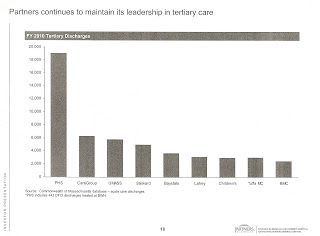
Partners Healthcare System (Massachusetts General Hospital, Brigham and Women's Hospital, Brigham and Women's Faulkner Hospital, Newton Wellesley Hospital, North Shore Medical Center, Martha's Vineyard Hospital, Nantucket Cottage Hospital, and more.)  An expansion is in process with the pending acquisition of South Shore Hospital and Cooley-Dickinson Hospital.  There are numerous clinical affiliations with other hospitals, also.  PHS is doing very well, thanks to above market contracts signed with Blue Cross Blue Shield and other insurers.  Do not ever expect to see above average earning reports, though, as the system is a master at burying its money in new buildings, information systems, and the like. Let there be no doubt that Partners has won the Massachusetts market for years to come.  The rest of this post is about how the others will fight for the remaining scraps.

Steward Health Care System (St. Elizabeth's Medical Center, Carney Hospital, Good Samaritan Medical Center, St. Anne's Hospital, Holy Family Hospital, Merrimack Valley Hospital, Morton Hospital, Nashoba Valley Medical Center, Norwood Hospital, Quincy Medical Center, New England Sinai Hospital.)  This is the big for-profit system, owned by private equity firm Cerberus, which acquired it from the former Caritas Christi system.  Tongues were wagging recently when the Attorney General issued her first report on this system, showing operating losses in its first year of ownership.

For example, a colleague who studies municipal bonds said, "We are sitting here in tax-exempt bond land saying 'What was Cerberus thinking?' and 'How long are they going to stick it out, but on the other hand, what can they do, is somebody else going to buy them out at this point?' All very interesting, especially since the for-profit guys are so confident that they can play the game better. Perhaps not always."

Not so fast.  Don't jump to conclusions.  The report only covered operations for the year ending September 30, 2011. And remember that operating losses on the income statement are not the main concern for a private equity firm.  Cash flow is what matters, earnings before depreciation and taxes.  Depreciation is a non-cash expense.  Taxes are subject to all kinds of IRS rules and loopholes.

Nonetheless, there are some things to watch.  Recall that Steward has promised to be the low-cost alternative in the communities it serves.  The AG found:

While 2011 prices were not available for this Report, 2009 and 2010 data shows that prices for the Caritas hospitals vary insurer by insurer, and by inpatient versus outpatient services, with the result that some Caritas hospitals are on par with competitors, others are less expensive, and others are more expensive. Given this variation in price by local market and service category, whether Steward’s activities will raise or lower costs in its markets ultimately depends on a variety of factors, from “endogenous” factors like the services Steward chooses to develop and the prices it seeks for those services, to factors “exogenous” to Steward, such as market activity by its competitors and changes in the regulatory landscape.

Steward has also been in the forefront of signing risk contracts with Blue Cross Blue Shield.  Those contracts were front-end loaded to be made more attractive the health systems.  Over time, their provisions will bind and can affect earnings.  Even those provider groups with the most experience with risk contracts are now finding how difficult it is to generate surpluses.  Does Steward have the care management system in place to be successful under this payment scheme?  How does it control the costs of tertiary referrals now that St. Elizabeth's really isn't a high-end hospital and when its main clinical partner for those referrals is MGH?

Personnel changes in recent months might be indicative of cultural problems or concerns about specific hospital business plans.  Highly regarded Bill Walczak, the former head of the Codman Square Health Center, was hired to be CEO of Carney Hospital but then was quickly fired.  More recently, well respected John Polanowicz left the helm of St. Elizabeth's to join the state government less than two years after signing on.    There are rumors, too, that the system's consolidated hospital billing system has had start-up problems.  Effective operational management is necessary even for a system that plans to do a flip in a few years.

Beth Israel Deaconess Medical Center (BIDMC, BID Hospital~Needham, Milton Hospital.)  After the recent merger with Milton Hospital, an expansion continues with the acquisition of Jordan Hospital.  It maintains clinical affiliations with several other hospitals, including the two other Caregroup hospitals, Mt. Auburn Hospital and New England Baptist Hospital.  BIDMC is apparently engaged in a strategy of acquisitions to provide a tighter network in the world of Accountable Care Organizations.  Are others in the offing?  While this strategy is understandable, the challenge will be how to integrate the governance and operations of a system of hospitals, as contrasted with what has essentially been a lone academic medical center with one small community hospital outpost.  The governance and operation of a health system require a different set of skills and approaches.  (Of course, I am loyally rooting for success!)

Tufts Medical Center.  I'm sorry to report that I haven't heard anything about the smallest of the academic medical centers, except the loss of Jordan Hospital as a referral source.  The hospital has had and continues to have thoughtful and excellent leadership, but it is not clear where their strategic path is to a happy future.  I'm hoping I just don't have the wisdom to see the path, as this is a treasured Boston institution, going back to 1796: "A group of public-spirited Bostonians founded the Boston Dispensary, funding tickets that enabled the city's poor to receive treatment. One of the original tickets was signed by subscriber Paul Revere." Hmm, maybe there is a deal to be done with BIDMC?

Switzerland.  Places that have some geographic advantage like Southcoast Health System (owner St. Luke's Hospital in New Bedford, Tobey Hospital in Wareham, and Charlton Hospital in Fall River) seek to maintain independence and offer affiliations with all the others.  As noted by the Boston Business Journal:  "Southcoast Health System is strengthening its clinical offerings and financial position as it strives to endure as an independent community health care system, with no ties to a Boston academic medical center or an out-of-state company."