Tuesday, February 05, 2013

The bus crash: Charges? Against whom?

One more comment with regard to the bus crash.  The Boston Globe reports today:

No charges had been filed or citations issued Monday against the driver of the bus, Samuel J. Jackson, as State Police continued their investigation. They are scrutinizing witness statements and physical evidence, examining the bus driver’s route just before the crash as well as posted road signs along the route and preliminary results of a collision reconstruction. Final results could take two to six weeks.

If charges are filed, I'd sure like to be Mr. Jackson's lawyer.  First, bring in Bill Geary as a witness and have him explain what he did to make the roads safer in the late 1980s:

“What just occurred this weekend was something I lived in fear of for six-plus years,” said Bill Geary, who from 1983 to 1989 served as commissioner of the former Metropolitan District Commission, the agency that used to be responsible for maintaining Soldiers Field Road. The approach “was kind of primitive, but it worked. It reduced these episodes dramatically.”

Then bring in state officials and have them admit in court to a recent up-tick in crashes along these roadways--and how an "awareness campaign" was planned for later this year.  Then, have them prepare work orders showing how often DCR people have been asked to survey the condition of the road signs.  "Over the years, some signs faded, got lost, or became tangled on the stanchions that support them."  Have DCR produce invoices as to how it often it purchased replacement rubber signs indicating the oncoming height of the underpasses.

Whatever you might think of Mr. Jackson's fault with regard to this accident, a judge or jury reviewing the full record is likely to find that fault equally shared by the agency that is the custodian of these roadways.  I'm sure poor Mr. Jackson feels terrible about being involved in hurting those children, and there is no purpose served in punishing him further.  If I were the State Police, I'd let him go home and live with his own terrible memories of the event. 

Monday, February 04, 2013

How not to deal with an up-tick in crashes

The story of the Boston bus crash this past weekend takes on a new dimension with the revelation by a spokesperson for the state agency that it had "seen an uptick" recently in the number of vehicles that had been hitting overpasses, "mostly by box trucks, vehicles that you can rent," by people who are not used to driving them.  Listen to this interview on Radio Boston.

The inaction by DCR in response to this trend is all the more striking when one considers that the solution to the problem was put in place 30 years ago.  It was low-cost, low-tech, and effective: Hang rubber signs saying "cars only" at every entrance to the river roads, at a height equivalent to the coming underpasses.  Much has been made of the cowbells that were attached to the signs, but the significant innovation were the signs themselves.

The "up-tick", I 'd like to suggest, is the result of the deterioration of the system Bill Geary put in place in the 1980s.  Because of my personal interest in this bit of urban infrastructure, over the last year or two, I have noticed a growing number of instances where the signs have been missing.  Often, all that was left were the chains that used to hold the signs.  Indeed, sometimes the only things left hanging on the chains were the cowbells!

Based on this interview, it appears that DCR thinks that an awareness campaign is the way to go.  Do you really think that an "awareness campaign" will reach those students with U-Hauls every September and June (or the tour bus operators who pass through Boston once or twice in their lives)?  Please don't reinvent the wheel.  Just restore what worked so well for so many years.

Why the bus crashed

Over two dozen people were injured in a bus crash on Boston's Soldiers Field Road this past Saturday evening when a too-tall bus tried to go under the Western Avenue underpass.  WCVB-TV tweeted:  "Three passengers are in critical condition at BMC [Boston Medical Center] and Brigham & Women's; 29 others suffered non-life-threatening injuries"  Above is a picture from the Boston Fire Department.

The BFD tweeted that 60 firefighters and "many, many" EMS folks came to the rescue: "Professionalism at its highest level at this incident by all first responders."

Universal Hub reported:

The bus had just left Harvard on its way to Pennsylvania with 42 people on board, from a non-profit group's day trip to Harvard and Harvard Square. Federal records show Calvary Coach is a small charter company based in Philadelphia - with just two buses. He was taking some Pennsylvania students from a tourist visit to Harvard Square and had chosen to head downtown on Soldiers Field Road.   


UHub said:

WPVI in Philadelphia talked to the owner of the bus that crashed into the Western Avenue overpass last night:

"He said he looked at the GPS, looked down to make the turn and when he looked back up, the bridge was a low bridge, he hit the low bridge," said Talmedge. 

Massachusetts State Police, however, say the driver should never have been there in the first place and that the entrances to Soldiers Field Road all have warning signs.

Within moments, judgements were coming in on the Internet:  "Buses are not allowed on that road. There are signs everywhere. Hang the bus driver."

Some were sympathetic, though: "I don't think native Bostonians understand how bizarre the low bridges on Storrow/Soldiers Field are to non-natives."

Let's do the root cause analysis:

Here's the view of the entrance to Soldier's Field Road that you would have seen if you were the driver:

 In contrast, here's what you would see if you enter Storrow Drive just a mile or two down the road:


I told this story in my book Goal Play!  Here's an abridged version:

When Bill Geary took over as Commissioner of the Metro­politan District Commission (the regional parks and roadway agency for the Boston area) in 1983, he noticed an odd traffic phenomenon. About once a week, a truck that was too tall would enter one of the two main roads along the Charles River and attempt to go through the underpasses below the main bridge crossing at Massachusetts Avenue. Those underpasses had only ten feet of headroom. The truck would hit the bottom of the bridge assembly, its roof would roll up like the top of a sardine can, and it would get stuck, blocking one or both of the two lanes of traffic. Traffic would back up two miles or more. The MDC police and road crews would go to work, rescue the truck driver, deflate the tires, and tow the truck away. Meanwhile, thousands of drivers would be delayed. 

He said to his staff: “What if,” he said, “we put signs up at every entrance to the river roads, at the height of the underpasses, with a pictogram warning taller trucks to stay out?”

“Commissioner,” someone replied, “Can you imagine the liability if our sign breaks a windshield and sends glass flying into the face of a truck driver?”

“Well, what if we make the signs out of rubber so they don’t break the windows?”

“But Commissioner,” someone said, “What good is a rubber sign? Truck cabs are noisy places. A trucker will just hit the sign and drive right through without even hearing that he has hit it." 

“Well, then, let’s hang cow bells on each sign, so drivers will hear a noise as they approach our roadway if their vehicle is too high to go through the underpass.” 

“Where will we get cow bells?” he was asked.

“I don’t know. Call a dairy farmer and ask where they get their cowbells.” 

The signs were installed, cow bells and all. The frequency of crashes in the underpasses went from one per week to less than one per year. Absent Bill’s persistence and personal involvement, we would still be cleaning up those weekly truck crashes three decades later.

Now, look at the two pictures again. Do you see those lonely chains hanging down from the Soldiers Field Road entrance sign?  There used to be a rubber sign (and cowbells!) there--placed carefully at the height of the Western Avenue underpass.

In contrast, now, all you have is a sign--way up high--indicating that there is a low bridge ahead.  It does not tell you the height of the underpass, and by the placement of the sign, most people would assume that it is pretty high up.

Now, imagine you are an out-of-town bus driver, with a busload of noisy kids, driving at night, using your GPS to find your way to the Massachusetts Turnpike.  While we can find fault with the driver if we want, I think we have to acknowledge that what happened to him could happen to anybody.

Here, as in the hospital world, the phrase, "what happened to him could happen to anybody," is usually evidence of a systemic problem, not a personal problem.  The Commonwealth of Massachusetts solved the problem of bus crashes on this road 30 years ago.  A lack of maintenance or will or understanding on the part of the state administration caused this problem to recur this past weekend.  It was, in a sense, inevitable.

And it will happen again and again unless the state agency gets it act together.

Sunday, February 03, 2013

Update on the Boston scene

It's been a while since I prepared a summary of the hospital industry in the Boston area.  Some things have changed.  Some remain the same.

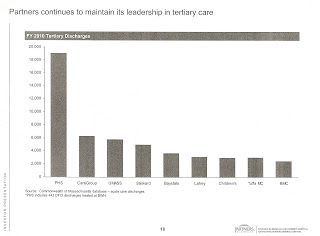
Partners Healthcare System (Massachusetts General Hospital, Brigham and Women's Hospital, Brigham and Women's Faulkner Hospital, Newton Wellesley Hospital, North Shore Medical Center, Martha's Vineyard Hospital, Nantucket Cottage Hospital, and more.)  An expansion is in process with the pending acquisition of South Shore Hospital and Cooley-Dickinson Hospital.  There are numerous clinical affiliations with other hospitals, also.  PHS is doing very well, thanks to above market contracts signed with Blue Cross Blue Shield and other insurers.  Do not ever expect to see above average earning reports, though, as the system is a master at burying its money in new buildings, information systems, and the like. Let there be no doubt that Partners has won the Massachusetts market for years to come.  The rest of this post is about how the others will fight for the remaining scraps.

Steward Health Care System (St. Elizabeth's Medical Center, Carney Hospital, Good Samaritan Medical Center, St. Anne's Hospital, Holy Family Hospital, Merrimack Valley Hospital, Morton Hospital, Nashoba Valley Medical Center, Norwood Hospital, Quincy Medical Center, New England Sinai Hospital.)  This is the big for-profit system, owned by private equity firm Cerberus, which acquired it from the former Caritas Christi system.  Tongues were wagging recently when the Attorney General issued her first report on this system, showing operating losses in its first year of ownership.

For example, a colleague who studies municipal bonds said, "We are sitting here in tax-exempt bond land saying 'What was Cerberus thinking?' and 'How long are they going to stick it out, but on the other hand, what can they do, is somebody else going to buy them out at this point?' All very interesting, especially since the for-profit guys are so confident that they can play the game better. Perhaps not always."

Not so fast.  Don't jump to conclusions.  The report only covered operations for the year ending September 30, 2011. And remember that operating losses on the income statement are not the main concern for a private equity firm.  Cash flow is what matters, earnings before depreciation and taxes.  Depreciation is a non-cash expense.  Taxes are subject to all kinds of IRS rules and loopholes.

Nonetheless, there are some things to watch.  Recall that Steward has promised to be the low-cost alternative in the communities it serves.  The AG found:

While 2011 prices were not available for this Report, 2009 and 2010 data shows that prices for the Caritas hospitals vary insurer by insurer, and by inpatient versus outpatient services, with the result that some Caritas hospitals are on par with competitors, others are less expensive, and others are more expensive. Given this variation in price by local market and service category, whether Steward’s activities will raise or lower costs in its markets ultimately depends on a variety of factors, from “endogenous” factors like the services Steward chooses to develop and the prices it seeks for those services, to factors “exogenous” to Steward, such as market activity by its competitors and changes in the regulatory landscape.

Steward has also been in the forefront of signing risk contracts with Blue Cross Blue Shield.  Those contracts were front-end loaded to be made more attractive the health systems.  Over time, their provisions will bind and can affect earnings.  Even those provider groups with the most experience with risk contracts are now finding how difficult it is to generate surpluses.  Does Steward have the care management system in place to be successful under this payment scheme?  How does it control the costs of tertiary referrals now that St. Elizabeth's really isn't a high-end hospital and when its main clinical partner for those referrals is MGH?

Personnel changes in recent months might be indicative of cultural problems or concerns about specific hospital business plans.  Highly regarded Bill Walczak, the former head of the Codman Square Health Center, was hired to be CEO of Carney Hospital but then was quickly fired.  More recently, well respected John Polanowicz left the helm of St. Elizabeth's to join the state government less than two years after signing on.    There are rumors, too, that the system's consolidated hospital billing system has had start-up problems.  Effective operational management is necessary even for a system that plans to do a flip in a few years.

Beth Israel Deaconess Medical Center (BIDMC, BID Hospital~Needham, Milton Hospital.)  After the recent merger with Milton Hospital, an expansion continues with the acquisition of Jordan Hospital.  It maintains clinical affiliations with several other hospitals, including the two other Caregroup hospitals, Mt. Auburn Hospital and New England Baptist Hospital.  BIDMC is apparently engaged in a strategy of acquisitions to provide a tighter network in the world of Accountable Care Organizations.  Are others in the offing?  While this strategy is understandable, the challenge will be how to integrate the governance and operations of a system of hospitals, as contrasted with what has essentially been a lone academic medical center with one small community hospital outpost.  The governance and operation of a health system require a different set of skills and approaches.  (Of course, I am loyally rooting for success!)

Tufts Medical Center.  I'm sorry to report that I haven't heard anything about the smallest of the academic medical centers, except the loss of Jordan Hospital as a referral source.  The hospital has had and continues to have thoughtful and excellent leadership, but it is not clear where their strategic path is to a happy future.  I'm hoping I just don't have the wisdom to see the path, as this is a treasured Boston institution, going back to 1796: "A group of public-spirited Bostonians founded the Boston Dispensary, funding tickets that enabled the city's poor to receive treatment. One of the original tickets was signed by subscriber Paul Revere." Hmm, maybe there is a deal to be done with BIDMC?

Switzerland.  Places that have some geographic advantage like Southcoast Health System (owner St. Luke's Hospital in New Bedford, Tobey Hospital in Wareham, and Charlton Hospital in Fall River) seek to maintain independence and offer affiliations with all the others.  As noted by the Boston Business Journal"Southcoast Health System is strengthening its clinical offerings and financial position as it strives to endure as an independent community health care system, with no ties to a Boston academic medical center or an out-of-state company."

Thursday, January 31, 2013

Insurance migration and counter-migration

I bet that if you were to look at the trends in medical insurance premium growth for companies in the US, you would find a bimodal distribution.  Some will have experienced a rate of premium growth lower than the average, and others will have experienced a rate above the average.  What might account for this?

It certainly is not the presence of wellness programs, sponsored by some companies but not by others. As Al Lewis and Vik Khanna documented in a recent Health Affairs Blog article, "the industry consistently mis-measures and overstates the direct healthcare cost savings" of wellness programs.  They continue, "The current wave of wellness programs are taking us wildly off course by promising substantial short-term reductions in health spending. This is clear whether one looks at the peer-reviewed literature, outcomes measurement generally, marketing claims, or the 'face validity' of the broader impact of wellness on population health status."

I'd like to suggest that a factor in the differential premium growth rates relates to whether companies have affirmatively counteracted the strategic plans of health insurers to migrate employees to plans that correspond to greater use of health care services.  Yes, you heard me.  Notwithstanding public pronouncements to the contrary, it is evident that insurers have persuaded plan fiduciaries (i.e, companies who offer health insurance to their employees) to adopt plan designs that are priced to diverge from the rates that would be based on actuarial calculations.  Plan designs for high-cost subscribers are subsidized by plan designs for low-cost subscribers.  I believe the insurers do this for strategic reasons, to migrate customers to those plans that create the most income for the insurers.  The plans that create the most income for insurers are the ones that generate growth in claims:  Insurers want larger groups to insure and they want to insure unhealthy populations.  After all, claim adjudication is the major source of income for the insurance companies.

Firms that are alert to this phenomenon are able to counteract it by modifying the relative contributions required by employees for the different plans offered.  A small amount of "counter-migration," especially among the high risk, high cost subscribers, goes a long way to mitigating the damage than can occur from pricing that is not reflective of actuarial risk.  Let me dive in further.

Let's start with the simple premise that health costs are overwhelmingly dominated by the average age of a risk pool.  Sure, there are other factors, but age trumps them all.  If we look at the various tiers of plans offered to employees, the average age of single people is roughly from 27 to 35, and their cost of health care is very low.  Moving to families, the average age of people rises to the mid-40s, and they are roughly 40% more expensive to take care of than single people.  For a family with two children, the rate should be roughly 3.8 times that of a single person.
 
But the underwriting benchmark prevalent around the country for the family plans is well below what would correspond to the actuarial predictions.  To make up the required amount of dollars, the premiums for singles are overpriced relative to their actuarial basis.  The rate for a single-plus-one policy, for example, should be about 2 times that of a single person's, but the industry benchmark is 2.5 or 3 times the single rate.    Strategically, the insurers want to shift business towards their preferred segments by subsidizing those segments and overpricing the other segments.

Firms often aggravate the problem by offering premium reductions for a deductible laden plan.  They hope by doing this to reduce their overall premium burden over time.  The problem with this is that consumers know what kind of claimant they are likely to be.  While consumers cannot predict accidents or the onset of an acute disease, they know if they have a chronic disease or cancer or some long-lasting malady.  Accordingly, those high claimant employees will never pick the high deductible plan, and so there are no savings to the employer.  (Why, then, are they offered?  Mainly, I'd suggest, so that the insurance company can then offer health savings accounts to the healthier families.  Administering those HSA's is remarkably profitable.)

In summary, risk is not a function of plan design.  Risk is a function of who is in the plan.  When plans are mispriced relative to actuarial risk, a less healthy population migrates into the pool, and that population is chronically underfunded.  This phenomenon is compounded when the low risk subscribers are encouraged by overpricing to move out of the risk pool, for it raises the cost of the residual population.  The insurer comes back at renewal time and says, "We're sorry, but your utilization has grown, and so we need to increase premiums by x percent," where x is dramatically above the average trend of health care costs in the region.

The way to fix this is to reverse the subsidization so that the effective pricing to consumers more closely reflects actuarial risks.  This can be done by adjusting the employees' contribution to the overall premium.  You don't have to do this by much to cause some counter-migration among the highest cost subscribers, and you don't need a lot of counter-migration to have a large dollar impact on the company's overall costs.  After all, the customers involved are the highest cost, so a movement of relatively few can make a big difference.

You may ask, where will they go? Well, here is an unpleasant aspect, but one that is inherent in the employer-based insurance system we have in the US.  As a colleague has said to me, "If I invite bad risk, it comes from somewhere.  If I encourage it to leave, it goes somewhere.  This is a zero sum game."  Specifically, a working couple will sit around the kitchen table comparing the health plans offered by their respective two employers.  They will transfer coverage to whichever spouse's firm offers the larger subsidy for their high-risk plan. That company will find itself shifted to a higher cost curve and will find itself moving up that cost curve at a rate greater than the average trend.  The company that has systematically acted to reduce untoward subsidies will find itself shifted to a lower cost curve and will find itself moving more gradually up that cost curve.  Simple mathematics drives this result. Firms have to understand that their strategic interest is at variance with that of the insurance companies.

14 minutes from Edgar Schein will help you

Charles van der Haegen, who works at the ZERI Foundation in Belgium, posted the following note on Google+:

I had an annoying experience today, got trapped again in trying to help someone avoid a mistake. You should never help someone if he doesn't indicate a willingness and ability to accept help, says Edgar Schein. What to do when you see a person you respect , or love, about to make a big mistake that can hurt them, and society?

To find answers to this apparently simple question I will need to read again this thoughtful book:
Helping: How to Offer, Give and Receive Help.

Right! Watch this video, in which Ed sets forth his thoughts.  Simple, but not easy!  I am so honored that he offered to write the foreword to my book, Goal Play!

(If you can't see the video, click here.)

Wednesday, January 30, 2013

KevinMD offers a prescription

The most prodigious health care blogger in the world, Kevin Pho, has published a book that will be of great interest to physicians and medical groups over the coming years.  In the whirlwind of rankings and other stories, how do you respond to online ratings and work with all of the major physician review sites?  As consumers get more and more information about doctors from the Internet, there is always the danger of untoward publicity about a doctor or group of doctors.  How can you protect yourself from inaccurate stories that can affect your patients' trust in you and, indeed, your livelihood?  How can you manage your on-line reputation to present an accurate reflection of your skills and abilities?

Kevin, co-writing with Susan Gay, has set forth a plan and useful thoughts in Establishing, Managing and Protecting Your Online Reputation: A Social Media Guide for Physicians and Medical Practices.

The Foreword is written by Robert Wachter, MD, and the book has many endorsements, including from  from Eric Topol, MD, Abraham Verghese, MD, Jerome Groopman, MD, Pamela Hartzband, MD and me.  Here's what I said:

"As one of the most prolific practitioners in the world of social media, Kevin Pho's insights for doctors and other health professionals are soundly based on experience. His ability to demystify this arena for others comes from a clear and concise exposition of what is fact and what is fear. His book is an important contribution to creating a more patient-centric healthcare system that is also highly respectful of the knowledge and good intentions of physicians and other clinicians."

It is now available for a limited time pre-order price, here.

Tuesday, January 29, 2013

Changing the alarm paradigm at EarlySense

Many hospitals employ telemetry systems to monitor at-risk patients.  These devices use electronic leads that are attached to the patient and send continuous signals of important bodily functions.  Results are presented on dedicated video monitors near the nursing station, and alarms sound if designated parameters are detected.  However, an undesirable aspect of these systems shows up as "alarm fatigue," a phenomenon described in this article in Patient Safety and Quality Healthcare.  An excerpt:

Alarm fatigue happens when too many alarms occur in a clinical environment, causing clinicians to miss true clinically significant alarms. Users report that more than 350 alarms per patient per day result from monitoring systems alone in some acute care environments, but less than 5% of these alarms require clinical intervention to avoid patient harm (AAMI, 2011). Nuisance alarms represent the 95% of alarms that do not require a clinical intervention. Reducing the overall occurrence of nuisance alarms is essential in creating and maintaining a safe clinical environment. Furthermore, solving this vexing problem is essential to improve patient safety systems. Experts in rapid response agree that improving the early detection of deteriorating patients is required to make rapid response systems an effective tool. A recent consensus article recommends continuous vital signs monitoring as a mechanism for strengthening rapid response systems, but only if nuisance alarms are addressed (DeVita et al., 2010).

During my recent trip to Israel, I learned of a new company, EarlySense, that has been established to provide an innovative approach to continuous monitoring.  There are several compelling aspects of the company's product and reporting system.

First, it is contact free, with no leads or cuffs. A flat sensing plate is placed under the patient's mattress and uses advanced signal processing techniques that detect not only heart rate and respiration, but also patient movement.  Second, the results for all of the monitored patients are presented in a simple graphical display.  (Oximetry results are also integrated in.)  When a parameter is out of range, a visual alarm is posted on screens at the bedside, the nursing station, other central locations, and also to the nurse's handheld device.  Distracting noises are avoided.

It seems to me that this is a good approach and potentially a big deal.  I like several features.  The lack of electronic connectors means that the perennial problem of detached leads--setting off alarms--is avoided.  The ease of patient monitoring and the relatively low cost means that all patients can be monitored, not just those usually categorized as high-risk.  Doing so can avoid quality and safety problems.  For example, the movement of an otherwise stable patient who might be subject to bed sores can be monitored on a regular basis to help avoid those decubitus ulcers.  Likewise a patient who is a fall risk can be seen to be engaged in inappropriate movement well in advance of the notice that would occur with the traditional bed alarm, one that goes off only when s/he gets out of bed.*  Or, a "regular" patient who might suffer some unexpected distress, say choking, will be noticed under this system.

We are all excited and interested in new technologies that can improve quality, safety, and results in health care.  What is unusual are new approaches that are reasonably priced, that have the potential to cover their own costs (or more), and that can easily be integrated in to the fabric of life on a hospital floor or unit.  I am encouraged, too, by the type of people who have joined the company's medical advisory board, including patient quality and safety experts Robert Wachter and David BatesOn all these fronts, it looks like the folks at EarlySense are headed in the right direction.
---
* One of my biggest safety worries--for the staff--has been watching nurses run down the corridor to "catch" a patient after s/he has left the bed!  
---
"Addendum dated February 26, 2013.  Disclosure:  Following publication of this article I was invited to, and was pleased to accept, membership on the EarlySense Advisory Board."

Monday, January 28, 2013

Organizations That Can’t Fall . . . Die on Their Feet

A not entirely unintended consequence of the various aspects of health care reform in the United States is the growing concentration of ownership of hospitals and physician organizations.  This is occurring because hospitals and doctors are predicting that they will be forced to take on a greater portion of the financial risk of patient care.  Creating larger networks is one strategy for dealing with this.  Larger networks provide more actuarial support, in terms of a diverse risk pool.  Also, by incorporating primary, secondary, and tertiary care into a network, the potential exists for more effective case management.  Finally, a larger market share is viewed as helpful in asserting leverage over the insurance companies.

I seek not to discuss in this post whether today's management cadre is capable of executing the business strategy of a system, as compared to a single hospital or physician group. While that is a topic worthy of discussion, my purpose today is to focus on broader issues.  In particular, let's explore the possibility that the growth of hospital networks can lead to such a reduction in competition that the result is one or more systems that are "too big to fail" in a given geographic area.  When firms reach this status in society, there can be dangerous ramifications.

My Israeli colleague Boaz Tamir (Israel Lean Enterprise) recently wrote about these dangers in a paper originally published in Hebrew.  I offer excerpts from an English translation here.  The discussion covers several types of industries, but there is a clear connection to the health care world that is evolving in the US. The title:

Organizations That Can’t Fall . . . Die on Their Feet

Here in the empty land, in the ebbing time
      We live and do not live, die and do not die.*

Does the fact that an organization’s fall is likely to shake the foundations of the economy and the society in which it operates justify preserving it at any price? When the central-bank commissioner prevents the bank’s collapse in the name of “banking stability,” does he take into account the damage this entails for how the bank is managed, for the market and the customers? Does the insurance supervisor who prevents the collapse of an insurance company really help the public of insured persons?

Is it not clear that no government would dare close a hospital even it slid into bankruptcy because of failures of corporate governance and administrative atrophy? But does anyone take into account the destructive effects of this premise on the possibility of correcting the defects of management and service, or on the number of patients who will die as a result of them?

The dream of managers, workers, suppliers, and financiers is to belong to an organization that cannot fall. Once they are part of such an organization their niche is guaranteed, along with the future of their families and associates. But what about the future of the customers who were forgotten—the insured, the patients, or the small households?

An organization that cannot fall lives inside a bubble. The price of its services is determined according to its operating costs, padded by its cost-plus. Such an organization, if it lacks a leader capable of working against the “force of gravity,” will naturally oppose any change, show no interest in developments in its environment, and fail to repair administrative failures or systems that have atrophied within it. When there are no mechanisms for seriously assessing its efficiency, nothing will lead management to insist on operational excellence, attract professionals and excellent workers, prevent waste, reduce hidden unemployment, and focus on creating value for the customers—the declared goal of an organization that operates in a competitive environment and is not immune to a fall. 

Any organization, from the moment its existence is not dependent on its customers, is like a body whose nervous system is impaired and has lost the sense of pain that was intended to protect it. It has no real impulse to streamline, upgrade its capacity, or create value for customers, who are seen as a nuisance instead of the source of its life. Therefore, the default option of such an organization is to atrophy from within. The mission, the goal, and the vision that led to its establishment are already faded memories that hang on the walls of the building’s entrance beside pictures of CEOs. 

The raison d’tre of an organization that cannot fall, that is maintained at any price even when it has gone hollow, is preservation of a body that lacks any vital sign of value for the customer, or in other words, preservation of the interests of the managers, the workers, the local authority, the ruling party, or the shareholders—everyone except its real customers, whose benefit was the original justification for its existence. Sadly, experience teaches that from the moment an organization is “sanctified” as an institution and cannot fall, the process of systemic atrophy cannot be reversed. Nor can the inflated results, unwieldiness, inflexibility, and damaged functioning.  

It is, though, an illusion to think that an organization that cannot fall has not died. Arriving at atrophy and systemic collapse, its end is to die on its feet. No one dares uproot this tree even when its fruits have long expired and its higher managerial levels have dried out. No one will dare proclaim the end of an organization that cannot fall even if it stands only as a silent monument—not even to make way for the growth of a young, naïve organization that seeks to justify its existence by achieving its goal: providing service to its customers.
---
*"Here in the Land," from the book by Amir Or, Masah Meshugah, Keshev l’Shira, 2012 (in Hebrew).

Pioneer Institute wonders who controls health care costs

This looks like a good session offered by the Pioneer Institute in Boston on March 6. You can register here.

The two speakers are:

David Cutler, Otto Eckstein Professor of Applied Economics in the Department of Economics at Harvard, with secondary appointments at the Kennedy School of Government and the School of Public Health. Cutler served on the Council of Economic Advisers and the National Economic Council during the Clinton Administration, as well as being Senior Health Care Advisor for the Obama Presidential Campaign. He is a Senior Fellow for the Center for American Progress in Washington, D.C. Among other affiliations, Professor Cutler has held positions with the National Institutes of Health and the National Academy of Sciences. Currently, Professor Cutler is a Research Associate at the National Bureau of Economic Research, and a member of the Institute of Medicine. Professor Cutler has held positions with the National Institutes of Health and the National Academy of Sciences. Currently, Professor Cutler is a Research Associate at the National Bureau of Economic Research, and a member of the Institute of Medicine.

Avik Roy, a senior fellow at the Manhattan Institute. His research interests include Medicare, Medicaid, the Affordable Care Act, and consumer-driven health care. Roy served as an outside adviser to the Romney Presidential Campaign on health care issues. He is author of The Apothecary, the influential Forbes blog on health care policy and entitlement reform. He writes regularly for Forbes and National Review, and his work has also appeared in National Affairs, USA Today, The Atlantic, The American Spectator, and other publications. Roy is also the founder of Roy Healthcare Research, an investment research firm in New York.

Sunday, January 27, 2013

Have things changed? Would you force them to?

I want to provide a description of a hospital and ask you whether it might apply to a place in which you work.  Later, I'll tell you the source, and I will also present some questions to you.  I hope you will submit your answers as comments.

A clinician-management divide; an excessively devolved system of management; an oral culture; a commitment to turning questions back on the questioner. A concentration of power combined with a fragmentation of responsibility. This militated against the provision of an adequate standard of care. Early warning signals of problems were less likely to be picked up if the care provided by some unit of the organisation were to become less than adequate.

The clinical directorates became isolated from each other. The development of `silos', channelling activities into separate and distinct compartments which did not effectively communicate with each other.

Clinicians taking up managerial duties lacked the training, experience and time to recognise and respond to problems which might exist in their area of responsibility. They were not equipped to identify the need to develop lines of communication nor how to introduce good managerial practices. It was not recognised by senior management that they should be given the opportunity to acquire the necessary managerial skills.

The lack of managerial expertise at the level of clinical director and, as important, the lack of training to acquire expertise, led to a further problem: the failure to develop effective teamwork within directorates.

The consultants, particularly the surgeons, saw themselves as having very effective teams. But they saw these as their teams, which they led. They were not part of the team, other than as leaders. Also, the teams were teams of `like professionals': consultant surgeon leading surgeons, consultant anaesthetist leading anaesthetists. The teams were not organised primarily around the care of the patient, they were not cross-specialty nor multidisciplinary, and they were profoundly hierarchical.

The source of this description was the Kennedy Report, investigating the death of several pediatric cardiac surgery patients at Bristol Royal Infirmary in the 1990s.  The report prompted an examination by the NHS of many aspects of its procedures.  The Guardian reported at the time:

A radical blueprint for a patient-driven health service independent in crucial respects from the government of the day was delivered yesterday by the Kennedy inquiry into the deaths of babies undergoing heart surgery at the Bristol Royal Infirmary. 

The vast and long-awaited report lifts the lid on the arrogance, ambition and "muddling through" at the hospital in the early 1990s where "too much power was in too few hands" and a "club culture" existed which shut out young doctors like the anaesthetist Stephen Bolsin, who tried to raise concerns about the death rates. 

Here are my questions for you.  As you work in your hospital, do you see any of the symptoms that were evident at BRI?  Do you feel comfortable calling out those problems?  What happens when you do?

As noted, the hero of this story was Stephen Bolsin, but he felt compelled to leave the UK and practice in Australia by the time it was all over.  He tells his side here.  Excerpts:

The contrast in attitudes to whistleblowing between the BRI and the Geelong hospital could not have been greater. I decided to inform the interview panel in Geelong of my reasons for leaving a UK teaching hospital for a regional hospital in Victoria. I briefly explained everything, including the difficulties I had encountered, before any questions had been asked. The response of Patricia Heath, the Chair of the Hospital Board almost reduced me to tears. “What you have told us sound like excellent qualifications for the position we have advertised Dr Bolsin.” This response in 1995 amazed me and was the first positive affirmation of my actions from a senior healthcare manager.

Leaving the UK with my wife and family was an incredibly sad and disappointing time but I am sure now that there could never have been ‘Clinical Governance’ or a change in medical attitudes while I remained in the UK. Only when I had a contract in a new hospital, in a new country did I feel secure enough to report the mortality rate in the Bristol paediatric cardiac surgery unit to the GMC.

Another question for you: Would you leave your job if you felt that the attitude of the clinical and administrative leadership was jeopardizing the care of patients?

Luckily, it eventually worked out well enough for Bolsin:

I have developed my career in Anaesthesia, Patient Safety and Medical Ethics with numerous publications and chapters in textbooks. In Geelong I led a team that successfully allowed junior doctors to measure their competence in medicine as part of an ongoing, lifelong commitment to assessing quality in healthcare. The same group also published the world’s highest incident reporting rate in medicine using the same mobile computers in a supportive environment.

Now, here's how to respond to a comment!

Timothy McSweeney's Internet Tendency presents the story of a recent comment to the New England Journal of Medicine.  Excerpts:


Dear Josh95,


The New England Journal of Medicine would like to thank you for posting a comment on our blog. However, the peer reviewer we assigned to your comment has expressed some concerns. While we cannot accept your post in its current form, we would like to give you the option of re-submitting a revised version.
Sincerely,

The Editors 


Reviewer Suggestions:


Josh95’s main assertion is that the blog entry in question “sucks” because it is “stupid.” However, this claim goes largely unsubstantiated in what seems to be an incredibly problematic addition to the comments section. According to the Flesch-Kincaid Index, the writing in this blog post rates within the highest possible level of complexity, so the evidence available actually points to it being the diametrical opposite of stupid. Unless Josh95 can provide a different and more reliable standard of measurement, his position that the blog post sucks because it is stupid remains untenable.

I should also point out that Josh95’s use of emoticons is, in a word, excessive. Many of them are so overtly angry and sexual that I am afraid they may be upsetting to NEJM’s normal readership.

In paragraph four, he does make an interesting point in which he identifies some key regulators in tumor formation and progression. But after a few sentences it becomes apparent that this paragraph has just been copied and pasted from the blog entry that he is commenting on, the only difference being sporadic instances of the word “fart.”


There is another initially promising passage in which he references an article on oncology that he feels is superior to the one posted by NEJM. Unfortunately, the link he provided actually redirects the reader to a video of two cats having sex with each other. The video in question is over 14 minutes long, and I can say with confidence that none of the footage supports the author’s claim or even seems to pertain to medical oncology.

Ultimately, I cannot recommend this comment for publication in the comments section of the NEJM blog. Josh95 should be encouraged to revise and resubmit, though his willingness to do so is doubtful.

Saturday, January 26, 2013

Help @lucienengelen, quick!

I've been so busy that I've let down my friend Lucien Engelen, but maybe you can help me make amends.  You see, he sent out a message a few days ago asking for an intense 24-hour crowdsourcing of ideas for a presentation he needs to make next week.  He notes:

We at Radboud University Medical Center are in the midst of change while running the quest of how to cope with the big challenges that we are facing in healthcare. Doubling demand, budget cuts shortage of skilled personnel combined with better-informed patients and exponential growing technology are rapidly entering this space.

Paradigm-shifts in which doctors become guides instead of gods, better informed patients that start monitoring themselves, review- and rating sites that enter the healthcare-arena are challenging. On the other hand the ample ambition to deliver more quality in less time for less budget. Are we still delivering healthcare the same way in 2020 or will things change and even disappear?

How do we ‘teach’ our new colleagues to face the challenges between quality of care and the pressure that is being put’ on them and compassion on the ‘other’ end.

To cope with these aspects as an Academic Medical Center we of course want to mould them into our education. Partially we are achieving this through master classes and conferences, but we also want to change the curriculum for our medical students.

Next Thursday we have a big meeting on this matter in which I will present my view on this subject.

Let’s assume we can come up with the same, better, unsighted, unexpected views topics in a little social media experiment; so we need YOU ;-)

By running this on LinkedIn, on Facebook and Twitter for 24 hours I want to show how powerful crowdsourcing this is and how we could use this in healthcare as a whole.

Let’s agree on some points to keep this clear and clean :
  • please share your thoughts below in comments
  • keep it short
  • use topics not sentences
  • share and/or RT this message in your communities
  • especially students-networks are important encourage them to share and reply in one of the networks
We then will make a summary of all the comments that l will present to the meeting, our board and also will publish on slideshare of course.

So the BIG question is :
What do we need to incorporate in a REshaped curriculum for medical students to be sustainable for the upcoming changes in healthcare?

Please add your comments here or on Lucien's post.  I don't think it is too late!

Friday, January 25, 2013

Step aside, Crouse!

Competition has emerged vis-à-vis the rap video produced by Crouse MDs in support of efforts to avoid hospital acquired complications.  Are you ready?  Here's a double header-- "Safety Dance" and "See Something Say Something"--produced by the folks at Children's Mercy Hospitals in Kansas City.  Discretion constrains what I can or should say, but there is an adorable level of goofiness here that helps render these very effective!

Click here if you cannot see the videos.

Thursday, January 24, 2013

Inspired at Children's Mercy Hospitals

I have visited dozens of hospitals over the past two years, spreading the gospel codified in the upper right-hand corner of this blog--patient-driven care, eliminating preventable harm, transparency of clinical outcomes, and front-line driven process improvement.  My audiences are invariably polite and engaged, and I try to leave them with a sense of the possibilities before them.  I know that some are inspired to take action, and some are not.  I sometimes wonder if I make a difference.  Is there a more useful way to spend my time?

And then I visit a place like Children's Mercy Hospital in Kansas City and get a jolt of renewed energy and optimism.  And, lo and behold, they tell me that I help do the same for them.  What karma!

I had a jam-packed day at CMH today.  First, it was multidisciplinary Grand Rounds, with a presentation to several hundred people in the auditorium and outlying facilities.  Here's my host, Executive Vice President Karen Cox.  The theme:  "These Things Happen: How Harm Occurs in Hospitals and What We Can Do About It."

But then I got to see the team in action.  I attended the Daily Safety Update, a short (9:10-9:30am) huddle of people from throughout the hospital reporting on operational matters and other issues that could affect patient safety.  It is chaired by Jason Newland, medical director for safety, and Cheri Hunt, chief nursing officer (seen here).

One of the things that Lean organizations do is to promote and encourage standard work in clinical and operational settings.  But managers have to engage in standard work, too.  You may recall that Virginia Mason's COO, Sarah Patterson, explained this when she discussed important aspects of daily management: 

Elements of daily management = leader standard work + visual controls + daily accountability process + discipline.

Whoa! Leader standard work, too! What a concept. Can't be "too busy" for this!


With leader standard work made visible, staff now know, "Oh that's what leaders do!"


The CMH people have put this into place in a clear and effective way.  All participants in the meeting orally fill in the chart of a daily operational report covering key areas.  The reporting is efficient and direct, with areas of action set forth.  For example, Rachael Dameron (above) presented data on the total number of ventilators in use in the various units of the hospital, staff on site last night and today, and any key events.  Meanwhile Sherry McCool (below) reported on transport:  How many runs in the last 24 hours, how many missed runs, how many delayed runs, and anticipated concerns for the next 24 hours.

The Daily Safety Update has created precursor and following events.  Pre-huddles occur in the departments beforehand, so that the required data and status reports will be accurate.  After the 20 minute meeting, subgroups will often coalesce to follow up on issues raised during the huddle.

CMH is not the only hospital that engages in this kind of huddle, but the process they use is as effective as any I have seen.

The rest of my morning was spent with people who work on programs to increase patient involvement in the hospitals' delivery of care.  CMH has several family advisory boards, volunteers from the community who work with the hospital staff to help deliver more patient-centered care.  Here, for example, you see DeeJo Miller, a family centered care coordinator, with Terrance Gallagher, a patient's father, who volunteers his time on one such FAB.   DeeJo is one of the hospital's "parents on staff," paid people whose job functions include special attention to the needs of patients and families.


Among other things, DeeJo and her colleagues conduct educational programs for residents on the issue of patient- and family-centeredness.  One part of that curriculum is to send residents on in-home visits, to see patients and families in their real life settings.  She presented some verbatim reactions from some of the residents as their eyes were opened to life "out there."  Here's a small sample:

Thoughts or concerns prior to your visit:

Looking forward to seeing a family's house.  Dreading the fact that it was 2 hours.  I didn't really know what I was supposed to do.

Tell us about you in-home visit:

It was more laid back than expected.  the whole family was involved.  Mom stated at the beginning that there is "no wrong way to ask a question."  Helpful to talk to the sibling.

What strengths did you see in the family?

Amazing support among the siblings.  "Supervised independence"--The parents let the daughter manage her diabetes; however, they always check on her and double check what she is doing.  They do it in such a discreet way the daughter may not even realize that they are checking on her.

What surprised you the most?

Daughter was insulted by the doctor's attempt to equate her insulin pump to video game Mario Cart.  She said it was "cheesy."  High functioning children--they were more adult-like than kid-like.  Don't remember what life was like before the diagnosis.  child's openness, how much she knew and verbalized what she didn't want to talk about.  Child's attitude mimicked Mom's attitude.  The normalcy of it all. 

What, if any, is the value of meeting in the home versus meeting somewhere else?

Made me think about the difference between just telling a family what to do and realizing how much work it takes to follow the instructions.  Makes you think more about making sure that the family has what they need for home.

I sat admiringly through all these sessions, which demonstrated a thoughtful execution of the principles I mentioned at the start of this blog post.  But I was even more impressed by the constant, "What do you think of this?"  "Can we do it better?", questioning I received from the staff as the day went along.  This is a group of people who are discontented with the status quo, who are modest about what they know and what they have accomplished, and who insist on getting better.  I was told later than my visit gave them a shot in the arm, a reminder of what is possible, but it was actually they who did that for me.  What a marvelous day with marvelous people!

Wednesday, January 23, 2013

Reduce Deaths from Sepsis on WIHI

January 24, 2013: A Partnership to Reduce Deaths from Sepsis
(2:00 – 3:00 PM Eastern Time)


Featuring:
John D’Angelo, MD, FACEP,
Vice President, Emergency Medicine, North Shore-Long Island Jewish Health System
Martin E. Doerfler, MD,
Vice President, Evidence Based Clinical Practice, North Shore-Long Island Jewish Health System
Darlene Parmentier, RN, MSN, MBA,
Assistant Director of Critial Care and Telemetry, Glen Cove Hospital, North Shore-Long Island Jewish Health System
Andrea Kabcenell, RN, MPH,
Vice President, Institute for Healthcare Improvement
Diane Jacobsen, MPH, CPHQ,
Director, Institute for Healthcare Improvement

Developing an infection can be complicated enough, but when the body's immune system reacts by going into overdrive in the form of sepsis, every second counts. The diagnosis needs to be swift and, if sepsis is confirmed, interventions in the form of fluids and antibiotics must be administered immediately. Because the global death rate from sepsis remains painfully high — tens of millions each year — stepped-up efforts to reduce mortality have been underway on a global scale for at least the past decade.
We’ll devote an hour to this critical issue on the January 24 WIHI, A Partnership to Reduce Deaths from Sepsis.

There is progress to report on multiple continents where many health care organizations have been working hard on sepsis, often as part of international initiatives such as the Surviving Sepsis Campaign and in concert with professional societies such as the Society of Critical Care Medicine. In the US, where 25 percent of the 750,000 people who develop sepsis each year die, North Shore–Long Island Jewish Health System has reduced its sepsis mortality rate significantly. North Shore–LIJ is now in the midst of a strategic partnership with IHI to maintain and further these gains, and key learning has begun to emerge.

We’ll explore the progress on reducing deaths from sepsis on the January 24 WIHI with three clinical leads from North Shore–LIJ and two improvement leaders from IHI. Early detection and intervention are key, but in order to execute best practices reliably, changing the culture and engaging the leadership of the organization have proven essential. At North Shore–LIJ, focusing on the emergency department has also been foundational to testing best practices and spreading them to the rest of the hospital system.

WIHI Host Madge Kaplan invites you to a very important discussion about a critical problem that everyone in acute care needs to be aware of and working on. Patients and families are getting engaged too. Bring your progress and best practices, and get ready to ask lots of questions, on the January 24th WIHI.

Please click here to enroll.

The Courant brings neighborhoods together

Offsetting the concentration of the media world into empires, some small community newspapers persist, delivering interesting information and services to the community left behind by the behemoths.  One such, as I have mentioned, is the 16-year-old Boston Courant, serving several downtown neighborhoods.

An example of the kind of story you might find is one entitled "A Homeless Man's Generosity Helped Park,"  written by Zack Huffman.  It is the story of a vagrant named Eldred "Max" Hiscock, who provided half of the funds raised in the neighborhood to build the park.  Excerpts from the story (sorry, there is no electronic edition):

Josh Young [a banker living in the area] first met Hiscock when his front door was accidentally left open and his two children ran outside.  When Young's wife, Hollis, went to look for them, Hiscock beckoned to her from where he was sitting near the corner of the street.

"He told her he was watching them down in the alley," said Young.  "From then on, Hollis would allow him to sit on the steps of our house."

Young assisted Hisckock, who was 62 at the time, in acquiring his birth certificate from his home state of Maine so that he could apply to receive Social Security benefits. Young also assisted Hiscock in opening an account at State Street bank, where Young worked as a trust officer.

"We had the money in a joint account so that I could put money in and take money out for him.  He used to pick it up from me in small amounts, usually about $10," said young.  "He didn't spend it as fast as it accumulated."

When Hiscock passed away in 1970 . . . in part because of excessive drinking, the remaining funds went to the new park . . . as per Hiscock's wishes that his money go towards something that would benefit the neighborhood children.  Said Young, "I just thought that it would be both nice and ironic to have his contribution be the naming contribution for the park."

The park is a gem.  The Phoenix says "Nestled deep in Boston’s South End, Hiscock may be tiny, but it’s one of the neighborhood’s crown jewels. An oasis of stately seclusion, Hiscock sees little action. It’s hardly neglected, though, thanks to a devoted group of groundskeepers — the Friends of Hiscock — who make sure it’s impeccably manicured. So bring a lunch. And a pet. According to its signage, Hiscock “welcomes all neighbors and four-footed friends.”  The Trust for Architectural Easements notes:  "The park works to preserve the overall architectural integrity of the neighborhood, which is the largest collection of Victorian row houses in the country."

Good for the Courant in reminding the neighbors about the generous instincts of one of their own.

Tuesday, January 22, 2013

Artless rather than artful variability

There is a prevailing view among skeptical observers of patient safety reporting that doctors and nurses will intentionally skew results about things like central venous catheter bloodstream infections ("CVC-BSIs") to portray improvement in their hospital's performance.  A recent paper by Mary Dixon-Woods and others in the Millbank Quarterly puts the lie to that assertion.*  The authors conducted an ethnographic study of infection data reported to a patient safety program.  After many hours of observation and telephone interviews involving 17 ICUs in the UK, here's what they found:

Variability was evident within and between ICUs in how they applied inclusion and exclusion criteria for the program, the data collection systems they established, practices in sending blood samples for analysis, microbiological support and laboratory techniques, and procedures for collecting and compiling data on possible infections. Those making decisions about what to report were not making decisions about the same things, nor were they making decisions in the same way. Rather than providing objective and clear criteria, the definitions for classifying infections used were seen as subjective, messy, and admitting the possibility of unfairness. Reported infection rates reflected localized interpretations rather than a standardized dataset across all ICUs. Variability arose not because of wily workers deliberately concealing, obscuring, or deceiving but because counting was as much a social practice as a technical practice.

Conclusions: Rather than objective measures of incidence, differences in reported infection rates may reflect, at least to some extent, underlying social practices in data collection and reporting and variations in clinical practice. The variability we identified was largely artless rather than artful: currently dominant assumptions of gaming as responses to performance measures do not properly account for how categories and classifications operate in the pragmatic conduct of health care.

What are we to make of this?  I suppose we should feel good that clinicians are not intentionally skewing reported results about infection control.  But we should not feel so good that there is such large variability in the collection of data, even if it is "artless."  That variability suggests that the application of financial penalties and incentives is likely to be misapplied.  The authors address this point directly:

Before CVC-BSIs were used as a performance measure, the data noise associated with the CA-BSI definition was of little consequence, and could be resolved locally. Rates based on this definition could be used by organizations to detect trends over time as long as they were internally consistent in their counting practices. The current use of these rates for performance measurement, pay-for-performance, and reputational sanctions, however, has converted a locally useful definition into a means of scrutiny and control, and could undermine its value for any purpose, as well as risking unfairness. The fallibilities of data collection and reporting systems also have important consequences for improvement efforts: poor practices may be reinforced; improvements may not be rewarded; or the search for cases may be less aggressive.

Our study also has important implications for current policies of classing a CVC-BSI as a “never event.” If the data produced by different settings are not comparable, then “getting to zero,” the standard implied by most targets and standards in the United States and elsewhere, may not always be possible for all units. The relationship between catheter care and infection outcomes may not be as stable as the current policy assumes.
---
*  Many thanks to Mike Davidge, Head of Measurement, Senior Improvement Advisor at the NHS Institute for Innovation and Improvement, for letting me know about this paper.

Monday, January 21, 2013

Capping, free rides, and future trends.

This is a post in honor of the elections in Israel this week, where the health care issue is one that has not seen a lot of attention.  As I summarize here, it must eventually rise on the public agenda.

I gained an unexpected appreciation for the US system of hospital payments recently while in Israel.  While one can argue about whether the rates set by Medicare are reasonably compensatory to hospitals, any concerns you might have on that front are rendered unsubstantial compared to the Israeli system.

Here's how it works.  Israel has universal health coverage for its citizens funded through the tax system.  Health services are administered and delivered by four health maintenance organizations (health plans), which compete among themselves for consumers.  The HMOs are essentially primary care and multi-specialty practices, although they own some hospitals, too.  Most of the hospitals, though, are owned by the government.  There are just a few private hospitals, akin to our non-profit institutions, but they are very important in the health care delivery system.  When the health plans need to refer patients to hospitals, they are obligated to pay fees for the services rendered.  There is a nationally established fee schedule for those services, but the actual payments are lower, based on contract negotiations among the parties.  That's the easy part.  Now, we turn to the capping system.

As summarized in this report by the European Observatory on Health Systems and Policies in 2009, the HMOs became concerned that hospitals were inappropriately increasing volume and therefore also their expenses. "The health plans pointed out that . . . their revenues would be determined largely by the Government, with little room for their own input. They also argued that, with little control over their revenue, they needed some protection from potential expenditure increases. Thus the cap sought to advance two main objectives: reducing the growth in hospital utilization by removing incentives, and reducing the health plans’ expenditure for services above the cap."

Each year a revenue cap is set by the Government for each hospital vis-à-vis each health plan. The cap is based on a three-year average of costs, reduced by a few percent.  After a certain volume of patients have been seen and costs have been incurred, the rate paid to the hospital drops by 70%--yes 70%, to 30% of the initial rate.  When the volume of services provided by the hospital exceeds 113% of the base, the rate paid to the hospital rises to 65% of the cap.  The intermediate step in the schedule has been nicknamed the "honey trap."

When a hospital is in the honey trap, its revenues can be insufficient to cover the incremental cost of patient care, much less fully allocated costs.  So, it is not unusual for hospitals to run a deficit.  When a government hospital runs a deficit, though, the amount is made up by the government.  When an HMO-owned hospital runs a deficit, there are also ways to shift or acquire government provided funds to cover the shortfall.  In contrast, when a non-profit hospital runs a deficit, it must turn to internal financial reserves and/or donors to break even for the year.

This latter point has given the government a free ride for the hundreds of thousands of patients seen by the non-profit hospitals.  It could establish a rate schedule that systematically caused a shortfall in those hospitals' revenues, knowing that it could rely on philanthropy (mostly from outside the country) to make up the difference.

This and other government policies account for the fact that Israel spends about 7.9% of GDP on health care, about 2% below other countries in the OECD, including the UK, which has a similar universal health care policy.  But even that difference disguises the fact that the government share of expenditures Israel is a much lower percentage than that of the UK, as you can see below.  It is supplemented by payments made to private insurance companies who provide access to physicians and hospitals outside those paid by the regular governmental rate system.

It is unlikely that this system of artificial constraints on government health care revenues can persist.  Israel faces the same demographic and technological changes occurring in the delivery of care as other developed countries.  The fountain of philanthropy from the US and elsewhere that has supported the non-profits can no longer be expected to flow to the same degree.  Relying on the private sector to supplement the government plan with ever more extensive and expensive private insurance will render those companies uncompetitive in the world marketplace, just when they are already facing diminished market opportunities.

As I have said before:

My prediction, therefore, is (with some minor ups and downs) a gradually increasing percentage of national budgets devoted to health care.  The demographics will drive this--older people living longer; Baby Boomers reaching the age of hospitalization, combined with a sense of entitlement about serving their aches and injuries; and a younger generation that is sedentary and overweight.  The body politic will allow this increase in national health care budgets to happen because it is just too hard to take things away from the voters.