A law student from Wyoming has written and asked me a couple of questions. Before I write my answer to this young man, I thought I would ask you readers, who are much more expert than I, to suggest answers that I might include. So please submit your comments, and I will refer your replies to him as well.
Dear Mr. Levy:
In a May 1, 2006 speech, President Bush said, "In the past five years, private health insurance premiums have risen 73 percent. And as a result, some businesses have been forced to drop health care coverage for their employees."
I have contacted you to ask you why you think the price of healthcare has skyrocketed.
I do not have the premise of faulting hospitals. I am not a writer for your local newspaper. I would just like to be become involved in politics some day, and in order to do so, you have to know the reasons for the problems from the people who are most in tune with the problems.
I have talked to several hospital CEO's in Wyoming and they say that the cost of new technology is their primary burden, not medical liability suits.
In a nutshell, what do you think are the primary reasons for the rising costs and what can be done to lower the costs? Also, do you think that health savings accounts, as proposed by the President, will lower the costs of healthcare?
I thank you for your time and look forward to hearing from you soon.
Thursday, November 30, 2006


Wednesday, November 29, 2006
Musings from our muse
I am sorry I don't know how to post an MP3 recording to accompany this essay from my friend Nancy. You will have to use your imagination, but it won't be that hard . . . . (Many thanks to our anonymous donor who makes it possible for us to offer this musical experience to our patients, families, and staff.)
Harp Musings
by Nancy Kleiman, Beth Israel Deaconess Medical Center, Boston, harpist
What is this phenomenon I have been experiencing all year as I bring the mysterious and magical sound of the harp to the corridors of this city of healing? How do its strings, like the fisherman’s net, capture and hold its catch for a brief moment of repose, then release to the ocean of hurried activity its weary yet refreshed traveler? Why are its invisible vibrations able to penetrate so precisely the hearts of those who resonate with its sound and create for them a space to center and smile, to breathe and awaken?
It matters little whether I’m playing in a lobby to a sea of passers-by, bedside for a dying patient, or within listening range of a family anxiously hovering while a dear one receives life-sustaining chemo. The harp has captivated children mesmerized by its ethereal sound as they create a glissando of their own with sheer delight. It has distracted elderly patients waiting for rides home after seemingly endless appointments and has raised stretcher-bound patients who give a thumbs-up to acknowledge a beautiful and familiar contrast to an otherwise stressful ordeal.
The harp’s muses have been nurses stepping out of the OR for a quick respite, doctors taking the time to comment on the soothing effects of the music, staff members seeking out its tranquil space to enjoy a meal, or even deliverymen who smile with surprise to see how its simple melodies can change the sterile atmosphere they are used to stepping into as they go about their busy day. “My blood pressure goes down just walking by the harp” is a familiar refrain.
Artists have stopped to sketch; musicians, to join in. Chaplains and therapists, family and friends request the harp to travel to rooms and floors where patients would benefit from its song. Even entering the elevator, the harp inspires those who respond to its presence. People have left countless gifts of gratitude and always, waves and waves of “thank yous” to bathe the harp in heartfelt appreciation.
What this phenomenon points to is the ability of live music - and especially music from this simple, artful instrument that vibrates richly, easily and effortlessly - to support an intention to serve a community with the highest standard of compassion and care. Through the overwhelmingly positive response the harp has elicited, it has earned its place as an important and vital partner in this hospital’s mission.
Thanksgiving 2006
Monday, November 27, 2006
What Works -- Part 2 -- Clinical Pathways
The Whipple procedure is a complicated and difficult surgical procedure. It is also called a pancreaticoduodenectomy, and it generally encompasses the removal of the gallbladder, common bile duct, part of the duodenum, and the head of the pancreas.This operation was first described by Dr. Alan O. Whipple of New York Memorial Hospital (now Memorial Sloan-Kettering).
The surgeons at BIDMC have developed a "clinical pathway" to guide themselves, related physician specialists, nurses, case managers and other involved in performing Whipples and taking care of patients before, during, and after this surgery. The clinical pathway is intended to assist physicians in clinical decision making by describing a range of generally acceptable interventions and outcomes. In other fields, it might be called a "decision tree." The guidelines attempt to define practices that meet the needs of most patients under most circumstances. While the physician must remain alert to deviations from the expected, the use of the clinical pathway can bring greater predictability to the entire treatment process in many cases.
The introduction of the clinical pathway for Whipple procedures at BIDMC has had very positive results. Here is a summary of the data pre- and post-clinical pathway.
Pre-clinical pathway period: October 2001-January 2004 -- 64 patients (42% male)
Post-clinical pathway period: February 2002-October 2006 -- 121 patients (53% male)
Age distribution: Mean for both periods = 64 (comparable range of ages)
ASA class of patients (degree of disease/difficulty)
Pre-clinical pathway: I (1.6%); II (51.6%); III (46.8%); IV (0%)
Post-clinical pathway: I(0.8%); II (39.7%); III (54.5%); IV (5.0%)
Pre-clinical pathway mortality = 1 death (1.6%)
Post-clinical pathway mortality = 2 deaths (1.7%)
Pre-clinical pathway ICU admissions = 8 patients (12.5%)
Post-clinical pathway ICU admissions = 16 patients (13.2%)
Pre-clinical pathway of stay/cost = 10.8 days/$23,536
Post-clinical pathway length of stay/cost = 9.8 days/$19,999
Pre-clinical pathway readmission/reoperation = 4 (6.3%)/4 (6.3%)
Post-clinical pathway readmission/reoperation = 10 (8.3%)/7 (5.8%)
(Both readmission and reoperation are measured within 30 days.)
To put all this into English, after the introduction of the clinical pathway, nothwithstanding a greater percentage of sicker patients, cost and length of stay decreased without negatively affecting mortality, readmission, or reoperation rates.
Patients and families also like the new pathway because they receive a roadmap of what to expect and when to expect it, and they can literally follow their own progress by looking at a chart on the wall of their room.
I don't mean to suggest that we are the only place to have clinical pathways, but they remain less prevalent than you might think. This is but one example to show how effective they can be when well designed and implemented by the entire medical team.
Friday, November 24, 2006
More Links
I have added some additional links to my list (on the right side of this page). I have found these to be well written, up-to-date and thoughtful commentaries on things going on in the Boston area -- and, yes, because they have cited my blog, too. (Hey, I told you they were thoughtful!!)
I include "Massachusetts Liberal" not to be exclusionary to conservatives, but because I have not yet run across an equally well written blog with conservative views. If you know of a good one, please send in a comment with its url.
I include "Massachusetts Liberal" not to be exclusionary to conservatives, but because I have not yet run across an equally well written blog with conservative views. If you know of a good one, please send in a comment with its url.
What Works -- Part 1 -- PatientSite
The first in a series of innovations that work (!) and make a difference in patients' lives:
A recent story on MSNBC called "Tired of waiting for the doctor?" made reference to PatientSite, our user-friendly, personalized electronic communications link between patients and their doctors, using a secure website:
Most patients have experienced playing phone-tag to get test results. That’s at least partly because of the traditional paper-based method of relaying information. Test results are transcribed onto paper, then given to the doctor, who then phones or snail-mails them to patients.
At Boston’s Beth Israel Deaconess Medical Center, patients can get test results electronically the same time as the doctor through a private online account called PatientSite. “There is no waiting for paper printouts to arrive by mail,” said Dr. John Halamka. All test results show up on the site, except those involving diagnosing cancer or HIV, “assuming that this news should be delivered in person,” he said.
PatientSite has been up and running for many years, well ahead of most of the industry. Patients like the fact that they can use it for a variety of routine functions -- from requesting prescription renewals, to making appointments and getting referrals, to viewing their own electronic medical records, including medications, allergies and test results, radiology reports and electrocardiograms. Doctors like it, too, because it frees them up to spend person-to-person time with patients on more important matters.
The long-term success of PatientSite also means that it can be used to study other new ways to improve care. Here is an example funded by the Robert Wood Johnson Foundation.
Try out the demo!
Thursday, November 23, 2006
Priorities
Even though Joan Vennochi pokes at me a little in today's column, I am glad to take the medicine for the cause she espouses. She sharply criticizes Governor Romney's recent budget cuts and issues a challenge to the new Administration, saying:
A lame-duck Romney is showing a willingness to exploit society's most vulnerable in order to look fiscally tough to a national audience.
But the future belongs to Governor-elect Deval Patrick and the Legislature. What will it be?
As always, Joan is a voice of conscience and political reality. Equally important, people on Beacon Hill read what she says, and she can often have an impact on the course of events. Let's hope so in this case in particular.
----
For those who did not read the piece to which she refers, here is the beginning of the op-ed co-authored by Dr. Jim Mandell, CEO of Children's Hospital, and me back in December 2005.
MORE THAN SOX AT STAKE IN TRANSPORTATION DEBATE
In 2005, the defending world champion Boston Red Sox squeezed a record 2,847,888 faithful through the turnstiles of its "lyric little bandbox of a ballpark." An average of 35,159 fans cheered their hometown heroes for each of 81 regular-season games.
In contrast, just down Brookline Avenue from Fenway Park, each year more than 14 million (more than 60,000 on any given day) patients and visitors, physicians and nurses, students and professors, medical researchers, administrators and others cram into the one-half mile radius of another jewel of Boston the Longwood Medical Area. Comprising 21 medical, academic, cultural, and religious organizations including Harvard Medical School and many of its affiliated teaching hospitals, as well as six colleges the area is one of the richest centers of health care, research, and education in the world and a major engine of economic growth in Massachusetts.
Wednesday, November 22, 2006
Greetings, Huntsville!
 A note to our director of Emergency Services. No further comment necessary from me!
To: Mccool,Michelle (BIDMC - Director of Ambulatory/Emergency)
Subject: You Made Our Day
Greetings from the Emergency Department Staff at Huntsville Hospital in Huntsville, Alabama!
Ms. McCool.
The school bus accident involving several High School students made National news. Our Emergency Department treated most of the victims. Your ED nursing staff heard about the accident and performed the most honorable gesture; they treated our nursing staff to lunch. Today, Nov. 21, 2006, around noon, we received several pizzas with a note attached from the ED Nursing staff at Beth Israel Deaconess Hospital saying we are with you keep up the good work! It was an honor to receive this token of recognition. The President of the United States can bestow a token of appreciation upon an individual for a job well-done, but when colleagues bestow a gesture of recognition the meaning is far more substantial. We would like to say thank you, and, your staff made our day.
Attached is a picture of a few staff members who were on duty and treated the victims. I hope you receive it. The person holding the "N" is from Boston. This really touched her.
--
James Noland RN,MSN,CEN
Clinical Education Specialist
Huntsville Hospital Emergency Department
Albert Schweitzer Fellowship
Two years ago, BIDMC’s board of directors voted to enter into a sister hospital relationship with the Albert Schweitzer Hospital in Gabon, Africa. The new relationship recognized the shared values among BIDMC, Schweitzer and those who have carried out his legacy. BIDMC is honored to be home to the Albert Schweitzer Fellowship Program, which trains physicians to help unserved people throughout America and the world. Here are some details from their website:
In 1940, the Albert Schweitzer Fellowship was founded in the United States to support Dr. Schweitzer’s medical work in Africa during World War II. Since Dr. Schweitzer's death in 1965, the Fellowship has continued to provide direct assistance to the Schweitzer Hospital in Lambaréné and, and more recently, to underserved communities within the United States.
In 1978, the Fellowship began sending senior medical students from the United States to work at the Schweitzer Hospital in Lambaréné. Fellows work together with an international staff of Gabonese and expatriate professionals, providing skilled care through over 35,000 outpatient visits and more than 6,000 hospitalizations annually for patients from all parts of Gabon.
In 1991, the Fellowship launched its U.S. Schweitzer Fellows Programs, through which students in health professions and related fields carry out direct service projects in underserved communities in the United States. To date, more than 1,000 Fellows have contributed over 200,000 hours of service at hundreds of domestic community agencies.
Today, the mission of The Albert Schweitzer Fellowship is to reduce disparities in health and healthcare by developing “leaders in service” - individuals who are dedicated and skilled in helping underserved communities, and whose example influences and inspires others.
Please join us in supporting this wonderful program. Here is an easy link to tell you how.
Monday, November 20, 2006
Door-to-door salespeople
A short while ago, one of the commenters on a November 6 posting on union organizing said:
"Your argument that your meetings are evened out by home visits is likewise unconvincing. In case you haven't noticed, the door-to-door salesman is extinct. Why? Because Americans dislike having somebody knock on their door to talk to us about just about anything. Nor do we like getting calls at home. (Did you notice how popular the "do not call" registry is?)"
Today, we received a report that two of our nurses (at least) had SEIU representatives come to their doors this weekend. The representatives had long lists of addresses for our employees.
Oh, and as I noted on August 25, previously they had conducted a telephone survey.
So, I guess this commenter is out of touch with current organizing tactics. :)
By the way, we had heard rumors that the SEIU and the Mass Nurses Association had reached an agreement that the SEIU would not engage in organizing nurses. I guess that rumor was incorrect.
Sunday, November 19, 2006
Awful news in mental health
I just read this notice from the Massachusetts Hospital Association:
"Department of Mental Health Commissioner Beth Childs has just informed MHA that, effective Wednesday, November 22, 2006, DMH will no longer accept inpatient admissions to any state DMH hospital or unit. In addition, DMH will restrict access to its residential programs. The Commissioner indicated that this action is being taken due to Governor Romney's recent 9C cuts to the DMH budget. This action will have a far-reaching negative impact across the entire health care system."
This is deeply troubling. Please understand that the state's funding for mental health programs was in no way overly generous before these cuts. We and others had already seen an overflow of violently disturbed patients from state facilities into our own hospitals, patients who were putting themselves, other patients, and caregivers in physical danger.
In the posting below, I termed the Governor's words on another topic to be "nasty." As I read the items in italics below, I realize that my focus on his speeches was misplaced and distracting from something far more important. Here, we are not discussing rhetoric: We are facing executed deeds. It makes me incredibly sad to be in a state where these actions would be taken. Read the items below and tell me if you agree.
Here is a detailed description of the cuts made by the Governor, sent to me by our chief of pyschiatry:
5011-0100 Administration 9C Cut $454,289
Elimination of 17 DMH staff positions, effective January 28th. Identified personnel positions include Central Office and Area program managers, licensors, housing coordinators, quality assurance staff, and managers who oversee services. As a result of significant staff reductions in previous fiscal years, these staff reductions will severely impact DMH’s ability to manage and operate ongoing client care functions.
5042-5000 Child/Adolescent 9C Cut $844,668
Elimination of 40 DMH positions comprising 37% of the DMH employees who provide direct care to children and adolescents in the community. 880 seriously emotionally disturbed children, adolescents, and their families will no longer receive case management services. Children/adolescents who are clinically screened for DMH continuing care inpatient/community services will wait longer in acute psychiatric settings, and there will be an increase in out of home placements. The affected employees are the linchpins of the child-adolescent system. They play a critical role in assuring that services from multiple providers are coordinated such that the child/adolescent’s mental health needs and all related issues, such as substance abuse, medical problems and educational problems are addressed.
Reduction in case management revenue in Fiscal Year 2007 of $600,000.
5046-0000 Adult Mental Health Services 9C Cut $1,900,000
Elimination of DMH research funding currently provided through contracted services with university medical schools. The DMH funding leverages over $10 million in external funding to support these programs. The direct service impact will be:
150 individuals with early signs of major mental illness who received treatment currently supported in research protocols will be terminated from the treatment protocols; elimination of training in crisis management; 90 families will lose supports and interventions for dealing with parental mental illness; and service system evaluations capacity will be eliminated.
Termination of 96 individuals from residential supported housing services providing essential in home supervision and supports. These supports include medication management, maintaining activities of daily living, maintenance of employment and housing. The residential services and supports currently enable these adults to effectively manage their symptoms and enhance their functioning, so they can live independently. Without residential supports many clients run a substantial risk of becoming homeless. This cut will lead to a shift toward more expensive interventions such as emergency rooms, acute inpatient care and homeless shelters.
This reduction will result in a loss of rehab option revenue in Fiscal Year 2007 of $390,000.
5046-2000 Homeless Services 9C Cut $ 260,098
5047-0001 Emergency Services and Community 9C Cut $ 369,812
5047-0002 Retained Revenue 9C Cut $ 787,427
The reduction in the three accounts listed above amounts to $1,417,337 in reduced funding. This will result in 243 individuals being terminated immediately from residential supported housing services. These individuals will lose essential in home supervision and supports. These supports include medication management, maintaining activities of daily living, maintenance of employment and housing. The residential services and supports currently enable these adults to effectively manage their symptoms and enhance their functioning, so they can live independently. Without residential supports many clients run a substantial risk of becoming homeless. This cut will lead to a shift toward more expensive interventions such as emergency rooms, acute inpatient care and homeless shelters.
This reduction will result in a loss of rehab option revenue in Fiscal Year 2007 of $552,762
5055-0000 Forensic Mental Health 9C Cut $500,000
Elimination of 9 FTE clinicians in Adult Court Clinics and 6.1 FTE clinicians in the Juvenile Court Clinics. Loss in will result in inability to provide needed evaluations and consultations to 6,942 adults in the District and Superior Courts and 366 children, adolescents and families in the Juvenile Court. Additional expected impact includes increased inpatient hospitalizations for statutory evaluations; increased reliance on DYS detention and adult bail incarceration, and increased utilization of adult detox services (particularly MASAC and Framingham State Prison)
5095-0015 Adult Inpatient Facilities 9C Cut $1,909,961
Reduction in DMH inpatient staffing in two critical areas: 57 direct care staff (nurses, and mental health workers) will be eliminated at the DMH operated continuing care inpatient facilities; and a reduction of 16 psychiatrists funded through Comprehensive Psychiatric Services contracts.
Direct Care and Psychiatrist staffing cuts at this level would jeopardize DMH’s JCAHO Certification and our ability to meet the Medicare/Medicaid Conditions of Participation. A cut of 16 psychiatrists will result in the lack of required attending physician capacity for 267 beds. DMH will therefore be forced to freeze all civil admissions to DMH inpatient facilities while it attempts to reduce its inpatient census. The simultaneous reduction in community services required by these 9C cuts grossly impairs DMH’s ability to discharge individuals safely.
Saturday, November 18, 2006
Bravo, Derrick!
Derrick Jackson's column in today's Boston Globe, entitled "The antigay obsession", prompts me to write on a related topic. I have not used this page to comment on current political and social issues, preferring to focus on hospital topics, but I think this is important. And it does relate to medicine and the BIDMC, too.
Beth Israel Hospital was established in 1916 because of discrimination against Jewish doctors and Jewish patients. Open access was therefore a deeply held belief at that hospital, and it is a belief that persists with the new BIDMC. We welcome all ethnic, racial, religious, and cultural groups, and we do our best to treat everyone the same, i.e, as though they were members of our own family. This includes people of all sexual orientations: heterosexual, homosexual, bisexual, and transgender.
This is not only a matter of social justice. It is a matter of life and death. To discriminate on any basis whatsoever is to say that some people are entitled to better care than others. We just do not accept this.
Mr. Jackson's article cites people from religious organizations who say negative things about gay people and about gay marriage. I understand that homosexuality makes some people uncomfortable, and I also understand that gay marriage makes some people uncomfortable. What I don't understand is why they can't ease off and just leave people alone to live their lives.
Unfortunately, our own Governor Romney is in this camp. Fortunately, his term ends soon, and we will be rid of his distressing and nasty speeches on this issue in Massachusetts. Unfortunately, he feels that taking this position will help him in a run for national office, and so now he will express it in a bigger forum. I hope that the vast majority of people in the country agree with Derrick's column and with the people he quotes from South Africa, a country that truly understands discrimination: "This country cannot afford to be a prison of timeworn prejudices which have no basis in modern society."
Thursday, November 16, 2006
Just bragging
In a posting below, I mentioned a story about bad service at our hospital. But, sometimes I hear stories about our folks that make me really proud to work here. So, here are three. I know I am just bragging -- so if you don't want to feel like you are reading a press release, skip this one! But, if you just want to feel good, read on.
My mother has been a patient in your gerontology department for the past year or so. I am completely blown away by the marvelous, compassionate care taking place there. Dr. B, one of the gerontology fellows, has been simply amazing, going over and above the call of duty. Even though she was working at the Brigham today, she stopped in to see my mother at her appointment--which was followed by hospitalization. Then Dr. M, who saw my mother today, pushed the wheelchair herself from her office to the ER. You should be so proud to have such dedicated professionals working for you.
From a trauma surgeon to the chief of pathology:
I just wanted to thank the Blood Bank personnel for their admirable work on behalf of [x]. If there is some way for you to share this message with them, I would appreciate it. It occurred to me afterwards that in the melee of such a bad operative trauma episode [patient crushed by heavy machinery], we lose track of the fact that there are dedicated folks buried deep in the hospital who feverishly are working with us to provide life-saving blood products, without which this patient certainly would have died.
A letter to one of our trustees:
I thought that I would write you a note to tell you about my experience as a new breast cancer patient.
From the moment that my doctor found the lump, I have been on a journey, one that is scary and emotional. Starting with the biopsy today I have had to see numerous doctors and have been taken care of by a group of compassionate, caring, professional nurses.
Dr. K was the first doctor that I saw. He talked to me for an hour listening to my concerns and answered all my questions. The surgery went very well, due in part to his outstanding skills, I am sure. Then I was off to Dr. R and Dr. L with my husband in tow. He wanted to get another opinion at Dana Farber, but after speaking to them, he didn't feel that it was necesary. They also spent a great deal of time with me going over my diagnosis and treatment opitions.
I am very lucky. I will need radiation for six weeks starting on the 29th of November and will need to take a Taxmofin like pill, then off to the rest of my life and great grandchildren.
It is important for me to let you know that your work for the BIDMC is paying off. If I have to go through the breast cancer then I know that I am at the right place.
Wednesday, November 15, 2006
AT&T and The Bell System (remember them?)
Steve Bailey, a Boston Globe columnist, offers an interesting column in today's paper about the market power and the behavior of the largest hospital and physician group in the state, Partners HealthCare System. The head of that group makes a cogent and thoughtful comment (as he often does) about the ambiguity in today's society about its desire for greater cooperation among health care providers and its wish for a competitive marketplace.
With respect, though, the comment misses the point that Partners could be more cooperative, still maintain its dominance, continue to be financially healthy, and could also enhance the efficiency of the overall system. Instead, it rationalizes aggressive stances in the marketplace with a supposed need to ensure quality.
What I have learned in my short time in this field, though, is that no single hospital or system has a monopoly on good ideas to enhance quality and efficiency. When one group puts up barriers to cooperation, everyone loses an opportunity to improve.
As a student of other industries, I also humbly suggest that protectionist behavior by a dominant provider also removes a key stimulus -- within its own system -- to encourage behavior that enhances quality and innovation and customer service. Remember Ernestine, Lily Tomlin's telephone operator?
Tuesday, November 14, 2006
Customer service?
We try really, really hard to be good at customer service. (This is in addition to offering very good medical care!) By customer service, I mean what the patient's experience is like when he or she calls on the phone or comes to the front desk. How well do we help each person navigate the unwieldy system in a big hospital? Often we do well, but sometimes we blow it! Here is an example of the latter:
I want to share a less than optimal experience, just so you know.
I have an appointment Thursday at Dermatology. I've been well reminded: a paper letter with map, two email reminders, and (tonight) a voicemail on the home phone. This is all fine. Clearly taking responsibility for making sure the patient doesn't forget, and doing it all automated, cost-effective.
However, I want to *change* the appointment, and that's not going so well.
Over the weekend I tried using PatientSite. No option to change apptmt.
Today during office hours I didn't get to it. Oops. So on the way home I called in. No menu option to change an appointment, but there's one to cancel. I selected that, to see what I'd get, and I got:
"The cancellation voice mailbox is full. Please call back during normal business hours."
No catastrophe - I'll deal with it, obviously - but not a particularly good customer experience.
Thanks!
So . . . we will keep trying to improve! We do learn from these comments, and we make changes in how we do things. For those of you out there who experience this or any kind of problem, please do not hesitate to write me.
Monday, November 13, 2006
My Congressman
I happened to listen on the radio last night to Congressman Barney Frank's speech last week to the Great Boston Chamber of Commerce. If I heard correctly, one of his points was that the new Congress should make it easier for unions to organize service employees, unlike industrial workers, because creating more unions in service establishments would not result in any competitive disadvantage to the US because those businesses can not move to other countries.
Do any of you out there have a reaction to this?
Do any of you out there have a reaction to this?
Saturday, November 11, 2006
Isabel's story
Those of you living in eastern Massachusetts may have seen a recent television ad from Blue Cross Blue Shield of MA about a young woman named Isabel and her discovery of and treatment for breast cancer. The whole story is on the BCBS website and is really worth viewing.
Can I confess something? When I first saw the ad, I was a bit annoyed that BCBS was taking credit for this person's treatment, when in fact it was carried out by doctors and nurses at a hospital in the Boston area. (No, I don't know which one.) After all, what right does an insurance company have in owning this story?
But watching the full video convinced me otherwise. BCBS really did make a difference in Isabel's experience by providing an additional level of comfort and support beyond what was given by her caregivers and her family. That is terrific, and the people in the company deserve credit for reaching beyond the traditional role of an insurance company and displaying that extra degree of humanity.
And Isabel, too, deserves a lot of credit for telling her story. I am sure it will be an inspiration to thousands of people. Bien hecho, Isabel!
Wednesday, November 08, 2006
$8.60
That's the average annual investment per American in cancer research, in federal funding through the National Institutes of Health. The total federal investment per American in cancer research over the last 30 years is about $260.
What has this produced? Thirty years ago, when people were afraid to even mention "the Big C", we were only able to detect large, advanced tumors. There was virtually no early detection. Survival times were short. Only one child in 10 survived cancer. Treatment was highly uncertain and painful and required long hospital stays.
Today, for the first time, annual cancer deaths in the United States have fallen. There are ten million cancer survivors. Early detection and screening are more effective. New targeted, minimally invasive treatments have multiplied. New discoveries make it possible for the first time to "personalize" cancer treatment.
These facts and figures were contained in a recent presentation by Dr. Elias Zerhouni, Director of the NIH.
I don't know about you, but I think that is a pretty great return on investment!
A really good cause
As you can imagine, I am expected to attend fundraisers for many worthwhile causes. One of my favorites, from which I am just returning, is an annual breakfast in support of Health Law Advocates. HLA provides legal assistance to people who are having trouble gaining access or services in the health care system. I urge you to check out their website to learn more about the organization and see if you want to get involved.
In addition to the worthiness of the cause, the HLA breakfast is always a pleasure because of the quality of program (great speakers, music, humor) . . . and because it always ends on time!
In addition to the worthiness of the cause, the HLA breakfast is always a pleasure because of the quality of program (great speakers, music, humor) . . . and because it always ends on time!
Monday, November 06, 2006
Look for the union label
The gubernatorial election will be over tomorrow, so look for an increase in organizing activities here in Boston. The SEIU was an active participant in the elections, supporting some candidates with money, time, and effort.
On the issue we have covered in a posting below, both Deval Patrick and Kerry Healy are on record in favor of elections and said they would not support efforts to substitute a "card check" form of union certification. So, it is unlikely that this tactic will be pursued. But watch closely, and let's see if the union changes the debate slightly. Perhaps now it will be in favor of elections, but not the form of election carried out under the auspices of the National Labor Relations Board. Here is an example of arguments being used in an organizing campaign in Chicago.
Look for the union, too, to cite papers and articles from selected academic think tanks, which may point to successful management-labor partnerships at other hospitals. Of course, that is not the issue, is it? There are both successful and unsuccessful management-labor partnerships in both union and non-union environments. The issue here is the process by which workers get to choose whether they want a union or not.
Finally, if all else fails, look for aggressive tactics to discredit the management and the boards of hospitals who don't give in. All of sudden, the hospitals you have trusted to provide high quality care to all people will be pictured as having low standards, not caring about poor people or minorities, abusive of their workers, wasting federal research dollars, or worse. Trustees -- those generous unpaid volunteer lay leaders -- will find themselves publicly characterized as unworthy of supervising non-profit hospitals.
I can understand why a union might want to change the rules of the game to improve its odds of success. Will hospitals in the state accede to this, in response to pressure from the union and several of their friends in elected positions?
Sunday, November 05, 2006
Man of Patients
Please read this lovely story from today's Boston Globe about George Geary, former CEO of Milton Hospital (for 18 years), who recently completed nursing school. George and I overlapped for a while as CEO's, and I was always impressed with his integrity, thoughtfulness, and caring. I am sure he is a great nurse! I wonder if we can recruit him away to join BIDMC . . . :)
More on Cookies
A few weeks ago (on October 18), I published the recipe for the world famous Beth Israel cookies. I received a number of oral comments and emails from people in the Boston area about this. Here is an exchange with one of our doctors, which tells you a lot about the culture of our hospital: (1) Everyone feels comfortable writing me with suggestions and comments; and (2) I take every suggestion seriously; (3) members of the administrative staff are undefensive and honest about steps being taken to improve the place; (4) running a hospital food service is like running a restaurant, with thousands of customers with a variety of taste and preferences; and (5) even doctors and nurses sometimes need a little treat to do the right thing, i.e, get their flu shot!
Dear Paul,
I was reading your blog last week with the old recipe for the much missed and wonderful BI cookies.
Today, I got my flu shot and a reward voucher for a cafeteria cookie, which I decided not to get because I try to avoid trans fats and suspect that the current hospital cookies (and other foods) are made with partially hydrogenated fats.
Is my concern correct? If so, as a health institution should we be asking our cafeteria to avoid using partially hydrogenated fats in the foods they prepare and sell?
Here is the reply from our director of hotel services:
Your message concerning trans-fat foods was forwarded to me; the food service is one of the departments I oversee.
We share your concern and we are taking steps to address it. First of all, the cookie you were offered for getting your flu shot is a trans-fat free product. We are converting to trans-fat fee items whenever possible, but some of our very popular items are not currently offered as such. For example, the jumbo cookies we sell in the cafeteria are not trans-fat free; as soon as they become available we will make the conversion. Earlier this year we began using trans-fat free fryer oil in both our patient and cafeteria programs. We are now offering more trans-fat free cakes, pies and crackers.
Our goal, like many food service establishments is to become totally trans-fat free, it will just take a little time. We will continue to look for and offer healthy options to our cafeteria customers.
Friday, November 03, 2006
Good government?
Now that all of you have teached me how to use this blog, I decided to try another one in a different arena. I was recently asked by the mayor of my city to chair a citizen's commission on municipal budget and finance issues.
I suggested to my fellow volunteers that it might be useful to the commission members and the public to have a blog in which people could exchange views and stay up to date on the activities of the commission. They agreed and have already used the blog for a healthy exchange of views on several issues. So far, we have not heard much from the public, but I am confident that will pick up steam.
So, if you are interested, take a look and see if this kind of site might be useful to you in similar activities.
Thursday, November 02, 2006
Choices (for men only)
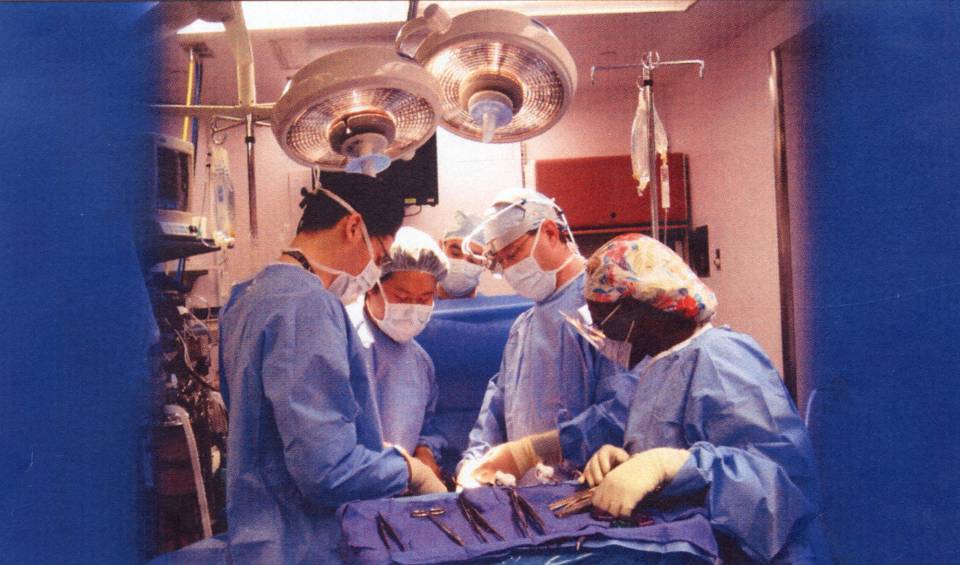 You learn you have prostate cancer, and you have been told that you need to have a radical prostatectomy to remove the diseased gland. You have a choice of an "open" procedure or a laparoscopic procedure. (By the way, we offer both at BIDMC.) How do you choose? What are the pro's and con's?
I attended a recent seminar of this topic -- yes, you get to do this kind of thing when you run a hospital -- and I was surpised to learn from our Chief of Urology that the case is not at all clear cut. I had thought that the laparoscopic procedure would be a clear winner on many counts, but there are arguments to be made on both sides.
I am giving my layperson's interpetation of what I learned, so please don't rely on this. Check with your doctor or the literature for a more accurate reading on the matter. Medicine being an inexact science, there are bound to be lots of opinions.
Since men only are reading this posting -- hold on, maybe some women readers joined us and are interested in this question, too -- I know that your first question will be about potency rates after the surgery. The answer: Similar results.
OK, what about effectiveness in removing the cancerous tissues? Similar results.
What about returning to regular life activities? With open surgery, doesn't the open incision mean a longer recovery time? No, postoperative pain is comparable in the two cases, and men can return to activities just as quickly despite an incision.
And so on, and so on. Are you surprised like I was?
Here's my pitch, instead
If Alice (below) can sell useless plaques, let me instead try again to sell something more practical. For those of you arriving recently, I repeat my posting from several weeks ago. (If enough of you buy this, I won't have to clog up my blog with repeated advertising!)
"A couple of years ago, we published a wonderful book on the subject by Monique Doyle Spencer, which is designed to help people who have the disease understand and cope with many aspects of the treatment process. We published the book because it is funny, and commercial publishers felt that it was inappropriate to have a humorous book dealing with cancer. We thought it deserved public exposure. It is called, 'The Courage Muscle, a chicken's guide to living with breast cancer.' After my mother-in-law read it, she said, 'I wish I had had this book to read during my treatment.' Many others have said the same thing, and the book's reputation has spread by word of mouth and occasional newspaper columns and Monique's interviews on television and radio.
You can buy it from Amazon, but if you buy it from the hospital instead, the proceeds go to support Windows of Hope, our non-profit oncology shop that sells wigs, scarves, and other supplies for cancer patients. Just send a check for $16.95 to Windows of Hope, 330 Brookline Avenue, Boston, MA 02115, and we will mail you a copy. Or call 617-667-1899."
I thought I had seen it all
We have a very good email system that intercepts a lot of the spam being sent out, but sometimes things slip through. As you can imagine, companies are trying to sell us all kinds of this. This morning, one arrived that I never could have imagined.
Here's the text:
Congratulations Paul on being recognized by The Chronicle of Philanthropy as one of The Philanthropy 400!
We prepared an online preview of your handcrafted special edition plaque for your review. Click here to personalize, customize and preview your plaque. Only 3 business days left to SAVE $30 on your order (order by Nov 6th, 2006).
If clicking on the link doesn't work, please copy and paste the entire address into your web browser or follow these simple instructions:
Click to the following website: www.amreg.comEnter Preview Code: 3262340
Now, with just a few clicks of your mouse you can prepare your plaque exactly the way you want it:
* PERSONALIZE the wording, font size or style.
* CUSTOMIZE your favorite wood finish and choose gold or silver for the wood trim.
* PREVIEW the plaque exactly as it will be delivered.
Please do not hesitate to call or email me with any questions. I would be happy to walk you through the simple steps of customizing your plaque.
Alice Sydney
1-866-964-0866 x8330
asydney@amreg.com
Here would be my response to Alice Sydney:
Dear Ms. Sydney,
America is a great country, full of entrepreneurial ideas. I guess your company figures there are people out there who would actually buy a plaque to commemorate the fact that their hospital raised a lot of money. Personally, I am extremely grateful to generous people in our community for their contributions to our clinical programs, our teaching, and our research. We could not survive and thrive without their help. But I am hard-pressed to figure out why anyone would buy this and where one would hang such a plaque. I guess some CEOs find comfort or excitement in this kind of self-congratulatory pat-on-the-back that could be placed in their offices; but if I had the spare cash to buy your plaque, I would instead donate it to the hospital.
Sincerely,
Paul Levy
And, by the way, did you notice that the sales pitch has the wrong name of our hospital . . .
:)
Wednesday, November 01, 2006
Clean Hands

The disk on the left shows bacteria colonies that grew from my hand before it was washed with a disinfectant. The disk on the right shows the number of colonies that grew from my hand after it was cleaned with the waterless, alcohol-based antiseptic that is in dispensers outside every patient room in our hospital.
It has been well documented that many infections in hospitals occur because of bacteria transferred from one patient to another when nurses or doctors do not wash their hands between seeing patients.
The New England Journal of Medicine published an article on this topic in July, 2006, entitled "System Failure Versus Personal Accountability -- The Case for Clean Hands," by Doctor Donald Goldmann at the Institute for Healthcare Improvement. His conclusion: "Each caregiver has the duty to perform hand hygiene -- pefectly and every time." "Yet, compliance with hand hygiene remains poor in most institutions -- often in the range of 40 to 50 percent."
It is inconceivable to those of us who are not doctors or nurses that caregivers would not follow simple standards for hand hygiene. We wonder why it does not occur. The article provides good background information on this topic.
Our clinical chiefs and senior adminstrators know that our hospital needs to have high performance in this arena, and we are strengthening our encouragement for this behavior through both positive reinforcement and penalties. As an example, our Chief of Medicine recently wrote the following to his staff:
Appropriate patient care requires that immediately prior to and following each patient encounter anyone having contact with the patient will cleanse the hands thoroughly, using either hand washing or the alcohol-based hand cleansers that are available everywhere in our environment. Anything less than perfect compliance with this standard (except in the case of a patient emergency requiring immediate intervention) represents substandard care which we will not tolerate.
To make this more clear: Everyone (including students, trainees, and faculty who may not expect to touch the patient when they approach) who enters a patient room or an exam room must clean their hands immediately before and immediately after the encounter. In addition, we are all responsible for ensuring that everyone on the healthcare team -- from attending physicians to environmental services personnel --practices scrupulous hand hygiene. Our task is to lead by example through good practice, to notify other healthcare workers if they forget to perform hand hygiene, and to respond respectfully when others do the same.
Please help us to ensure the finest care for our patients by adhering to and insisting upon proper hand hygiene.
Again, we lay people might wonder why it is necessary to provide such advice and reminders to people who have been trained in medical school; but since it is apparently necessary, my colleagues at BIDMC and other hospitals will continue to do so.
Tuesday, October 31, 2006
The Week Before
The week before the drug company supplement in the NY Times Magazine, there was a glossy insert called "National Hospital Guide, a reference tool for health-conscious consumers". It portrayed itself as "designed to help you better manage your health care needs".
Of course, the major entries in the booklet were those hospitals that had shelled out the money to buy an ad in the same booklet. But then, a few others were included, too, including a few in Boston. When we inquired how the selection was made of those hospitals, the publisher told us that they had a selection process, but could not or would not tell us the criteria for selection. One group of hospitals included in that manner is a major purchaser of advertising space in the Boston Globe, which is owned by the New York Times. In the absence of public criteria for selection in the Times brochure, it is unreasonable to assume that there is some carryover influence from the Globe ad placement?
The point is this. Advertising is advertising. A selection process based on supposed clinical excellence is another. Shouldn't we expect the media to distinguish between the two when they are "guiding patients to better health"?
Monday, October 30, 2006
Offensive
Like everybody else, I have gotten used to the unfortunate number of ads in which drug companies encourage consumers to push their physicians to prescribe the latest in expensive new therapies. But, the NYTimes Magazine had a supplement this weekend that, to me, was really offensive.
It was entitled "From cause to cure, a patient's guide to advances in mental health" and presented articles about Alzheimer's, bipolar disorder, epilepsy, and schizophrenia -- fully intermingled with full page ads from drug companies pushing their products which, by the way, were often featured in the articles themselves. I can't tell you how relieved I was to know that Bristol-Myers Squibb thinks that "treating bipolar disorder takes understanding"; that UCB is "the epilepsy company" that lets you have "life on your terms"; that Pfizer is "working for a healthier world"; that AstraZeneca is wants us to know that "sometimes there is another side to depression" -- and offers a postcard we can send in on which we list our diagnoses and what medications we are currently taking.
The articles and ads were illustrated by manipulative photos of people in various stages of sadness, thoughtfulness, and happiness. I believe that this kind of approach to reaching people -- especially those with mental illness -- and their family members is so cynical as to be offensive.
But, maybe I am just out of date and should learn to expect and accept this form of advertising. What do you think?
Please understand that I highly value the work these companies do: My problem lies in the way they deliver their message.
Sweet Music
A few months ago, I asked a friend of mine, Nancy Kleiman, to play her harp in several places in the hospital, just as an experiment. The reponse was so positive that a donor funded the program, and we have made it a regular thing. The comments from patients and staff have been very positive. Here is the latest note from Nancy, which tells some marvelous stories:
Dear Paul,
There has not been one day since I've begun to play the harp at the BIDMC that I haven't had a significant experience to record in my journal. But in this past week alone, the events that have occurred have been so overwhelming that I wanted to take a moment to describe for you how your vision and investment are making a difference in our community.
It began when a patient in a wheel chair, on her way to an appointment, approached me to say that she was a classically trained harpist who could no longer play her pedal harp because of her MS. During our chat, I invited her to return and try a small harp I owned that she could hold in her lap with the help of a bar that rests under her legs. This Monday when she met me in the Shapiro lobby people gathered around to watch and listen to us play a duet! A social worker looking on wept at this remarkable site. The harpist was so thrilled to be able to play the harp again that she plans to purchase a similar one. I have invited her to a harp workshop I am hosting next weekend where another of your employees, a harpist in your sleep clinic, is speaking about her work. Already, Barbara [chief of social work] and I are talking about getting this harpist involved in the hospital's support for other MS patients.
Thursday as I was playing, a social worker was about to begin a workshop to address self-care for other social workers and asked if I would come and speak about my work and be the "experiential" part of her workshop. She had the social workers close their eyes and simply relax as I played for them. She had attended another workshop where a harpist colleague of mind who started the MGH program spoke and performed this way. As we were chatting, a patient - also a musician - came over to tell me that as she entered the lobby she could tell instantly that what she was hearing was live music. She said she looked up at the harp and was no longer in a hospital.
Although I usually do not come in Friday, I checked my email and had an urgent request from a harpist at the GentleMuse program at MGH. A family of a dying patient at the Brigham and Women's had called for a harpist to do a "death vigil" for their mother who had been expected to die the day before. Of course, I called the family and they were thrilled that I could be there immediately. I simply took out my harp in the Shapiro lobby and walked it across the street. On the way, three employees at the Brigham and Women's asked for my card! One commented, "Why does the BIDMC and MGH have a harpist but not us?" I could not have been received with more welcome and warmth than by the nurses on the 12th floor and everyone else in my path. And what more wonderful example of hospital cooperation than what happened yesterday!
There are so many other stories I could share. A day does not go by that someone doesn't ask me to teach the harp. At least five of your staff - including a physician - have seriously asked me to do so! And even the Starbucks manager is begging me to play in the mornings when her lines are out the door! Since I have already been asked to provide harp music by chaplains to play for a dying patient and by the nurses in Farr 9 and the psychiatric unit, I am envisioning a time when your harpist is available to respond to such requests. I have retired from teaching to make myself available on a volunteer basis to do just that because I believe that this service is a vital and compassionate role to be filled. Paul, that I could do so to serve your community is my ultimate dream!
Nancy
Thursday, October 26, 2006
CareGroup -- Part 2
Shortly after arriving as Administrative Dean at Harvard Medical School in the fall of 1998, I was invited to attend a three-day strategic planning retreat for the senior managers and clinical leadership and lay leaders of CareGroup. They were kind enough to invite me, as someone new to the medical field, to get an intensive briefing on the inner workings of part of the Harvard hospital system. It was a fascinating experience, and I learned a lot.
I was struck by the sense of unity and purpose of all those attending to create a vibrant and strong CareGroup integrated health care delivery network. Nonetheless, within a short time, I noticed that it wasn't working.
First of all, the merger of the BI and the Deaconess was well into several years of bad results. What had been portrayed as a merger of equals was actually a takeover of the Deaconess by the BI. A look at the clinical and administrative leadership of the BIDMC made it clear that the BI folks had the overwhelming role in running the place. This, along with other misteps, left the Deaconess people feeling left out and alienated and undervalued. Doctors left, nurses were disgruntled, referring physicians changed loyalty, and lay leaders from both the BI and the Deaconess in the community became disenfranchised. Operating losses grew year after year, into the tens of millions of dollars.
The CareGroup holding company, meanwhile, made clinical judgments that further weakened the BIDMC -- most noticeably a commitment to moving the preponderance of orthopaedics to New England Baptist. For a general hospital like BIDMC to lose this specialty meant a significant hit and loss of potential growth to its bottom line.
As BIDMC weakened, both the Baptist and Mt. Auburn, the two other major hospitals in the system, feared for their financial future -- because the debt issued under the CareGroup name was a joint and several obligation of all of the hospitals. How could the two hospitals raise philanthropic donations, for example, if donors thought that funds would be used to bail out the Medical Center?
Meanwhile, the system's three small community hospitals in Needham, Waltham, and Ayer were suffering from the usual woes of community hospitals in Massachusetts, and the Baptist and Mt. Auburn also fretted about the financial impact of those hospitals. The CareGroup board ultimately voted to close the Waltham hospital, but it had to remove the local board to do so, because that local board refused to accede to this action. This use of reserve powers by the holding company board sent a shock wave throughout the system: While everybody knew that the CareGroup board had this authority, it had never been used so dramatically.
You can imagine why this series of events led to a lack of cooperation and collaboration among the Caregroup hospitals. All hope for an integrated health care delivery system was shattered. Eventually, at the behest of the hospitals, the CareGroup board voted to reduce its authority over the member institutions, removing itself from clinical matters and focusing instead on its fiduciary responsibility to the bond holders.
Wednesday, October 25, 2006
Are there any doctors out there?
If so, I can't imagine that you don't have an opinion about my comments on Transplants, below. In that posting, I am suggesting that not all hospitals should be permitted to do all kinds of clinical procedures. Are you going to let a non-MD like me make a clinical judgment like that -- unchallenged? (I got more comments on the cookies!!)
Tuesday, October 24, 2006
How magic happens
The magic of academic medical centers occurs at the intersection of clinical care, basic science research, and clinical research. The excerpt below is from an article written by Dr. Jerome Groopman and printed in The New Yorker this past July. If you have chance to read the whole thing, you will find a wonderful story of how a young scientist, working in collaboration with others in the hospital, developed a theory that might end a disease.
The Preeclampsia Puzzle (The New Yorker)
In June, 2000, Ananth Karumanchi, a thirty-one-year-old kidney specialist at Beth Israel Deaconess Medical Center, in Boston, read an article in Nature about preeclampsia, a poorly understood disorder that affects about five per cent of pregnant women. In the developing world, preeclampsia is one of the leading causes of maternal death; it is thought to kill more than seventy-five thousand women each year. In the United States, where treatment is more readily available, few women die of the disease, but complications -- including rupture of the liver, kidney failure, hemorrhage, and stroke --can cause lasting health problems. (In rare cases, patients with preeclampsia develop seizures or lapse into a coma; this is called eclampsia.) The only cure is delivery. "If a woman develops preeclampsia near term, then she is induced to have a delivery or undergoes a Cesarean section," Benjamin Sachs, the chief of obstetrics and gynecology at Beth Israel Deaconess, told me. "In most cases, as soon as she is delivered we know she will get better. But, if preeclampsia develops early in the pregnancy, then we have a huge challenge, because we have two patients: the mother and the baby. If you deliver the baby early to spare the mother, then you put the baby at risk for the complications of prematurity; if you wait, then the mother can have severe complications and go on to eclampsia."
http://www.newyorker.com/printables/fact/060724fa_fact
What is CareGroup?
One of the persistent questions I receive from people at BIDMC and outside is, "What is Caregroup?" Here is the answer.
In the mid-1990s, the Partners HealthCare System was established with a merger of MA General Hospital, Brigham and Women's Hospital, several community hospitals, and many physicians. The business concept behind this merger was to establish a new corporate entity that reflected the changed health care marketpace. The new corporation would have better access to capital, garner economies of scale by larger scope, and have more leverage with insurance companies because of its extensive reach and integration of care delivery.
Beth Israel Hospital, the third largest of the adult care Harvard teaching hospitals, was not part of that merger and began to search for its own partner. It joined up with the New England Deaconess Hospital, and added affiliations with New England Baptist and Mt. Auburn, along with three small community hospitals and a number of community physicians. The goal was to establish another integrated health care delivery system -- CareGroup -- to be the bookend to Partners in Eastern Massachusetts.
But many problems soon ensued (which I will describe in future postings), and CareGroup failed as an integrated health care delivery system. A few years ago, therefore, the board of CareGroup, under urging from its member hospitals, redefined its scope. Its main purpose today is to satisfy the fiduciary obligations of the system with regard to previously issued bonds, which are a joint and several obligation of the three hospitals. CareGroup no longer has any clinical responsibilities.
Throughout the country, there are stories of mergers and corporate reallignments gone awry in the hospital world. This is no surprise. I used to be involved in other industries in which competitive market frameworks replaced regulated, cost-plus businesses (electricity, natural gas, telephone -- to mention a few). The first refuge of management in the face of such change was often to look for merger partners, but such mergers often failed. In future postings, I will provide more details about the BIDMC and CareGroup experience, but in the meantime, I would love to receive comments from you about interesting successes or failures from other parts of the country.
Monday, October 23, 2006
More from Monique
Monique Spencer, the author of The Courage Muscle, A Chicken's Guide to Living with Breat Cancer -- see our posting below -- has an op-ed in the Boston Globe today.
Like Captain Louis Renault (Claude Raines) from Casablanca, we are shocked that our demure, shy, and withdrawn friend might have strong opinion about the current political scene . . . .
Like Captain Louis Renault (Claude Raines) from Casablanca, we are shocked that our demure, shy, and withdrawn friend might have strong opinion about the current political scene . . . .
Saturday, October 21, 2006
Heart Stents
Read this story in the New York Times. I think it is really well written and takes a complicated medical issue and fairly and clearly presents the various aspects of it.
I post it to give a sense of the complexity of advanced medical treatment. A new technology emerges that appears to hold great promise of treating disease -- in this case, drug-coated stents vs. non-coated stents vs. cardiac surgery. As time passes, doubts emerge as to the relative efficacy of the three.
The solution for the doctor is to stay up-to-date on the latest literature and studies and try to do what is best for the patient who shows up today. Unfortunately, the evidence is not always conclusive. I think this is a significant emotional burden for both patients and doctors. You can't ask someone who is having a heart attack to wait until this is resolved. You also can't ask a doctor who is treating the patient to wait until this is resolved.
I am certainly not wise enough to offer a solution to this particular or general problem, and so I welcome your thoughts.
Really little babies
I just attended a reunion of NICU babies at our hospital. The NICU is the neonatal intensive care unit, where premature or other medically distressed babies go to get bigger and stronger. Over the last 15-20 years, there have been major advances in the treatment of these babies that allow even very small ones (1.5 pounds) to survive. Surfactants allow their lungs to be opened, and new types of ventilation permit them to breathe without damage to delicate repiratory tissues. Previously, many would die. Ordinarily, they stay in the NICU until their normally expected birthdate, which could be days, weeks, or months.
At this reunion, we revealed photographic portraits of 11 of these babies, who now range in age from 3 to 14. There are pictures of their baby days and from now, along with a written summary of their stay in the NICU and their current activities. They kids play lacrosse, compose music, excel at school, and engage in a multitude of normal activities. Some have neurological or other problems resulting from their premature days, but all are happy, functioning children.
The portrait gallery is called the "Hall of Hope" and is designed to give current NICU parents encouragement as they walk by to visit their really little babies. We are not the first place to do this, but I am pleased that we have done so.
If you had or knew a NICU baby (or were one!) and want to relate your story, please submit a comment.
Friday, October 20, 2006
How am I doing?
Former New York Mayor Ed Koch used to wander through the city yelling out to people, "How am I doing?" I am writing to ask the same question.
I know that hundreds of people view this blog every day, but most do not submit comments, and it is hard to know if people actually read the postings, much less find them enjoyable or interesting. Sometimes, writing this feels a little bit like being lost at sea and sending out messages in bottles, with the hope someone will pick up a bottle and respond.
So, here's your chance! Is this a good use of my time? Yours? Even if you have not commented before, please send feedback, ideas, and suggestions. I promise to post everything you send in (subject to normal rules of politeness and nice language). Thanks.
Thursday, October 19, 2006
The "other" Beth Israel
Dr. David Shulkin, CEO of Beth Israel Hospital in New York, has started a blog. I have listed his link on this page for those who want to check in with him. It looks like it is mainly designed as an internal communications tool, but perhaps we can all offer him some ideas.
Errors, Improvement, and Discipline
This posting is long, but I think the final point is very important, so please bear with me. Last year, one of our doctors violated one of our safety regulations, and although there was no harm to the patient, we disciplined him with a temporary suspension of privileges. The fact that we took this action ended up in the newspapers. Now, this doctor is one of the experts in his field and very well regarded in the region and often takes on cases that are so difficult that others will refuse to take them. A number of people in the hospital and from other hospitals contacted me about the case, wondering how we could treat such an exemplary doctor in such a manner. It occurred to me that the case would be an opportunity to remind everyone in our hospital about our standards and procedures, and I did so in the email that follows.
But after you quickly read my email, take the time to slowly read the one that I received from a nurse a day later. That's the message that really hits home.
Here's mine:
Dear Colleagues, I received a number of comments following last week's press report regarding disciplinary action against one of our physicians. Many of you were proud that you work in an organization that engages fully in the internal and external processes designed to improve care and ensure safety. However, some of you expressed surprise and concern and asked "Why couldn't this be limited to an internal process?" I thought it would be worthwhile to explain. We know that we all have the best of intentions in treating patients at BIDMC. In the vast majority of our hundreds of thousands of patient encounters each year, things go well. Every now and then, though, there is an unexpected adverse patient event or a near miss. This could result from a series of unexpected events that may be the fault of no one. Sometimes, though, it results from potentially avoidable medical error, a care process that does not work effectively enough to prevent errors, or from poor judgment of a member of our medical staff.
Our Medical Executive Committee, comprising all of the departmental Chiefs and several other members of the physician staff, establishes rules of procedure and conduct that apply to medical care professionals here at the hospital. Those rules call for review of major adverse events and near misses whenever they occur. (Given industry experience, we can expect about four to six such episodes each month.) We conduct confidential peer reviews of these cases in the following manner: First, appropriate cases are identified at departmental conferences. These are then reported to our Department of Health Care Quality, where they are investigated to determine the root cause. We look for ways to learn from them and make improvements so we can better serve our patients. The vast majority of those reviews do not result in punitive action against a doctor. Indeed, we depend on healthcare professionals to disclose fully all facts so that the process can be accurate and helpful to future patients.
As required by state law, the most serious of the adverse events are reported to the state Board of Registration in Medicine ("BORIM"). Some types of cases must be filed with the state Department of Public Health ("DPH"). The law states that the entire process at the BORIM is protected by the rules of confidentiality as a peer review event, but cases filed with the DPH are not confidential. There are other occasions, however, where a member of the medical staff may have willingly or knowingly violated one of the rules set forth by the Medical Executive Committee ("MEC"). Here, too, a confidential investigation is undertaken, whether that doctor is a full-time faculty member or any physician with privileges at our hospital. If there is a violation, the Chief of that service imposes a penalty that he or she deems appropriate. That case is then reviewed in its entirety by the Medical Executive Committee. Assisted by an internal peer review panel, the MEC can accept or modify the Chief's determination. The record of that case is then forwarded to the BORIM. The Board conducts it own review and takes it own action, which may be similar, more severe, or less severe than that taken by the Medical Executive Committee. It can assess a range of penalties, the ultimate one being a revocation of a license to practice. Unlike the adverse events reports, under state law, disciplinary actions are made public by the Board. We do not seek press coverage of these events, but actions by the state can generate media inquiries. When they do, we provide clear, open, and honest comments to reporters to help put the case in proper context.
This series of processes is governed by the laws of the Commonwealth of Massachusetts. In the case of adverse events, those laws are designed to encourage disclosure by doctors by shielding them from unfair criticism and publicity during a substantive review of a case. The hope is to learn from our mistakes in a helpful and constructive environment. These reviews can often lead to resolving system problems, too. For example, the computerized physician order entry system was largely a response to illegible and incorrect written orders that resulted in medical errors. In the case of disciplinary actions, though, the laws are designed to publicize misbehavior -- to inform the public about the record of a doctor and to deter others from acting in the same manner.
No one takes pleasure from a process in which a highly trained physician who has devoted his or her life to healing patients is put through the agony of this kind of publicity. On the other hand, the public has a right to know if a caregiver has acted in a manner inconsistent with the professional standards established by his or her peers. Men and women who choose to become doctors do so out of a great sense of service to their fellow human beings. The fact that we engage in intense review processes of our own colleagues is a sign of this quest for excellence. On those few occasions when a member of the medical staff is hurt or embarassed by this process, it is because his or her colleagues have acted to prevent patients from potential harm in the future. It is a sign of the strength and commitment of our Medical Center. It is also the law of the land, and we will abide by it.
Sincerely, Paul
Now, here is the nurse's note to me:
I feel inclined to respond to your email with an experience I had today on the floor. Your email proved to be helpful in my circumstance. I am a new nurse at the hospital, and I am currently orienting. On my way to work early this morning I was thinking about the hospital and the recent publicity via this incident with the doctor. I actually felt a huge sense of pride coming into work. Taking the higher road is not always easy but lends it self to a freedom and power that all great institutions must embody. I believe that Beth Isreal's commitment to excellence is a model for both myself and other hospitals to emmulate.
At work today I made a mistake, a medication error. My stomach turned, I felt faint . . . however I recalled my focus earlier in the day: on the integrity of the hospital and the type of light that it shined on my paradigm as I entered my day. I felt an immediate sense of freedom and put my attention on what I needed to do to correct the error. Although embarrassment and fear visited me, I wasn't overwhelmed by the emotions. I contacted the right people, and helped maintain the safety of my patient. It was a very challenging day . . . and I grew. I will go to sleep with integrity; knowing I was honest, feeling I had done all I could.
I know healthcare presents these types of moral dilemas to all of us who choose this challenging field to work in. Beth Isreal is a safe place to honestly confront these dilemnas and strive to achieve the excellence that I know can exist.
** RN
Wednesday, October 18, 2006
Best of Boston Cookies: The Secret is Out!
The chocolate chip cookies served at Beth Israel Hospital were listed as Best of Boston in 1995 or so. People used to come in off the street to buy them at the hospital cafeteria! For those of you who always wanted the recipe, here it is. You might want to reduce the quantities for household use . . . :)
CHOCOLATE CHIP COOKIE
Yield: 600
Preheat oven 300 degrees
Baking time: 12-15 minutes
Ingredients:
7 ½ lbs of granulated sugar
7 ½ lbs of brown sugar
10 lbs butter
1 ½ cups vanilla
28 eggs
15 lbs flour
1/3 cup and 1 tablespoon salt
1/3 cup and 1 tablespoon baking powder
1/3 cup and 1 tablespoon baking soda
12 ½ lbs chocolate chips
1½ lbs walnuts (optional)
Procedure:
Soften butter and whip with both sugars
Beat eggs and mix in salt, baking powder, and baking soda
Gradually mix in flour
Add chocolate chips and walnuts
Tuesday, October 17, 2006
A Statistically Valid Sample?
Every year, US News and World Report lists the top hospitals in the country. Everyone in the health care field knows that the methodology used in this survey has no statistical or scientific validity, but everyone wants to be at the top of the list!
Here's a story on efforts by the University of Pittsburgh Medical Center to try to score well in this annual survey. We wish them well, especially because their former Chief of Medicine is now Chief of Medicine here at BIDMC. So if they get highly ranked, based on his many years of fine work there, we will share in their pleasure.
Here's a story on efforts by the University of Pittsburgh Medical Center to try to score well in this annual survey. We wish them well, especially because their former Chief of Medicine is now Chief of Medicine here at BIDMC. So if they get highly ranked, based on his many years of fine work there, we will share in their pleasure.
Site Feed
At the suggestion of several people, I have created a link on the side of this website to a site feed for those who want to use it for automatic delivery of new postings.
Having said that, I have no idea how this works and don't really want to know . . . . :))
Having said that, I have no idea how this works and don't really want to know . . . . :))
Monday, October 16, 2006
Not Transparency
Several months ago, the state of Massachusetts started a website (click on the box in the lower right of the home page that says Health Care Quality and Cost Information, and then click "physicians") with data on the volume of certain procedures done by individual surgeons at hospitals in the state. There are several problems with this website.
First, the state is using administrative datasets (i.e., billing information) to generate the numbers. Those datasets only allow for a certain number of "operators" to be listed as part of an admission. So, for a person who has multiple operations during the same hospital admission, not all of the procedures will be captured.
Second, the coding logic that the state uses has some oversights. Mass General Hospital and Boston Medical Center, for example, note that the category of abdominal aortic aneurysms (AAA) does not include endovascular repairs, which represent a significant portion of those types of surgeries. MGH points out, "The conventional surgery involves a major incision and the AAA is repaired by the surgeon sewing in an artificial aorta. The stent graft (or minimally invasive operation) achieves the same goal (eradication of the AA) by working up through the arteries in the groin. In the past year the percentage of AAA repaired with the minimally invasive approach has grown to 70% at the MGH." BMC states, "The ... definition allows us to report only on the volume of direct aortic aneurysm repairs. At Boston Medical Center, we do both endovascular aortic aneurysm repairs as well as direct repairs; adding the endovascular cases would more than double the volume reported for FY04."
Third, the numbers are out of date and do not represent the latest volume of surgeries carried out by doctors. I have suggested to people in the state and to insurance companies that it would be very, very easy to have real-time information on these topics: The state could set up a website and give password access to each hospital, and we could update the website from our own databases virtually every day of the year. We all keep track of our doctors' clinical volumes.
To keep us from "cheating" -- as if we would! -- the data submitted by us could be printed in italics and listed as unaudited until the state actually caught up with the figures in its own reports. At that point, the font could switch over to plain type.
And, finally, to persist with one of my favorite topics (see below), why doesn't the website include solid organ transplant surgical volumes? These are easily counted and reported. Wouldn't you want to know these figures if you needed a new liver or kidney?
We all appreciate the steps the state is taking, but if we are going to be serious about transparency, let's improve what is posted so consumers have up-to-date and accurate information.
Sunday, October 15, 2006
TV Remote Controls
From time to time, I will post a comment on the little things that work well or poorly in our hospital. I hope this will give you an insight into the unusual aspects of running a hospital that are not present in other organizations. If you want to send me other examples, I will try to address them, too.
How many of you have been a patient in a hospital bed and have faced the problem of the TV remote control that requires you to cycle through the entire set of channels to get back to an earlier channel or to turn off the television? How incredibly frustrating, right? You lie there in bed and say, "What dodo thought of this?" Here is the explanation, from our person in charge of facilities, in response to a patient's complaint:
"We researched it and found that the remote is the one that is connected into our nurse call system, and the company did not have alternatives that would be more convenient. We checked with other hospitals in town and they all had the same limitations. Having these systems integrated reduces the number of separate handheld items hooked to the bed and allows the speaker to be at the bed, particularly important in a double room.
"We looked into the possibility of making available commercially available universal remotes and programming them to work on our TVs, but they would not meet the infection control and electronic system standards required in a hospital (e.g., the infrared used could interfere with the monitoring system). We went back to the nurse call system company, and they are now going to offer remotes that let you turn the TV off without cycling through the stations and allow you to cycle backwards (so if you are on Channel 5 and want Channel 4, you do not have to go ALL around). We don't know if they figured out this new technology based on our call or not. They claimed nobody had ever inquired about this before, but regardless, we are thrilled. As we replace our older remotes, we will use these alternative products and continue to push the company to do even better by more closely mimicking the remotes we all have at home."
Friday, October 13, 2006
More on Transplants
See my posting below on the waste involved in having more transplant programs in New England that are necessary. Now see this article on the creation of yet another liver program, this one at Dartmouth Hitchcock Medical Center. The article notes: "When DHMC first begins performing liver transplants, only private-payer insurance carriers will be covered for the procedure, Berk said. The hope, however, is that publicly funded insurance programs will approve it shortly thereafter and begin referring patients. "
I have nothing against DHMC or the very fine doctors there, but why should society support this program when there is already surplus liver transplant capacity in New England? Another quote: "Of the 4 million people in (New Hampshire, Vermont and Maine), about 40 are succumbing to liver problems every year," Berk said."
The article notes that some potential recipients lack transportation to get to another center in New England. Can this really be true? It is not that far, and people travel throughout the region all the time. If transportation costs are the issue, let's raise money to pay for it rather than hundreds of thousands of dollars for a new liver transplant program that will not do enough procedures to justify its existence.
Wednesday, October 11, 2006
Concierge Practices
Is it right and good for primary care doctors to change their regular practices into "concierge" or "boutique" practices? Most of the doctors associated with BIDMC have the traditional kind of arrangements with their patients, but a few have adopted this other model. Here is a portion of an essay written by my friend and colleague Dr. Harold Solomon on this topic. Please let us know how you feel about his approach and his point of view:
"Four years ago, in frustration, and after a 38-year career in internal medicine and nephrology, I closed my Beth Israel Deaconess Hospital-affiliated practice, reopened as a "concierge" physician. As an alternative to quitting medicine altogether, I joined MDVIP, a national association of physicians. I wanted to make a loud statement about the error of undervaluing primary care.
"MDVIP charges a $1500 annual fee, covering a prevention-oriented physical and wellness plan, other services- newsletter, personal health information CD, website, and internet services. I limit my practice to 600 patients. I participate in all insurance, HMO, and Medicare. Fewer patients means quick access, same day visits for acute problems, a personal touch. I rarely sign out to coverage. Unless I am in a plane, or abroad, I am the first contact for my patients’ after hours needs.
"I was moved to preserve the quality of my work, and was willing, for the first time in my career, to be a bit controversial. . . . 475 patients signed up, and to my surprise, I had overestimated signups by the rich by a third, underestimated the middle class patients by a third. The demographics of my practice did not change. This was not an "elite" patient group. Why did more rich patients leave that I expected? I did not understand then, but I do now. The upper class patients already know how to get special care. They become hospital donors, are connected socially. Many hospitals have development offices which promise better access in exchange for donations. At Boston's most famous hospital, there is a "concierge" floor. Donors of $1000 get a unique color hospital ID card which alerts employees of your importance. You get a free flu shot, ahead of the line!
"Most doctors defer to patients with stature -- politicians, celebrities, physicians, the wealthy. A former cabinet secretary left me angrily, and was seen within three days by a colleague whose practice is "closed", and who is a public figure in the movement for universal access in Massachusetts! I wondered who pried his closed door open!
"The argument against "boutique" medicine is that it creates a two-tiered system. I would argue that the US has had a multi-tiered system for many years, as does Great Britain, Germany, New Zealand, Denmark -- countries I have visited recently. Whenever the government, or insurors, limit care, a segment of society looks finds more. Instead of forcing mediocre primary care from the bottom up, why not force quality care from the top down?"
Tuesday, October 10, 2006
Community Health Centers
With all the focus on hospitals, it is easy to forget the important role of community health centers in the delivery of care, particularly in otherwise underserved urban and rural areas. BIDMC is affiliated with several community health centers in Eastern Massachusetts. Those centers provide primary care to their patients and refer them to our place if they need more advanced diagnoses or treatment. They are Bowdoin Street Health Center in Dorchester, Fenway Community Health, South Cove Community Health Center in Boston's Chinatown and in Quincy, Dimock Community Health Center in Roxbury, Joseph Smith Community Health Center in Brighton and Waltham, Sidney Borum Community Health Center in Boston, and Outer Cape Health Services in Provincetown and Welfleet.
Here is a wonderful story about UMMA Community Clinic in the poorest section of Los Angeles. They have a video at http://youtube.com/watch?v=kLiagBbSryY that is pretty inspirational.
If any of you have had great experiences at these community health centers or others, please post them. The staff at these places are extremely dedicated. Let's provide them some positive feedback and encouragement!
Monday, October 09, 2006
Electronic Medical Records
Partners Healthcare System had an ad in the Globe yesterday talking about the development of their Electronic Medical Records (EMR) System. They deserve credit for their progress on this important project. We have a similar effort underway in our hospital. As of this week, we have the same adoption of EMRs as Partners - 85% of our faculty are using electronic records in their practices. In addition, all of these doctors will be using ePrescribing (electronic delivery of accurate prescriptions to pharmacies) by the end of the year. Several dozen of our physicians have this available to them now.
But along with this good news comes a problem:
Twenty-seven percent (27%) of the patients who are seen at either BIDMC and Brigham and Women's Hospital are also seen at the other hospital. But if you have a blood test at BWH, and doctors at BIDMC want to view the results at your next visit at our place, the information is not available on their computers. Why is that? It is because our EMR system and the one run by Partners Health Care are not interoperable. Likewise, if you need to go to an emergency room in Worcester, but your primary care doctor is part of Partners primary care network or is one of our primary care affiliates, the ER there cannot get instantaneous electronic access to your medical history.
As we each make progress with our own systems, it would be great if we could also learn how to share data across systems. Interoperability is at an early state in the country because of the need for standards, privacy concerns, and lack of a consistent architecture. We look forward to working with our colleagues across the state to solve these problems.
Saturday, October 07, 2006
Religion and Union Organizing
Now, here is a very, very delicate issue, on which I would welcome comments. I apologize if it makes you uncomfortable, but it was an important moment, and I think it deserves exposure and debate.
Recently, a person affiliated with unions in Massachusetts (not the SEIU) said to me, "As one Jew to another, I would hate to think that you would be publicly taking the kind of position you have been taking on this SEIU matter." I was really stunned by this -- to think that this issue would be couched as a matter of religion, rather than being addressed on the merits. My response to him was, "As one Jew to another, I would like to think that you would be ashamed of me if I did not stand up to an undemocratic approach that undercut the rights of a group of people."
See the posting below on union activities for background on this issue, and then answer the question: What do you think? Was he out of line? Am I?
Friday, October 06, 2006
Have you read the Globe today?
Christopher Rowland, a reporter at the Boston Globe, has a story about my blog in today's paper. We had a nice talk about it a few days ago. Mr. Rowland, while an excellent reporter, left out a key quote as to why I started the blog: "It was to have a dialog with people about issues of importance without the interference of reporters and editors." :)
Seriously, I like the story . . . and, more importantly, I really do appreciate the difficulty for reporters and editors in making sense of complicated issues in health care. Isn't it interesting, though, that this blogging topic is newsworthy enough to be put in the newspaper? For hundreds of thousands of people, a blog is just a blog and no big deal, but as noted when I started this experiment, among CEOs it remains rare. Thanks to the Globe for printing the story. Maybe some of my colleagues will join in with their own blog, or at least reply to some of my postings: Hey guys and gals, you can do that anonymously, so you can say all those things you REALLY want to say, but where you don't want attribution . . . . :)
If you are just joining this site as a result of Mr. Rowland's story, please read on and write back.
Tuesday, October 03, 2006
Monique's book
October is breast cancer awareness month, designed to help people understand this disease, seek early diagnosis, and inform folks of advances in treatment. In recognition of that, I want to tell you about something that can be very helpful to you, a friend, or a loved one.
A couple of years ago, we published a wonderful book on the subject by Monique Doyle Spencer, which is designed to help people who have the disease understand and cope with many aspects of the treatment process. We published the book because it is funny, and commercial publishers felt that it was inappropriate to have a humorous book dealing with cancer. We thought it deserved public exposure. It is called, "The Courage Muscle, a chicken's guide to living with breast cancer." After my mother-in-law read it, she said, "I wish I had had this book to read during my treatment." Many others have said the same thing, and the book's reputation has spread by word of mouth and occasional newspaper columns and Monique's interviews on television and radio.
You can buy it from Amazon, but if you buy it from the hospital instead, the proceeds go to support Windows of Hope, our non-profit oncology shop that sells wigs, scarves, and other supplies for cancer patients. Just send a check for $16.95 to Windows of Hope, 330 Brookline Avenue, Boston, MA 02115, and we will mail you a copy. Or call 617-667-1899.
Subscribe to:
Posts (Atom)


